Hasina says she would lead Bangladesh again if the public asks
A report quotes former prime minister Sheikh Hasina as saying she would return to power if Bangladeshis want her to, while warning that religious minorities are not safe.
In this piece
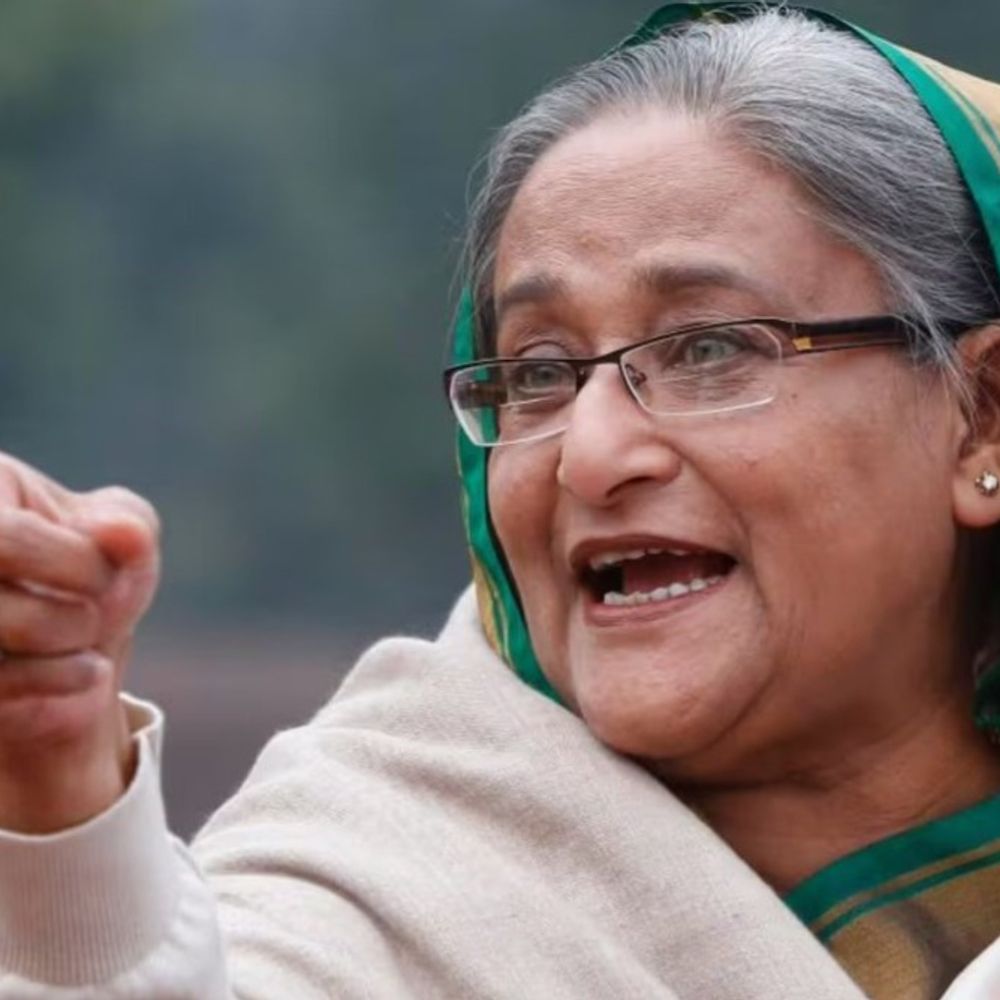
Divya Bhaskar reports that Sheikh Hasina has said she would again take charge in Bangladesh if the people wish, adding that she is not concerned for her own…
Former Bangladeshi prime minister Sheikh Hasina has said she would again take charge of the country if the public wants her to, according to a report by the Indian news outlet Divya Bhaskar. The account also quotes her as saying she is not concerned about her own life, and as warning that Hindus, Buddhists and Christians are not safe in Bangladesh.
The report, published in the outlet’s international section, presents those remarks as a political statement on a possible return to office. It does not, in the material available here, set out a full interview transcript, a date and place for the comments, or any formal plan for how such a return would occur.
Hasina led Bangladesh for a long stretch of its recent history before mass protests in 2024 forced a sudden change of government and she left the country. An interim administration took over afterward, and the question of when and how a new elected government would be formed has remained central to the country’s politics.
Her reported willingness to “take charge again” if the people wish puts her back into that unresolved contest, at least in public messaging. Any actual return would depend on politics inside Bangladesh, on legal and security conditions, and on whether voters and institutions accepted her as a candidate for power. The report does not establish that any of those conditions has been met.
The line that she does not care about her life frames the statement as personal as well as political. Hasina’s years in office and the manner of her exit have left her a deeply polarizing figure: supporters credit her governments with stability and development, while critics associate her rule with a shrinking space for dissent. The new remarks, as reported, do not resolve that divide.
The warning about Hindus, Buddhists and Christians speaks to a separate and sensitive issue. Religious minorities in Muslim-majority Bangladesh have long been vulnerable during periods of unrest, and attacks and fear in minority communities drew wide attention after the 2024 upheaval. The report states her claim that those communities are not secure; it does not, on its own, document particular new incidents, casualty figures or official findings.
That claim still matters because minority safety has become one of the tests by which governments in Dhaka are judged at home and abroad. India, which shares a long border and close ties with Bangladesh, has repeatedly treated the security of Hindus across the border as a diplomatic concern. How far Hasina’s remarks were aimed at that audience is not spelled out in the report.
For Bangladeshis, the statement also revives a practical question: whether the former ruling family remains a force that can contest power, or only a voice from outside the country. Parties, student groups and the interim authorities have spent the period since 2024 arguing over reforms, accountability for past rule, and the timetable for elections. A declaration of readiness to return adds pressure to that argument without answering it.
What happens next is not clear from the report. There is no indication in the available material of a travel plan, a party decision, or a response from the current authorities in Dhaka. Any follow-through would be visible in statements from her party, from the interim government, and from election authorities, rather than in a single headline.
Until those responses appear, the remarks stand as a reported signal: Hasina is presenting herself as willing to lead again if the public asks, and she is tying that offer to a bleak assessment of minority safety and to her own personal risk. Readers should treat the wording as her account, relayed by Divya Bhaskar, not as an independently verified record of events on the ground.
Primary source: Divya Bhaskar International. Newzly rewrites and structures source reporting for clarity; verify critical details at the original.