world·Chhattisgarh·Raipur District
HNLU and Chhattisgarh Police Review Implementation of New Criminal Laws at Constitution Day Summit
Hidayatullah National Law University and the Chhattisgarh Police convened a Constitution Day summit to evaluate the rollout of India's new criminal statutes, highlighting that over 35,000 officers have completed specialized training.
In this piece
Hidayatullah National Law University hosted a high-level summit in Raipur alongside the Chhattisgarh Police to examine the operational rollout of India's new…
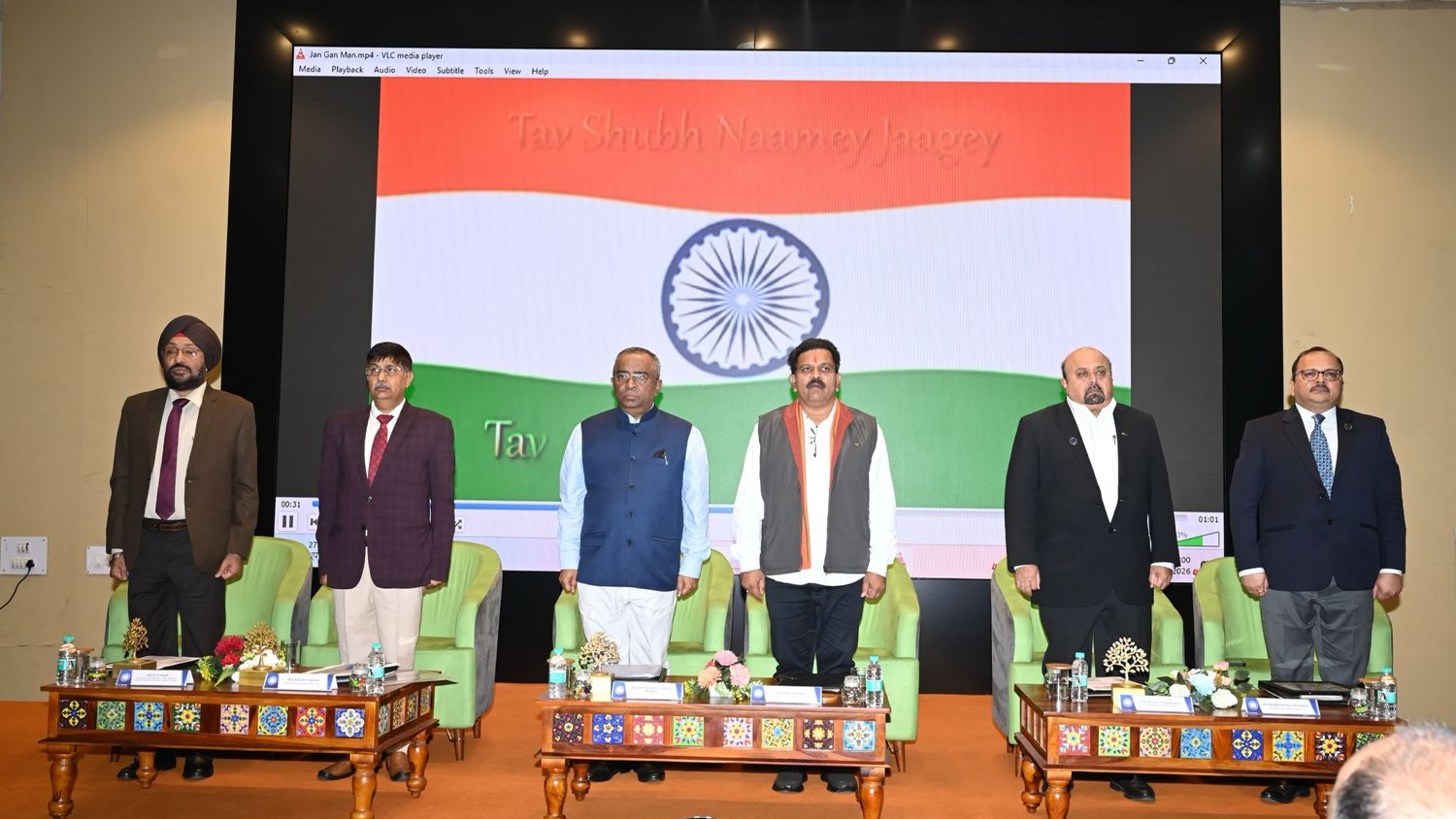
Hidayatullah National Law University in Raipur convened a high-level summit on Constitution Day to assess the operational rollout of India's new criminal laws across Chhattisgarh. Organized in collaboration with the Chhattisgarh Police, the one-day conference, titled "From Reform to Reality: Assessing the Implementation of New Criminal Laws in Chhattisgarh," brought together senior government leaders, judicial figures, police leadership, and legal academics to review practical enforcement on the ground.
Chhattisgarh Deputy Chief Minister and Home Minister Vijay Sharma attended the inaugural session as chief guest alongside former Chhattisgarh High Court Judge Justice Gautam Bhaduri, who delivered the keynote address. The proceedings opened with an observance marking the anniversary of the adoption of the Indian Constitution, during which Sharma administered the constitutional Preamble pledge to assembled police officials, university faculty, and law students.
HNLU Vice-Chancellor Prof. V.C. Vivekanandan, Director General of Police Arun Dev Gautam, and DGP for Training G.P. Singh also addressed the gathering. The speakers emphasized the critical transition required as law enforcement adapts to the replacement of colonial-era penal codes with modern statutes, highlighting the necessity of aligning daily police procedures with constitutional values.
A focal point of the summit was the progress achieved under a collaborative institutional partnership between the law university and the state police force. Officials highlighted that more than 35,000 police personnel across Chhattisgarh have undergone specialized instructional programs on the new legal framework under an ongoing memorandum of understanding established between HNLU and the police department.
Deliberations during the summit centered heavily on modernizing procedural workflows, with particular attention to digital justice mechanisms and forensic evidence gathering. Participants examined the statutory demands of the new codes, including mandatory videography during search and seizure operations and the prompt integration of electronic records into official investigation dockets.
State leadership commended the Chhattisgarh Police for making notable strides in nationwide operational indices, specifically highlighting its elevated standing in Crime and Criminal Tracking Network and Systems performance and electronic evidence adoption. Speakers noted that institutional coordination has enabled field officers to adapt more swiftly to tech-enabled compliance standards despite initial infrastructural constraints.
In his keynote address, Justice Bhaduri underscored the institutional responsibility of bridging statutory text with daily courtroom and investigative realities. Legal scholars and judicial experts at the summit pointed out that procedural safeguards must remain robust as investigating officers navigate initial evidentiary hurdles and transition from familiar historical precedents to fresh statutory interpretations.
The discussions carry significant implications for criminal jurisprudence across central India as states navigate the nationwide enactment of the Bharatiya Nyaya Sanhita, the Bharatiya Nagarik Suraksha Sanhita, and the Bharatiya Sakshya Adhiniyam. Chhattisgarh's systematic academic-police partnership offers an operational model for inter-agency coordination, aiming to prevent procedural lapses that could jeopardize prosecutions during the transition.
Looking ahead, organizers and law enforcement officials signaled plans to sustain joint training modules, refine standard operating procedures, and conduct regular review sessions across district police commands. As judicial scrutiny of early cases registered under the new statutes begins to take shape, state stakeholders stressed that continuous capacity-building will remain vital to safeguarding constitutional guarantees while achieving swift justice.
Primary source: Google News Chhattisgarh. Newzly rewrites and structures source reporting for clarity; verify critical details at the original.