culture·California·Los Angeles County
How 'Rocky' and the Steadicam Revolutionized Modern Cinema
A new retrospective film chronicles how the making of Sylvester Stallone's 1976 hit 'Rocky' launched his career and accelerated the widespread adoption of the groundbreaking Steadicam camera system.
In this piece
A new movie exploring the production of the 1976 classic 'Rocky' opens nationwide this week. The retrospective highlights how Sylvester Stallone's breakout role…
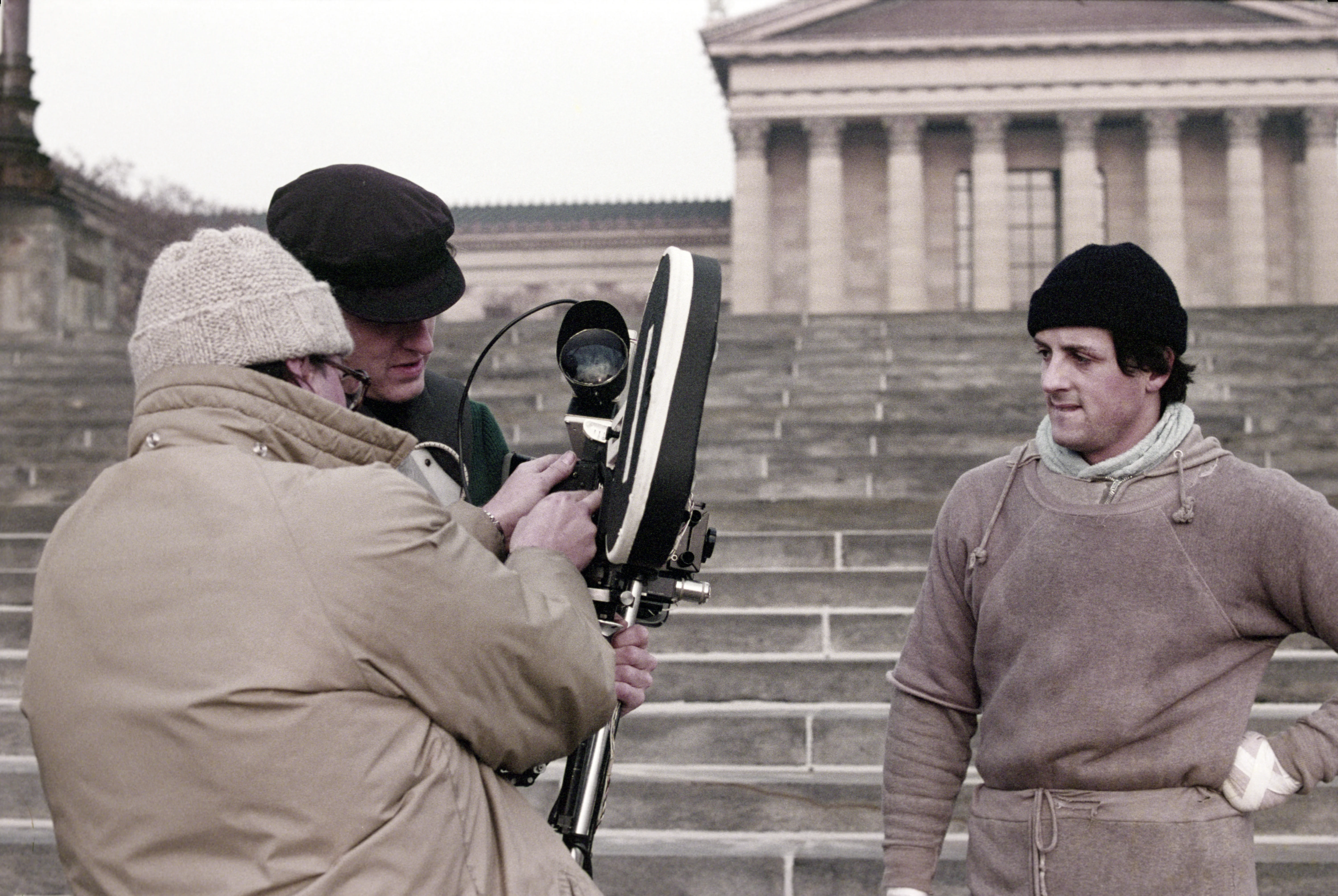
A new feature film examining the making of Sylvester Stallone's 1976 classic "Rocky" arrives in theaters nationwide this week, revisiting the beloved sports drama that launched its creator into global stardom. The retrospective draws fresh attention to the behind-the-scenes ingenuity that made the production possible, including the camera innovations that permanently altered filmmaking.
When "Rocky" debuted in 1976, it achieved rapid critical and commercial success, transforming Stallone from an impoverished, unheralded screenwriter and actor into a major Hollywood name. Beyond its emotional underdog narrative, the production stood out for its distinctive visual texture and energetic pacing, which departed dramatically from standard studio conventions of the era.
Central to the film's enduring visual identity was the historic use of the Steadicam, a then-novel camera stabilization system that permitted operators to capture smooth tracking shots while moving freely on foot. By mechanically isolating the camera from the operator's physical steps, the device eliminated the abrupt shaking typical of handheld shooting without requiring rigid tracks.
The technology famously enabled one of the most celebrated training montages in movie history, in which the title character sprints through urban streets and bounds up stone steps. Rather than framing the moment from distant stationary angles, the camera ran directly alongside the actor, pulling audiences directly into his physical exhaustion and triumph.
Prior to the emergence of stabilized portable rigs, complex mobile shots required time-consuming assembly of metal tracks or the use of heavy vehicles. Such setups were impractical for tight corridors, steep inclines, or low-budget independent shoots, making fluid movement across unpredictable urban environments nearly impossible to capture at reasonable expense.
The dramatic visual impact achieved in "Rocky" served as an undeniable proof of concept for the new camera apparatus, accelerating its adoption throughout the global entertainment industry. Directors and cinematographers recognized that the rig offered a new visual language, blending the intimacy of handheld cinematography with the elegance of traditional crane shots.
Decades after its 1976 cinematic debut, the core stabilization concepts pioneered during that era remain essential to contemporary motion picture and television production. Modern crews continue to deploy refined variations of the technology to navigate crowded soundstages, track dynamic live sports events, and execute intricate, continuous single-take action sequences.
The new retrospective release contextualizes these mechanical achievements within the broader struggle of bringing a low-budget passion project to fruition. By detailing how financial constraints spurred inventive technical solutions, the film illustrates how collaborative experimentation helped elevate a modest sports story into an enduring cinematic classic.
As the documentary makes its nationwide theatrical debut, it offers film enthusiasts and industry historians a chance to reflect on the intersection of storytelling and technical innovation. Nearly fifty years after its release, the visual language established by Stallone and his crew continues to influence how movement is recorded on screen.
Primary source: NPR Arts & Life. Newzly rewrites and structures source reporting for clarity; verify critical details at the original.