How the 26-Day 504 Sit-In Shaped Disability Rights History and Inspired 'Being Heumann'
Director Siân Heder's new film 'Being Heumann' dramatizes the 26-day 504 Sit-In led by Judy Heumann, reviving national attention on the longest peaceful occupation of a federal building in American history.
In this piece
A new film by director Siân Heder dramatizes the historic 504 Sit-In, where activist Judy Heumann and fellow organizers occupied a federal building for 26 days.…
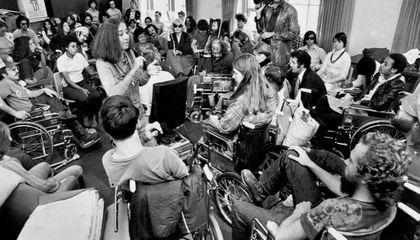
Director Siân Heder's new film, "Being Heumann," brings renewed public attention to the historic 504 Sit-In, dramatizing what remains the longest peaceful occupation of a federal building in American history. The feature film highlights the pivotal 26-day demonstration that reshaped the national landscape for disability rights.
At the center of the movement was organizer Judy Heumann, whose leadership rallied disabled activists to demand meaningful enforcement of federal civil rights protections. Protesters occupied the federal facility to pressure government officials into implementing long-delayed rules designed to protect disabled Americans from systemic discrimination.
The standoff focused on Section 504, landmark federal legislation that represented the first statutory protection against civil rights violations for people with disabilities in the United States. Despite its passage by lawmakers, administrative inertia and resistance to enacting necessary enforcement guidelines had left the protections largely stalled.
Lasting nearly a full month, the 26-day protest demonstrated the determination of community organizers willing to disrupt official operations to secure their basic rights. Demonstrators maintained their peaceful presence inside the government building, confronting logistical hurdles and official pushback to keep national attention firmly focused on the cause.
The peaceful occupation ultimately became a watershed moment for the broader civil rights movement in America. By demanding accountability directly from federal decision-makers, Heumann and her fellow organizers established that disability access and equal treatment were fundamental civil rights rather than matters of charity.
As retrospective coverage by Smithsonian History highlights, the history behind the 504 demonstration offers an essential case study in grassroots mobilization and civic persistence. While many major American protests of the twentieth century achieved widespread popular recognition, the historic 26-day occupation long remained underrepresented in mainstream cultural narratives.
Heder's cinematic adaptation seeks to bridge that gap by translating the complex realities of the occupation into a compelling screen narrative. By dramatizing Heumann's personal journey alongside the collective effort of the demonstrators, the production underscores how collaborative organizing can compel federal action.
The arrival of "Being Heumann" comes at a time when questions of equal access, inclusion, and civil rights enforcement continue to resonate across public life. Advocates note that revisiting the tenacity of the 504 organizers provides critical perspective on the enduring struggle to safeguard and expand protections for disabled individuals.
With the film poised to introduce new audiences to this pivotal milestone, the legacy of Judy Heumann and the 26-day occupation stands reaffirmed as a cornerstone of modern American protest history. The project emphasizes that securing landmark legislation is often only the first step, with persistent public pressure required to turn legal promises into enforceable reality.
Primary source: Smithsonian History. Newzly rewrites and structures source reporting for clarity; verify critical details at the original.