culture·Oklahoma·Oklahoma County
Threatt Filling Station: The Black-Owned Oasis That Kept Route 66 Travelers Safe
As racial segregation made cross-country journeys perilous during the Jim Crow era, the Threatt Filling Station in Luther, Oklahoma, provided fuel, shelter, and vital sanctuary as Route 66's only known Black-owned service station.
In this piece
The historic Threatt Filling Station in Luther, Oklahoma, provided essential respite and fuel for African American motorists navigating Route 66 during the Jim…
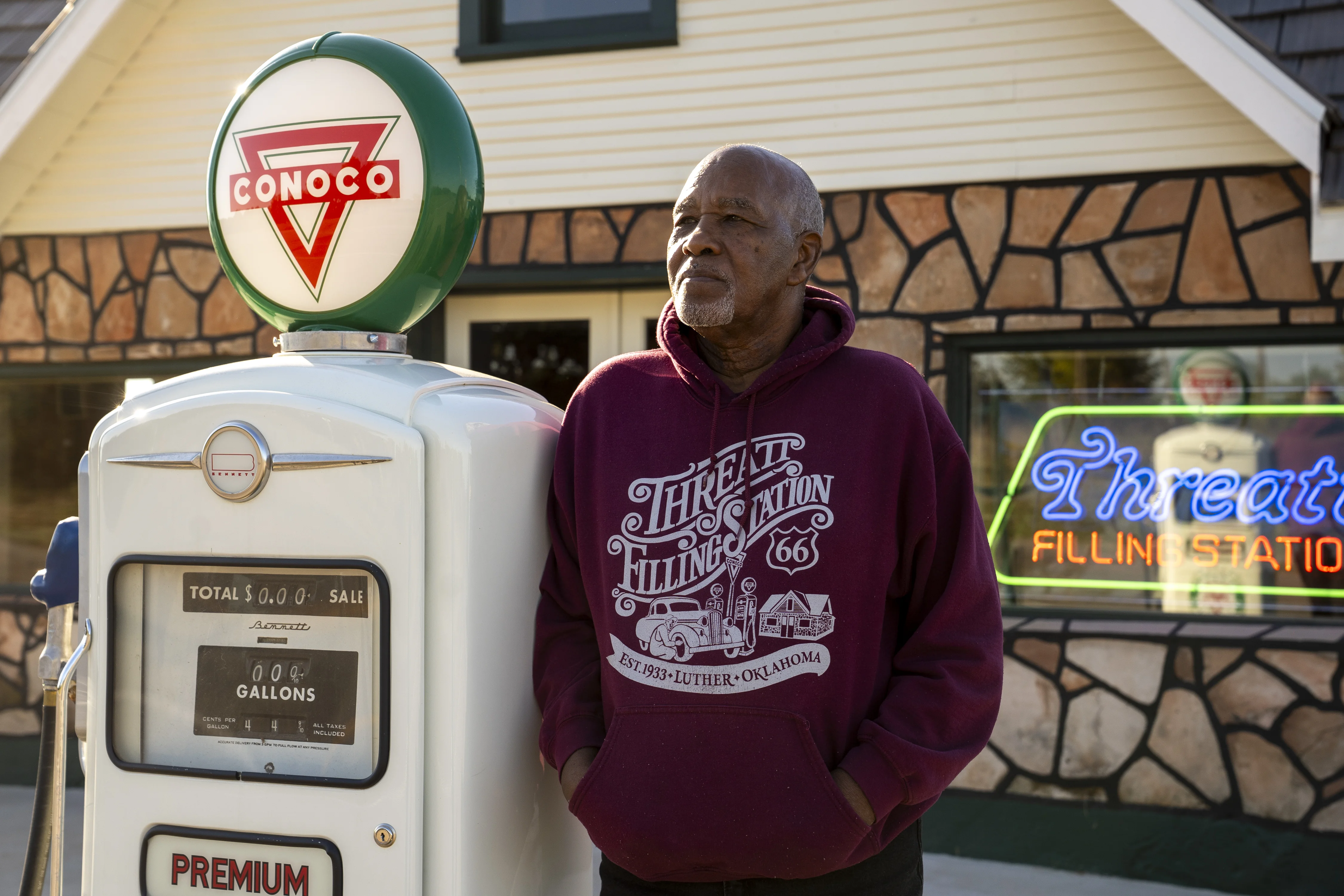
Along a quiet stretch of Route 66 near Luther, Oklahoma, a modest sandstone outpost stands as a profound monument to survival and hospitality during the Jim Crow era. The Threatt Filling Station, founded in the early twentieth century, is recognized by historians as the first and only known Black-owned gas station along the entirety of the storied highway. During an era when racial segregation and discriminatory local ordinances made long-distance travel perilous for African Americans, the station provided far more than petroleum.
For decades, Black motorists traversing the Mother Road faced widespread hostility, exclusion from public accommodations, and the constant threat of racial violence. While white travelers celebrated the romantic allure of open-road American freedom, Black families relied heavily on Victor Hugo Green's Negro Motorist Green Book and tight-knit word-of-mouth networks to identify safe corridors. The Threatt family offered a vital refuge where travelers could refuel, purchase farm produce, access clean restrooms, and rest without fear of harassment.
The enterprise began with Allen Threatt Sr., an African American homesteader who moved to Oklahoma Territory from Alabama around the turn of the twentieth century. He initially established a family farm and quarrying operation before opening a roadside service station on his land in 1915, more than a decade before the corridor was officially designated Route 66 in 1926. After an accidental fire destroyed the original wooden outpost, the family rebuilt the service station in the 1930s using distinctive native sandstone quarried directly from their property.
The station's location between Edmond and Wellston placed it squarely along a path surrounded by communities that strictly enforced sundown ordinances prohibiting Black visitors after dark. In response, the Threatt family expanded their services beyond routine automotive maintenance, converting the grounds behind the pumps into a safe campsite. Motorists who could not secure overnight lodging in segregated hotels were invited to pitch tents, park trailers, or sleep in their vehicles under the protective watch of the family.
Over the years, the site developed into a bustling community anchor for Black residents in central Oklahoma and visiting travelers alike. The Threatt family hosted community gatherings, social dances, and regional Negro League baseball games on their adjacent farmland. In addition to serving civilian travelers, the facility briefly assisted the American Red Cross and offered essential emergency resources when Jim Crow restrictions locked Black citizens out of municipal infrastructure.
Although the filling station embodied the exact survival network celebrated by the Green Book, historians note that it primarily built its reputation through community networks rather than national printed guides. Word of the safe haven spread among porters, musicians, commercial drivers, and migrating families journeying westward toward California during the Great Migration. For many cross-country travelers, reaching the stone station in Luther meant they had successfully navigated one of the most hazardous segments of their route.
The station ceased its commercial petroleum operations in the 1970s following the construction of interstate highways that bypassed historic two-lane alignments across Oklahoma. Despite decades of weather exposure and deferred maintenance, the structure remained in the continuous stewardship of the Threatt family, preserving an unbroken line of Black landownership. In 1995, the landmark earned inclusion on the National Register of Historic Places, later drawing national urgency when preservationists flagged it among the country's most endangered historic sites.
Today, a dedicated coalition including descendants of Allen Threatt Sr., historic preservation groups, and federal partners is actively working to restore the native stone building. Restoration plans aim to transform the iconic structure into a vibrant cultural interpretive center and visitor destination ahead of Route 66's centennial milestone. Organizers envision the site not only as a physical link to highway history, but as an enduring educational classroom highlighting the resilience of Black entrepreneurs who carved out dignity along America's most celebrated road.
Primary source: NPR Arts & Life. Newzly rewrites and structures source reporting for clarity; verify critical details at the original.