Illinois school bus drivers defeat privatization plan, win contract and raises
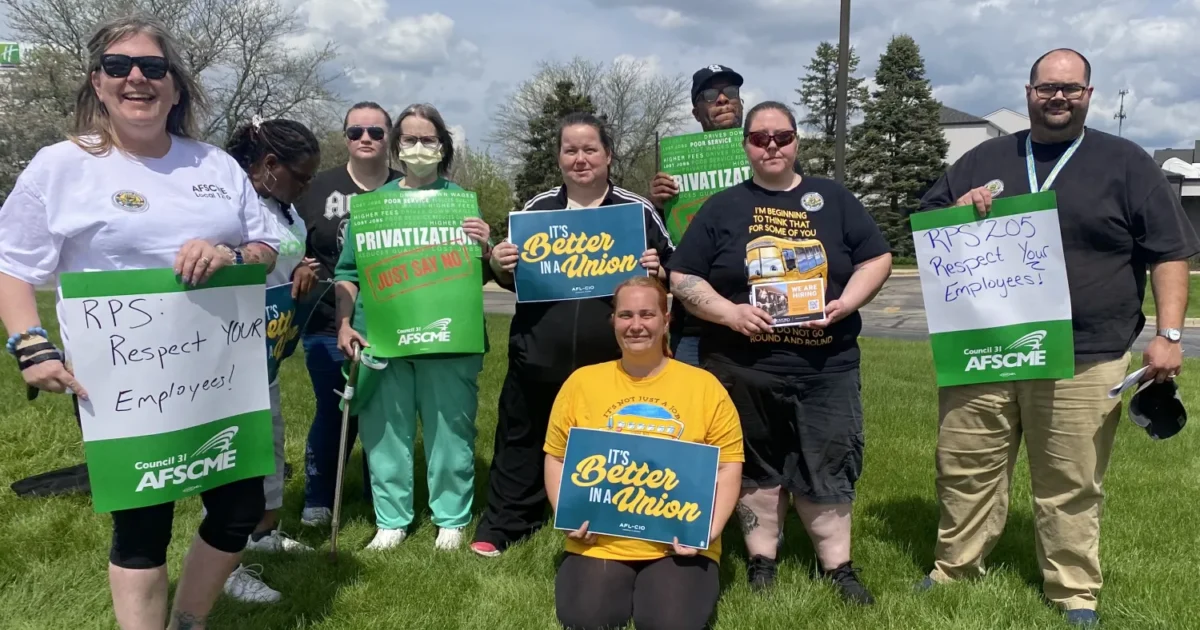
AFSCME says Illinois school bus drivers turned back a plan to privatize their work and secured a strong contract that includes wage increases. The initial report did not detail pay terms or the district involved.
In this piece
Illinois school bus drivers defeated a privatization proposal and won a strong contract with wage increases, according to AFSCME. The brief account does not…
School bus drivers in Illinois have defeated a privatization plan and won a strong contract that includes wage increases, the union AFSCME reported. The account, carried through a Google News item citing AFSCME, offers that outcome and little else.
The report does not name the school district or contractor involved, the number of drivers covered, the size of the raises, or the length of the agreement. It also does not describe the vote, bargaining timeline, or the specific form the privatization proposal took. Those details were not available in the source material used for this article.
What the union did state is direct: drivers blocked a move to privatize their work and secured what AFSCME called a strong contract, with wage increases as part of the settlement. In labor terms, that pairing means members kept the jobs inside the existing employment arrangement rather than seeing the service shifted to an outside operator, and they obtained higher pay under the new pact.
Privatization of pupil transportation is a recurring issue in U.S. school systems. Districts sometimes consider contracting routes to private companies in search of lower costs or simpler administration. Drivers and their unions often argue that contracting out can cut pay and benefits, increase turnover, and make routes less stable for students and families. This Illinois case, as described by AFSCME, fits that broader pattern even though the local particulars have not been published in the item at hand.
School bus driving is skilled, regulated work. Drivers must hold the proper commercial credentials, pass background checks, and manage student safety on the road and at stops. Staffing those routes has been difficult in many communities in recent years, and pay is frequently cited by workers as central to whether experienced drivers stay. A contract that raises wages, if implemented as the union describes, would speak to that pressure, though the dollar amounts are not stated here.
Keeping the work in-house, rather than privatizing it, also matters for who sits across the table in future negotiations. Employees of a district or an existing public operator typically bargain under that employer’s rules. A shift to a private vendor can change the employer, the contract, and sometimes the union relationship itself. AFSCME’s claim that the privatization plan was defeated indicates that change did not occur in this instance.
AFSCME is a large public-employee union representing workers across government and school-related jobs, including transportation staff in some jurisdictions. Its announcement frames the result as a win for the drivers. Independent confirmation of the contract language, wage schedule, and employer response was not included in the source, so the union’s account stands as the available record.
For families, the practical question is whether routes continue without disruption. Nothing in the report says service was interrupted, and nothing in it guarantees future staffing levels. A ratified agreement with higher wages can support retention, but retention also depends on hours, benefits, and working conditions that were not described.
Illinois districts and local governments have faced the same budget tradeoffs seen elsewhere: transportation is a large operating cost, and labor is a large share of that cost. Proposals to outsource are often presented as savings measures. Unions counter that savings can come from lower compensation and that service quality may suffer. The AFSCME report says drivers prevailed on both the privatization fight and pay, without quantifying either side’s proposals.
What happens next depends on steps the brief report does not cover. If the contract requires formal ratification or board approval, those actions would still need to occur before new wages take effect. Neither a timeline nor an employer statement was available.
Until a fuller account is released, the established facts are limited to AFSCME’s report: Illinois school bus drivers defeated a privatization plan and won a strong contract that includes wage increases. Further terms, and any response from the employer, remain unstated in the material reviewed here.
Primary source: Google News Illinois. Newzly rewrites and structures source reporting for clarity; verify critical details at the original.