world·Delhi·New Delhi District
India and 32 Nations Oppose UN Moratorium on Death Penalty
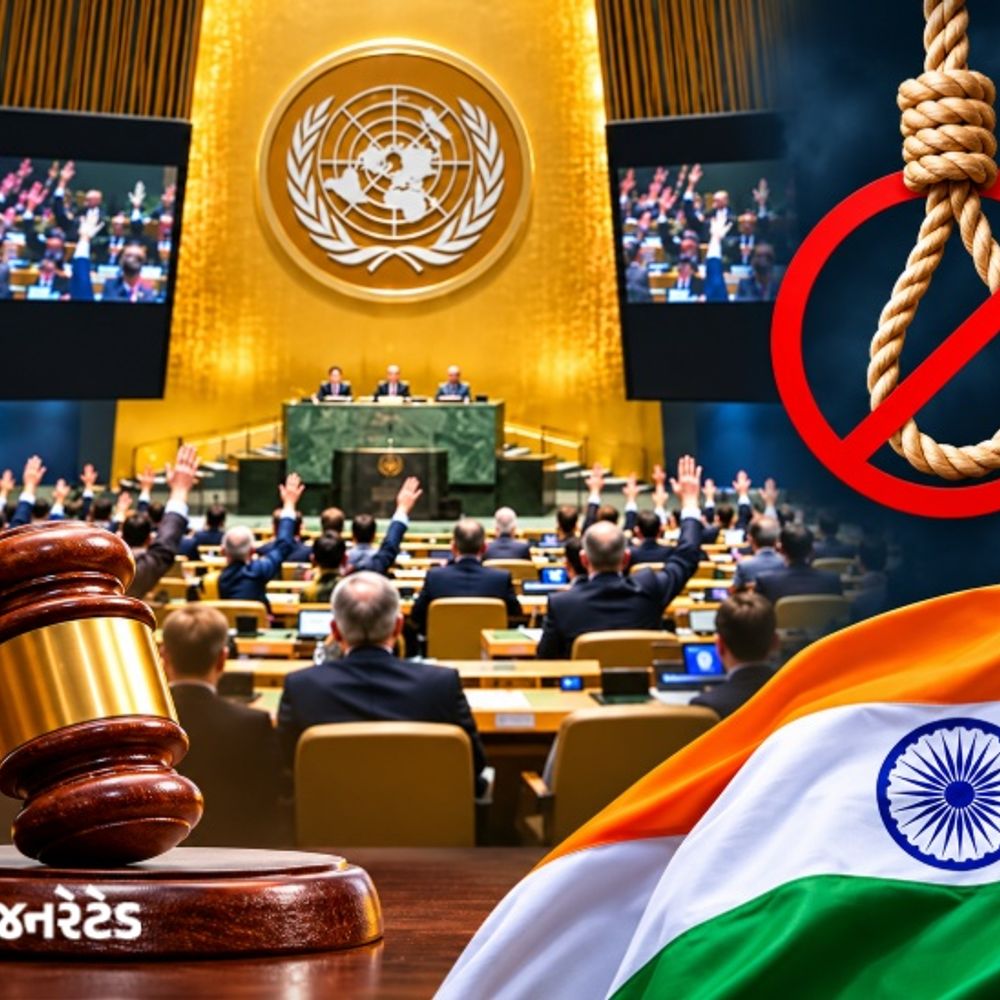
India and 32 other nations voted against a United Nations resolution calling for a global moratorium on the death penalty, rejecting characterizations that equate lawful judicial executions with state-sponsored murder.
In this piece
The UN General Assembly's Third Committee approved a draft resolution urging a worldwide moratorium on capital punishment with 133 votes in favor and 33…
The United Nations General Assembly's Third Committee has adopted a draft resolution calling for a worldwide moratorium on capital punishment, drawing opposition from 33 countries including India. The measure, which seeks to encourage member states to progressively restrict the death penalty with a view toward its eventual abolition, was approved with 133 votes in favor, 33 against, and 16 abstentions.
India strongly criticized rhetoric that equates judicially ordered capital punishment with unlawful state killings or torture. Indian diplomats told the committee that classifying lawful judicial executions as state-sponsored murder distorts international legal principles. New Delhi maintained that penal policy is an integral matter of sovereign national jurisdiction that cannot be rewritten by multilateral resolutions.
In articulating its official position, India highlighted Article 6 of the International Covenant on Civil and Political Rights, which permits the death penalty for the most serious crimes following due process. Indian delegates pointed out that the treaty does not mandate total abolition and that no global consensus exists on the subject. They cautioned against attempting to present specific ideological positions as universal international law.
India emphasized that every sovereign nation possesses the right to establish its own criminal justice system and determine penalties reflecting its societal values. Delegations from retentionist states echoed this view, arguing that multilateral bodies must respect sovereign legislative authority. They asserted that external interventions in domestic judicial statutes undermine the foundational principles of international cooperation.
Defending its domestic legal standards, India reiterated that capital punishment in the country is reserved strictly for the rarest of rare cases. The Indian judiciary applies the penalty only under extraordinary circumstances involving heinous offenses where the alternative of life imprisonment is conclusively inadequate. The standard requires judges to balance mitigating and aggravating circumstances before handing down a capital sentence.
Indian legal architecture incorporates multiple layers of judicial scrutiny to ensure fairness and prevent miscarriages of justice. Every capital verdict requires mandatory confirmation by higher courts and remains subject to appeals before the Supreme Court of India. Convicts are also entitled to seek executive clemency through mercy petitions submitted to the President of India or state governors.
India voted alongside a prominent coalition of dissenting nations, including the United States, China, Pakistan, and Saudi Arabia. Representatives from several of these countries argued that capital punishment serves as an important deterrent against severe crimes, including terrorism. They argued that imposing a blanket global moratorium disregards the legal diversity and domestic security priorities of sovereign nations.
The recurring vote highlights an enduring global divide between abolitionist governments, largely centered in Europe and Latin America, and nations that retain capital punishment. While human rights advocates argue that ending the death penalty is vital for human dignity, retentionist states maintain that justice systems must respond appropriately to the gravity of extreme offenses.
The draft resolution will advance to the plenary session of the 193-member UN General Assembly for formal adoption later this year. Although General Assembly resolutions carry symbolic and political weight, they are non-binding and do not create mandatory obligations under international law. Consequently, sovereign retentionist nations, including India, are expected to maintain their existing criminal statutes and judicial death penalty provisions.
Primary source: Divya Bhaskar International. Newzly rewrites and structures source reporting for clarity; verify critical details at the original.