world·Odisha·Balasore District
India Considers Opening Chandipur Missile Test Range to Japan
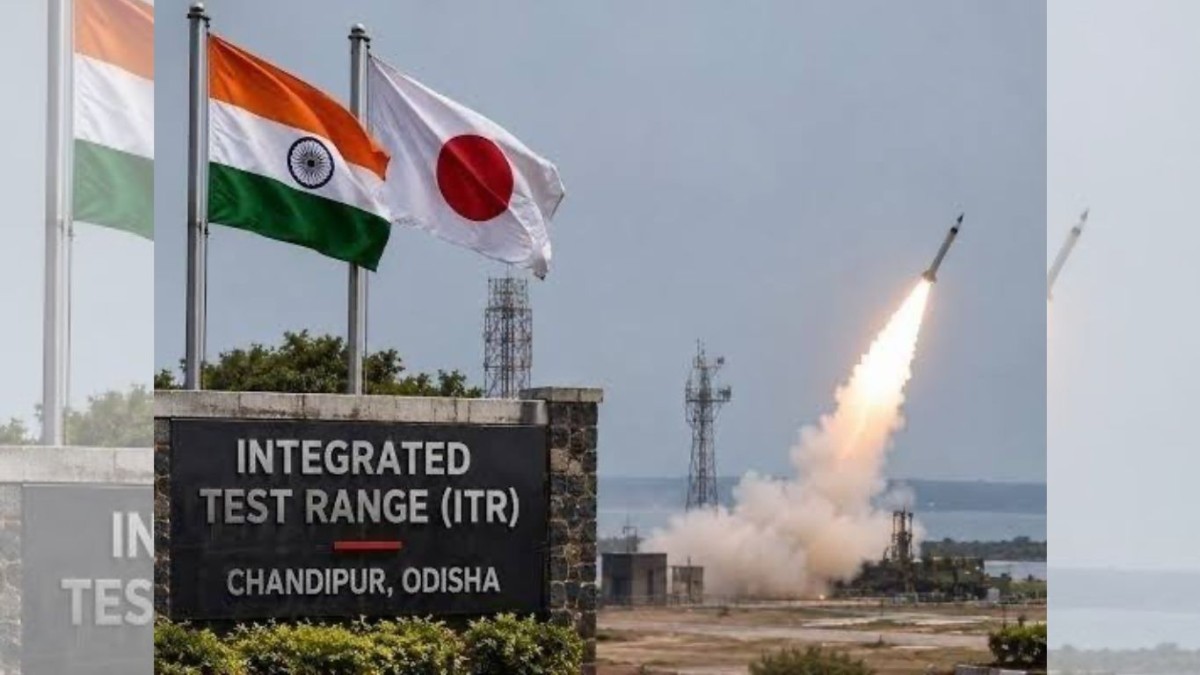
India and Japan are exploring an unprecedented defense arrangement that could allow Japan’s Self-Defense Forces to conduct live-fire missile trials at the Integrated Test Range in Chandipur, Odisha.
In this piece
New Delhi and Tokyo are advancing talks to allow Japan’s Self-Defense Forces to utilize the Integrated Test Range at Chandipur in Odisha for missile trials. The…
India and Japan are taking significant steps to deepen their bilateral defense partnership, with discussions underway that could see Japan’s Self-Defense Forces utilize Indian testing facilities for live-fire missile trials. According to defense reports and policy circles, the Integrated Test Range at Chandipur along the coast of Odisha has emerged as a premier candidate to host Japanese testing operations. The proposal follows a Letter of Intent signed between the two nations during high-level bilateral defense dialogues, exploring mutual access to firing ranges.
If finalized, the arrangement would mark an unprecedented milestone in Indo-Japanese security cooperation and Indian military diplomacy. India has historically maintained tight control over its sovereign defense infrastructure, making the potential opening of its test facilities to a foreign military an unprecedented strategic shift. The move reflects rapidly converging security interests between New Delhi and Tokyo amid shifting dynamics across the Indo-Pacific region.
For Tokyo, the search for overseas testing grounds is driven by severe domestic geographic and operational constraints. Japan's main archipelago is surrounded by dense civilian maritime corridors, active commercial airspace, and heavy fishing zones that severely restrict military live-fire exercises. Testing modern standoff munitions and long-range anti-ship systems requires extensive safety corridors that Japan simply cannot accommodate safely within its own territorial waters.
Japan's recent defense modernization programs emphasize the development of advanced standoff strike capabilities, including improved surface-to-ship missile systems designed to deter maritime incursions. These next-generation systems, such as extended-range anti-ship missiles projected to travel several hundred kilometers, demand expansive ocean ranges to validate guidance systems, telemetry, and terminal impact. Conducting such long-range trials at home also risks triggering immediate geopolitical friction with neighboring maritime powers.
The Integrated Test Range at Chandipur, operated by the Defence Research and Development Organisation in Odisha's Balasore district, offers an established solution to Tokyo’s logistical dilemmas. The facility features a sprawling tracking and telemetry network equipped with electro-optical tracking systems, range radars, and specialized ocean recovery vessels. Chandipur’s launch pads fire directly into the open expanse of the Bay of Bengal, providing a controlled maritime corridor ideal for complex trajectory monitoring.
The testing range initiative builds upon a steady expansion of defense ties established during recent bilateral two-plus-two ministerial meetings between the defense and foreign ministers of both countries. Bilateral engagements have already progressed from joint naval exercises in the Malabar series and air combat drills like Veer Guardian to reciprocal logistical support agreements. Granting facility access represents a transition from tactical interoperability toward deep institutional integration.
Beyond live-fire logistics, officials and industry observers view range sharing as a stepping stone toward deeper defense-industrial co-development. The two partners have increasingly sought avenues for joint research in cutting-edge defense technologies, including unmanned systems, surveillance platforms, and hypersonic capabilities. Co-locating testing teams on Indian ranges could foster greater technological familiarity and streamline future joint procurement or maintenance protocols.
Despite the strategic alignment, several procedural and regulatory hurdles must be cleared before Japanese hardware arrives on Indian soil. Defense planners must negotiate strict protocols governing data security, intellectual property, range safety liability, and the presence of foreign technical personnel at sensitive military installations. Officials from both ministries are expected to conduct detailed technical assessments to align operational standards and communication systems.
The prospective deployment highlights how shared concerns over maritime security and regional stability continue to reshape Asian defense alignments. While formal schedules and specific weapon systems for the trials remain subject to bilateral finalization, working groups continue to refine the terms outlined in the preliminary agreements. Observers anticipate that successful validation exercises could establish Chandipur as a key hub for multinational defense cooperation in the Indo-Pacific.
Primary source: Google News Odisha. Newzly rewrites and structures source reporting for clarity; verify critical details at the original.