India's First Bullet Train Project Energises 50-km Surat-Bilimora Section
India's maiden bullet train project reached a key milestone as authorities energised the 50-kilometre Surat-Bilimora section in Gujarat with overhead power, clearing the way for integrated trial runs on the high-speed rail corridor.
In this piece
The 50-kilometre Surat-Bilimora section of the Mumbai-Ahmedabad bullet train corridor has been energized with high-voltage overhead power lines. The…
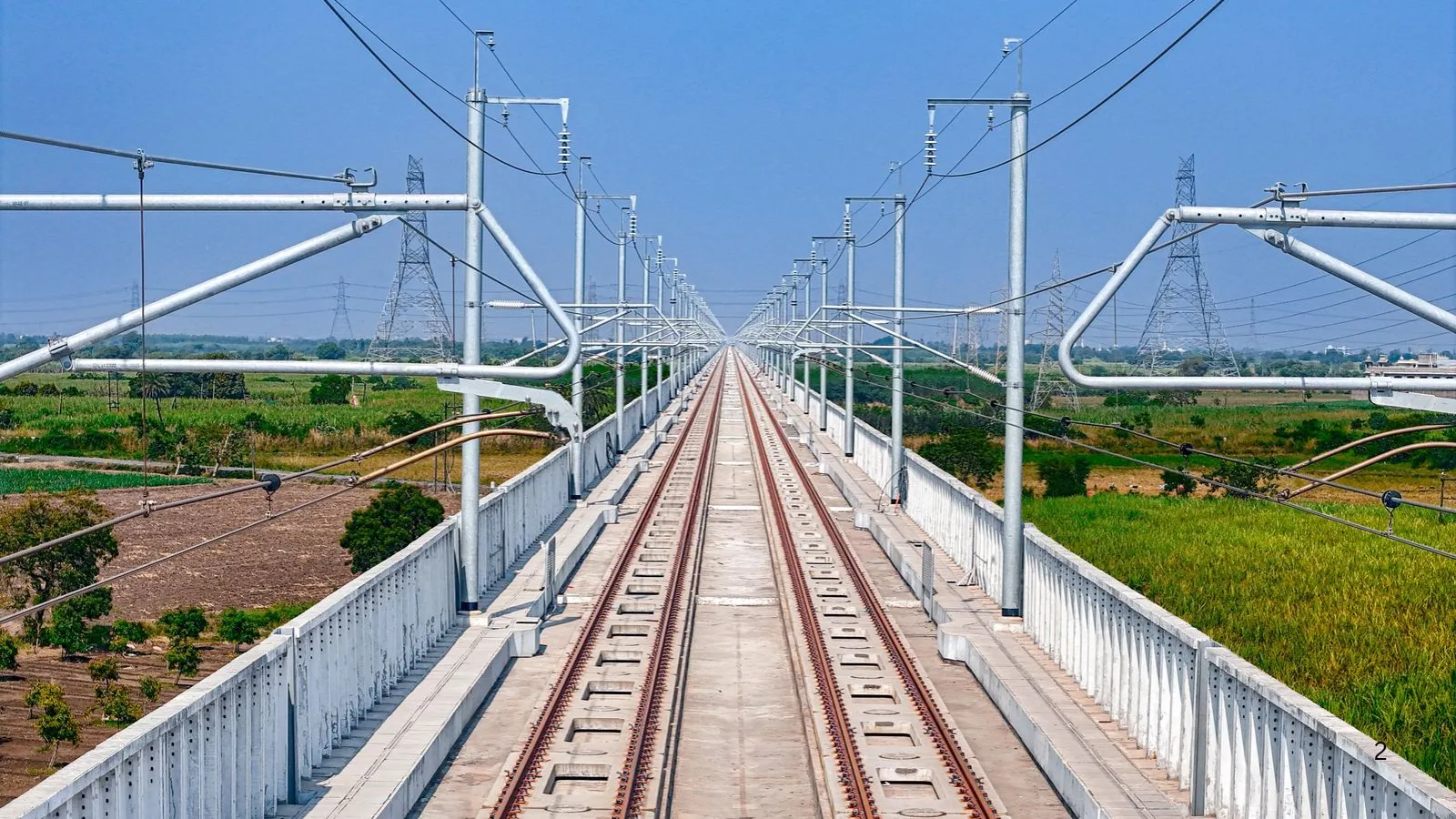
India's first high-speed rail corridor achieved a major operational milestone with the successful energisation of the overhead power supply system along the 50-kilometre Surat-Bilimora section in Gujarat. The National High Speed Rail Corporation Limited energized the overhead equipment covering both the Up and Down lines on the elevated viaduct. The development marks the first time high-voltage electricity has been fed into any segment of the Mumbai-Ahmedabad bullet train project.
The energised alignment forms the designated priority section of the 508-kilometre corridor connecting Mumbai and Ahmedabad. Power for this initial stretch is drawn through the newly commissioned traction substation at Bilimora. That facility receives high-voltage transmission feeds directly from the Gujarat Energy Transmission Corporation's 220-kilovolt Ambetha grid substation.
Engineers implemented an advanced 2-by-25-kilovolt overhead traction system along the viaduct, a standard electrification setup deployed on premier high-speed rail networks internationally. This design minimizes transmission line losses while delivering stable power essential for operating trains at speeds reaching 320 kilometres per hour. The installation includes overhead masts, catenary wires, contact wires, and associated power distribution assemblies tailored for high-speed conditions.
The 50-kilometre elevated viaduct across southern Gujarat traverses challenging terrain and busy transport arteries. The route incorporates bridges over four major rivers along with a specialised steel truss bridge spanning National Highway 53. To mitigate environmental and acoustic disruptions to neighbouring communities, construction teams installed approximately 94,000 noise barrier panels along the viaduct walls.
Across the broader 508-kilometre corridor, railway planners are establishing a total of 14 traction substations to power trains along the double-track line. These substations will be linked to a central control centre responsible for continuously monitoring grid stability, load balancing, and traction power delivery. The energisation of Bilimora provides engineers with the first live testbed to validate control protocols and electrical integration under regional operating conditions.
Following the electrical activation, rail authorities issued comprehensive safety advisories to local communities and project staff. The corporation warned that the overhead lines and associated fittings will remain energized at high voltage at all times. Local residents, commuters, and construction personnel were cautioned against approaching the viaduct or conducting unauthorised activities near power installations.
The power switch-on transitions the priority section from structural civil works into active systems testing and validation. With traction power live, technical teams can begin static integration checks on power supplies, signalling gear, and track sensors along the elevated viaduct. These procedures precede the eventual deployment of track-recording rolling stock and test trainsets on the alignment.
Government authorities have identified the Surat-Bilimora segment as the first corridor stretch slated for demonstration runs before full commercial services commence. Successful verification of the overhead electrification represents a critical hurdle cleared toward realizing India's maiden bullet train service. Project teams are now focusing on completing remaining signalling, telecommunications, and sub-station tie-ins across adjacent sections in Gujarat.
Primary source: The Indian Express. Newzly rewrites and structures source reporting for clarity; verify critical details at the original.