Iowa Residents Mark Thanksgiving With Lingering Fears After Military Detonation
Residents in southeastern Iowa celebrated Thanksgiving amid lingering health and safety worries after the U.S. Army carried out an emergency pre-holiday detonation of five tons of degrading lead azide at a local ammunition plant.
In this piece
Iowa residents marked Thanksgiving with persistent anxiety after the military detonated 68 barrels of volatile lead azide at the Iowa Army Ammunition Plant on…
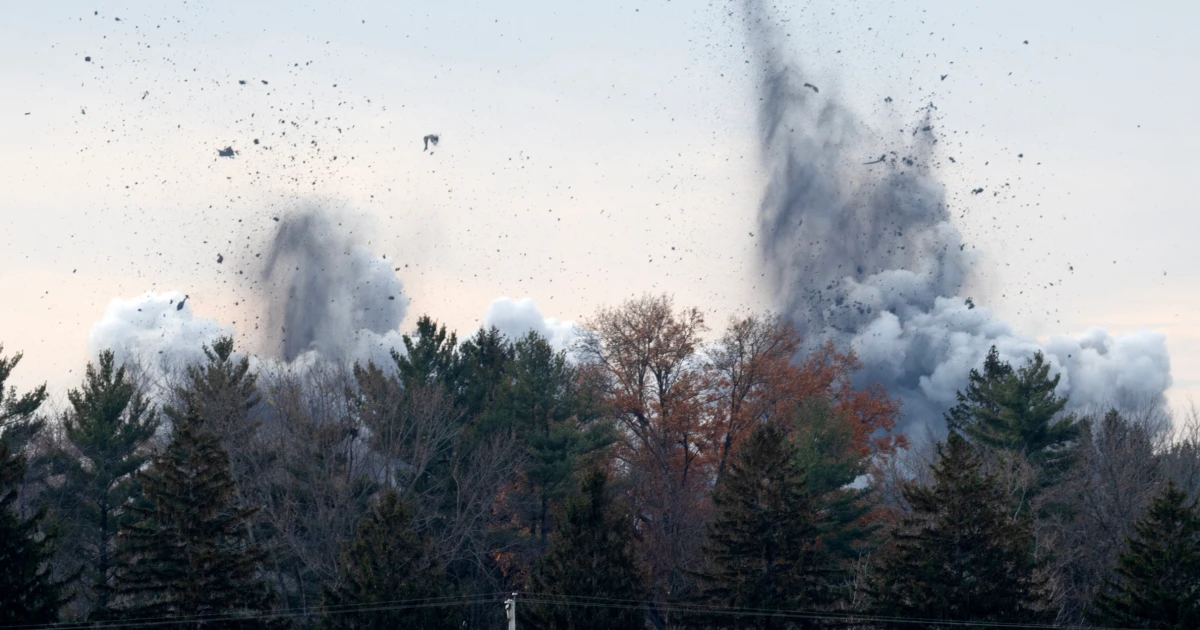
Families across southeastern Iowa gathered for Thanksgiving under a cloud of anxiety this week following an emergency military detonation of roughly five tons of volatile chemicals at the Iowa Army Ammunition Plant. The controlled blast on Wednesday morning near Middletown destroyed decades-old stockpiles of lead azide, disrupting holiday preparations and leaving neighboring communities uneasy about potential environmental fallout.
The U.S. Army executed the operation after warning that 68 deteriorating barrels of the sensitive explosive compound posed an imminent hazard of spontaneous detonation. While military officials confirmed that the blast occurred without an immediate catastrophic failure or visible broad disaster, the timing on the eve of a major holiday rattled thousands of nearby households.
Lead azide is a toxic, shock-sensitive primary explosive commonly used in military detonators and bomb fuses to trigger larger munitions. Officials determined that the aging drums, which had been stored at the facility for decades, had begun crystallizing and destabilizing as late-autumn temperatures dropped, making safe transportation or prolonged storage impossible.
To contain the blast and minimize airborne contamination, engineers surrounded the disposal site with two-story concrete and sand barricades and applied specialized suppression foams. Crews also deployed more than 100,000 gallons of water intended to capture heavy particulate matter and prevent dangerous lead dust from escaping the perimeter.
Despite the containment efforts, authorities had urged residents living within a five-mile radius of the Middletown installation to evacuate or remain vigilant ahead of the scheduled blast. Further precautionary advisories extended to communities up to 20 miles away, where residents were urged to shelter in place, keep windows closed, and adjust travel plans during one of the busiest travel periods of the year.
The emergency operation went forward only after a federal appeals court rejected last-ditch legal challenges from environmental advocates seeking to halt the open-air destruction. Community members and environmental organizations had argued that thermal treatment or non-explosive neutralization methods should have been pursued to avert toxic emissions, but the military maintained that the degraded state of the chemical ruled out any physical handling.
The event has amplified long-standing frustrations among local residents regarding transparency and environmental safety surrounding legacy military facilities. For neighbors in Des Moines County and surrounding rural towns, the prospect of airborne lead particles settling onto farmland, residential yards, and local waterways cast a somber shadow over annual family reunions.
Army representatives emphasized that initial air monitoring in the immediate vicinity showed no widespread dispersion of hazardous plumes into surrounding residential sectors. Officials insisted that waiting longer would have dramatically elevated the danger of an accidental, unmitigated blast that could have devastated workers and neighboring civilian infrastructure.
Nevertheless, independent monitors and local civic leaders expressed skepticism, calling for comprehensive and transparent soil and air testing in the coming weeks. Many residents noted that the sudden urgency of the pre-holiday timeline left families with little time to seek alternative accommodations or fully understand the potential risks to vulnerable children and pets.
Environmental agencies and municipal authorities plan to review lingering air quality data and soil samples to assess whether any heavy metal residues migrated off-site. For southeastern Iowa communities, the focus in the days following the holiday remains fixed on federal accountability and verifiable evidence that their homes and air remain safe.
Primary source: Google News Iowa. Newzly rewrites and structures source reporting for clarity; verify critical details at the original.