Israel to Close West Bank Crossings on Election Day as Crackdown Escalates
The Israeli military announced a general closure of all land crossings with the West Bank on Tuesday's election day, extending restrictions already imposed on Palestinian workers amid an intensifying military operation in Hebron.
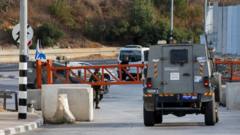
Israel's military announced Sunday it would close all land crossings with the West Bank on election day, October 27, 2026, as part of a broadening security operation that has already uprooted thousands of Palestinians in Hebron. Defense Minister Yisrael Katz approved the measures, which ban Palestinian workers from entering Israeli communities in Judea and Samaria and the Jordan Valley from Sunday through Monday, with a full crossing closure taking effect on Tuesday.
The restrictions come in the aftermath of a Palestinian armed attack in the West Bank that killed two Israeli soldiers. Israeli authorities said the security measures were a direct response to the threat posed by armed groups operating in the territory, though critics argue the sweeping closures impose collective costs on civilian workers and residents.
In Hebron, Israeli forces pushed deeper into the occupied city, expanding a lockdown that has displaced roughly 2,000 residents from neighborhoods including Dier Bacha and al-Jalda. Hebron's population stands at approximately 200,000, and Mayor Youssef al-Ja'bari has spoken out against the scale of the operation as it continues to affect daily life across the city.
Around 200 sites were searched during the operation, and at least ten Palestinians were arrested. Medical workers reported treating nine cases of gas suffocation, including six children, amid the military activity in residential areas. Shops, factories, and roads were reported to have been demolished during the incursion.
Defense Minister Katz stated that displaced residents "will not be allowed to return until we finish resolving all issues related to Hamas in Hebron," signaling that the military campaign is open-ended. The statement drew concern from human rights observers who warn that indefinite displacement of civilians risks violating international law.
The closures and military operation unfold just days before Israelis vote in what polls describe as a closely fought Knesset election. Surveys conducted ahead of Tuesday's vote showed former military chief Gadi Eisenkot's bloc ahead of Prime Minister Benjamin Netanyahu's, though neither side had secured a clear majority, according to Haaretz polling coverage.
For Palestinian day laborers who depend on crossing into Israel or Israeli-controlled industrial zones for their livelihoods, the closure represents a significant economic blow. Tens of thousands of workers hold permits to enter Israel from the West Bank, and even short disruptions can have outsized financial consequences for households with no alternative income.
The timing of the crackdown has drawn political scrutiny both domestically and internationally. Opposition figures and Palestinian officials have questioned whether the military actions and border restrictions are being calibrated to influence the electoral atmosphere rather than purely driven by security imperatives — a charge the government has denied.
Israel has periodically imposed closures around Jewish holidays and sensitive security periods, but combining a full crossing closure with an active urban military operation on election day marks an escalation of scope and intensity. The United Nations and several European governments are said to be monitoring the situation in Hebron closely.
With election day approaching and no clear political resolution in sight for the broader Israeli-Palestinian conflict, the events of this week underscore how security conditions in the West Bank continue to shape Israeli domestic politics — and how millions of Palestinians remain subject to measures they have no electoral voice in deciding.
Primary source: BBC World. Newzly rewrites and structures source reporting for clarity; verify critical details at the original.