J&K Lieutenant Governor says accused in old terror cases will be pursued
The Hindu reports that Jammu and Kashmir’s Lieutenant Governor said people accused in older terrorism cases will be pursued and that victims will receive justice. The available account does not list cases or a timetable.
In this piece
Jammu and Kashmir’s Lieutenant Governor said accused in older terror cases will be hunted down and victims will receive justice, The Hindu reported. The Google…
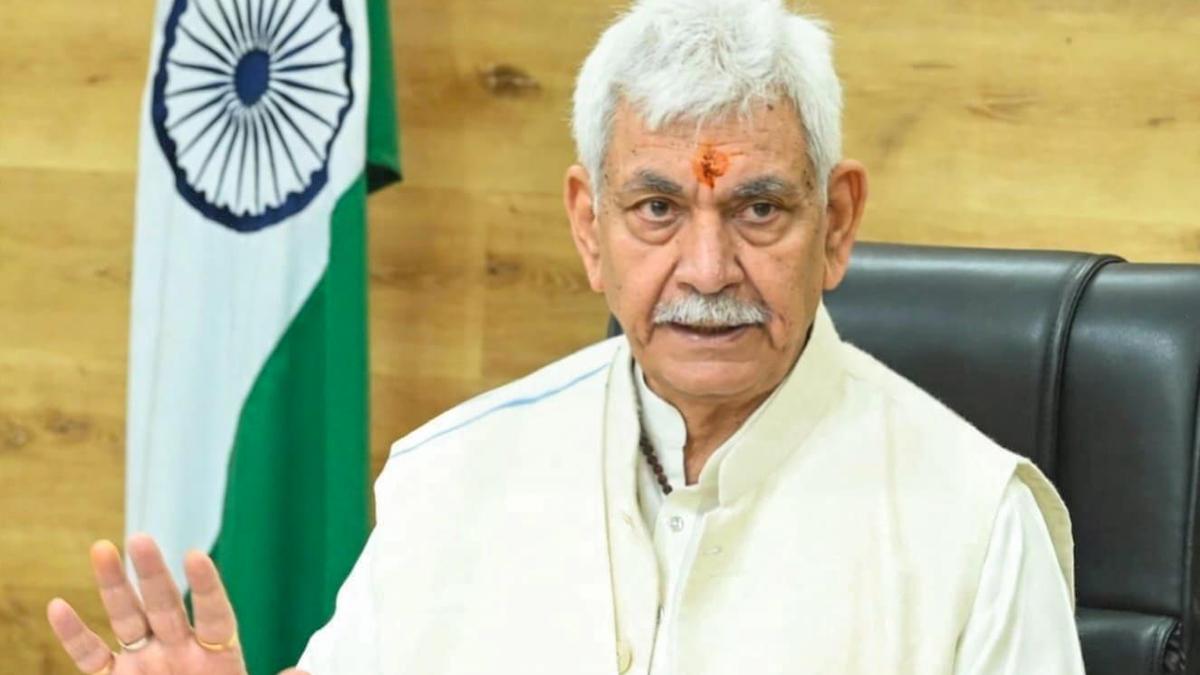
The Lieutenant Governor of Jammu and Kashmir has said that people accused in older terrorism cases will be tracked down and that victims will receive justice, The Hindu reported.
The remarks were circulated through Google News in its Jammu and Kashmir coverage, with The Hindu identified as the publisher. The headline-level account presents the pledge as a commitment to pursue unresolved accusations rather than as a description of a single arrest or verdict.
The feed item used for this report does not include the full text of The Hindu’s story. It does not record where the Lieutenant Governor spoke, whether the comments were part of a public event or an official briefing, or which cases were being discussed. Those details should be treated as unconfirmed here.
In the language of the headline, the administration’s position is twofold: accused persons linked to older terror cases will be “hunted down,” and victims are to receive justice. The phrasing is reported as the Lieutenant Governor’s, and this article does not add wording beyond that published formulation.
Jammu and Kashmir is a Union Territory whose security situation has long been shaped by militancy, policing, and court proceedings that can stretch across years. “Old” cases, as the headline describes them, are those that remain outstanding rather than newly opened matters. The source does not define how far back those cases reach or how many people they involve.
A pledge to pursue accused persons raises questions that only investigative agencies and courts can answer: whether suspects are at large, whether evidence can still be produced, and whether trials already under way will move. The Hindu item, as available in the feed, does not cite a new statute, a named task force, or a deadline.
For victims and families, the reported promise is about recognition as much as about procedure. The Lieutenant Governor’s formulation links the search for the accused with an outcome of justice for those harmed. The source does not describe compensation, a review of closed files, or a public list of victims.
The statement also sits inside the ordinary limits of criminal process. Being accused is not the same as being convicted, and any pursuit described in the headline would still have to meet the standards of investigation and trial. Nothing in the available report suggests those legal steps have been set aside.
Why the comments matter is the signal they send about unfinished cases. If authorities treat older terror files as active obligations, agencies may face pressure to account for suspects who have not been brought before a court. The source does not say that such a review has already produced results.
Because the underlying article text was not part of the material supplied here, readers should rely on The Hindu for the complete remarks, any officials who were present, and any examples the Lieutenant Governor may have given. This account is confined to what the headline and its attribution establish.
What happens next is not spelled out in the feed. The Hindu’s report frames an intention — that the accused will be pursued and that victims will receive justice — without publishing, in the text available here, a timetable or a measure of progress. Further reporting from the original story, or later official updates, would be needed to show whether that intention has been turned into specific action.
Primary source: Google News Jammu and Kashmir. Newzly rewrites and structures source reporting for clarity; verify critical details at the original.