Jharkhand Statehood Won Through Sacrifice, Not Charity, Asserts CM Hemant Soren
Chief Minister Hemant Soren asserted that Jharkhand’s statehood was forged through sacrifice rather than received as charity, vowing to defend the state's financial and mineral rights in ongoing disputes with the Centre.
In this piece
Jharkhand Chief Minister Hemant Soren stated that the state was earned through historic struggles rather than granted as alms by the Centre. Highlighting the…
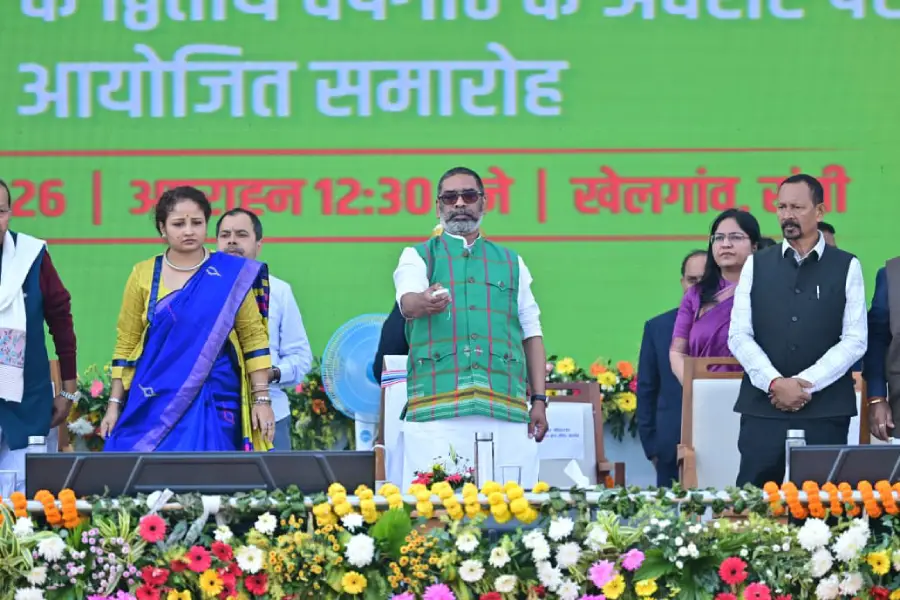
Jharkhand Chief Minister Hemant Soren has forcefully reiterated that the state was not established as an act of charity or begging, asserting that its creation was earned through generations of sustained resistance and public sacrifice. Speaking on the historical identity and constitutional standing of the region, Soren insisted that the dignity of the local populace cannot be compromised. He emphasized that the state was nurtured by the blood and sweat of its people rather than handed down as central benevolence.
The Chief Minister maintained that the people of Jharkhand hold a sovereign and historical entitlement to their land and resources. According to reports from The Indian Tribal, Soren underscored that any narrative framing the creation or welfare of the state as a concession from the Centre fundamentally misrepresents decades of tribal struggle. He framed the statehood achievement as the outcome of persistent collective determination against institutional neglect.
A central theme in Soren’s address was the stark paradox defining Jharkhand's economic landscape. He pointed out that while the state's vast mineral reserves and natural wealth have powered India's industrial growth and contributed significantly to broader economic prosperity, its indigenous and local residents have historically faced severe deprivation. Soren noted that local communities have long borne the ecological and social burdens of extraction without receiving commensurate returns.
The historical struggle for a separate Jharkhand spanned several decades before culminating in formal statehood in November 2000. Soren drew upon the enduring legacy of tribal icons and martyrs whose movements resisted external exploitation and fought for indigenous autonomy. By invoking this heritage, the Chief Minister sought to anchor his government's political ethos in the historic fight for tribal self-respect and administrative self-determination.
The Chief Minister’s remarks arrive amid ongoing friction between Ranchi and the central government over resource governance, fiscal federalism, and statutory dues. Soren and his ruling coalition have repeatedly called on New Delhi to clear long-standing mining royalties and compensate the state adequately for coal and mineral extraction. His assertions serve as a rhetorical counterweight against central fiscal constraints and regulatory policies that the state argues restrict its financial autonomy.
Beyond fiscal disputes, Soren underscored that the ultimate objective of statehood remains unfulfilled if tribal and marginalized populations continue to lag in essential social indicators. He argued that bridging persistent deficits in education, healthcare, and livelihood generation must be recognized as a constitutional obligation rather than administrative goodwill. The Chief Minister maintained that policies must actively center the rights and aspirations of local residents over external industrial priorities.
Politically, Soren’s vocal defense of state dignity reinforces the regional identity platform championed by the Jharkhand Mukti Morcha. By framing governance disputes around state pride and historical sacrifices, the leadership seeks to consolidate its traditional base among Adivasi and indigenous communities. The discourse also draws clear boundaries against political opponents who question the administration’s development record, turning regional autonomy into a central rallying point.
Soren also suggested that the state remains prepared to defend its constitutional rights through legal and political avenues whenever its legitimate entitlements are challenged. State officials have consistently argued that federal frameworks must respect the financial sovereignty of mineral-rich regions, particularly regarding revenue-sharing mechanisms. He stressed that Jharkhand would not hesitate to assert its jurisdictional voice in institutional forums across the country.
Moving forward, Soren’s assertive rhetoric is expected to shape the state government’s posture in bilateral engagements with the Union government. Observers note that the administration will likely continue pressing its demands for royalty clearances, enhanced welfare allocations, and local rights protections with renewed vigor. As political and policy debates intensify, the emphasis on statehood as an uncompromised right is set to remain a cornerstone of Jharkhand's broader developmental agenda.
Primary source: Google News Jharkhand. Newzly rewrites and structures source reporting for clarity; verify critical details at the original.