Judi Dench Recalls the Pressure of Playing Bond’s First Female M
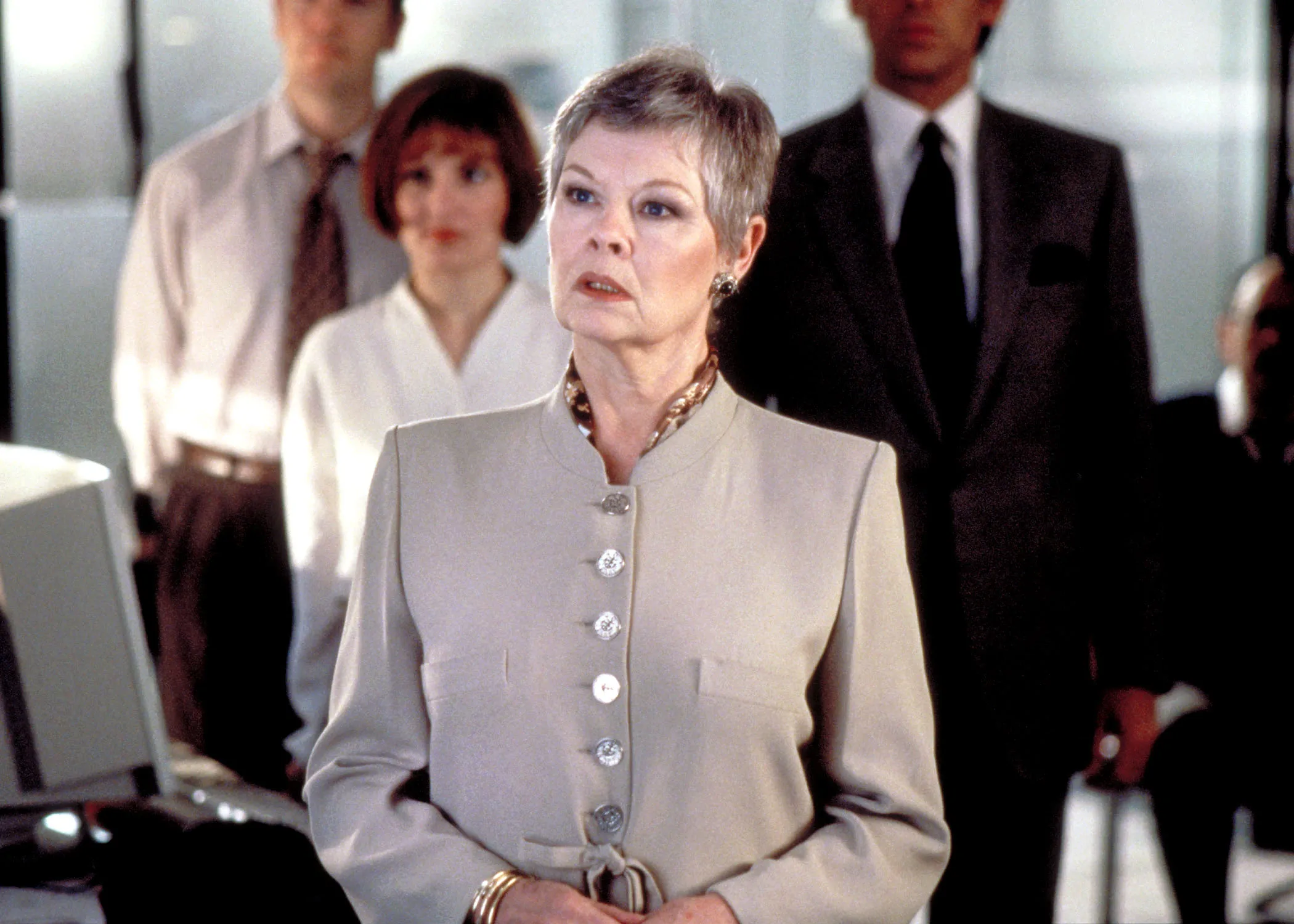
Judi Dench says she felt a huge responsibility as the first woman cast as M, the officer who directs James Bond, and that she put herself under heavy pressure in the role.
In this piece
Judi Dench has described the weight of becoming the first woman to play M in the James Bond films. She held the part across eight movies, from GoldenEye in 1995…
Judi Dench has spoken about the burden she felt as the first woman to play M, the commanding officer who oversees James Bond in the long-running film series. In remarks reported by Variety, she said she felt a “huge responsibility” in the part and that she put herself under a lot of pressure.
Dench played M in eight Bond films. The run began with GoldenEye in 1995 and ended with Skyfall in 2012, the film in which her character was killed. Variety also reported that she later made a small cameo in which the character was already dead. The account in circulation does not name that later appearance or describe the scene.
Before GoldenEye, M on screen had been a man. Casting Dench was therefore a break with the film series’ established image of who gives Bond his orders. The source material frames her comments as a reflection on that first, rather than as a broader history of the franchise or of the intelligence service M is meant to lead. In the films, M is Bond’s superior inside the British secret service; public descriptions of the movie role generally place that chief at MI6.
Her quoted language stays personal. She emphasizes responsibility and self-imposed pressure, not a list of production disputes or a verdict on later Bond films. Variety’s summary does not say when or where she made the remarks, and it does not include a longer transcript. Any reading beyond those two points — that the role felt weighty, and that she drove herself hard — would go past what the report actually supplies.
The length of the assignment helps explain why the pressure she describes would matter. Eight films is a long hold on a single character inside a series that reinvents its lead and its tone from decade to decade. M remained a constant through that stretch: the person who briefs Bond, judges his methods, and stands for the institution he serves. Dench’s version of that figure was written and performed as a woman in charge, which made the part conspicuous each time the opening titles gave way to a mission briefing.
Skyfall brought that tenure to a dramatic close by killing M. The death was not a quiet exit between installments; it was part of the story of that film. For audiences who had watched the character since the mid-1990s, it closed a chapter that had begun with GoldenEye. Dench’s later, brief posthumous appearance, as Variety describes it, kept the character in view after that death without restoring her to the desk.
The comments arrive as another reminder of how unusual the original casting still looks inside a franchise built on repetition. Bond films return to gadgets, set pieces, and a familiar chain of command. Changing the gender of the person at the top of that chain altered the picture even when the missions themselves followed familiar lines. Dench’s account, limited as the published summary is, treats that change as something she felt internally as duty and strain.
What the remarks do not do is map a next chapter. Variety’s report, as reflected in the available summary, does not announce a new Bond film, a memoir tied to these quotes, or a successor’s plans for M. It leaves the emphasis on Dench’s own memory of the job: first woman in the part, eight films, a death in Skyfall, a short appearance afterward, and a sense that the responsibility was large because she made it so.
Until a fuller interview text is public, the firm record is those details and her wording. She felt a huge responsibility. She put herself under a lot of pressure. The rest of the performance — how that pressure showed up on set, and how viewers received M from 1995 to 2012 — remains the part of the story the films themselves still carry.
Primary source: Variety. Newzly rewrites and structures source reporting for clarity; verify critical details at the original.