Kansas State Capitol Hosts Diwali Celebration for the First Time
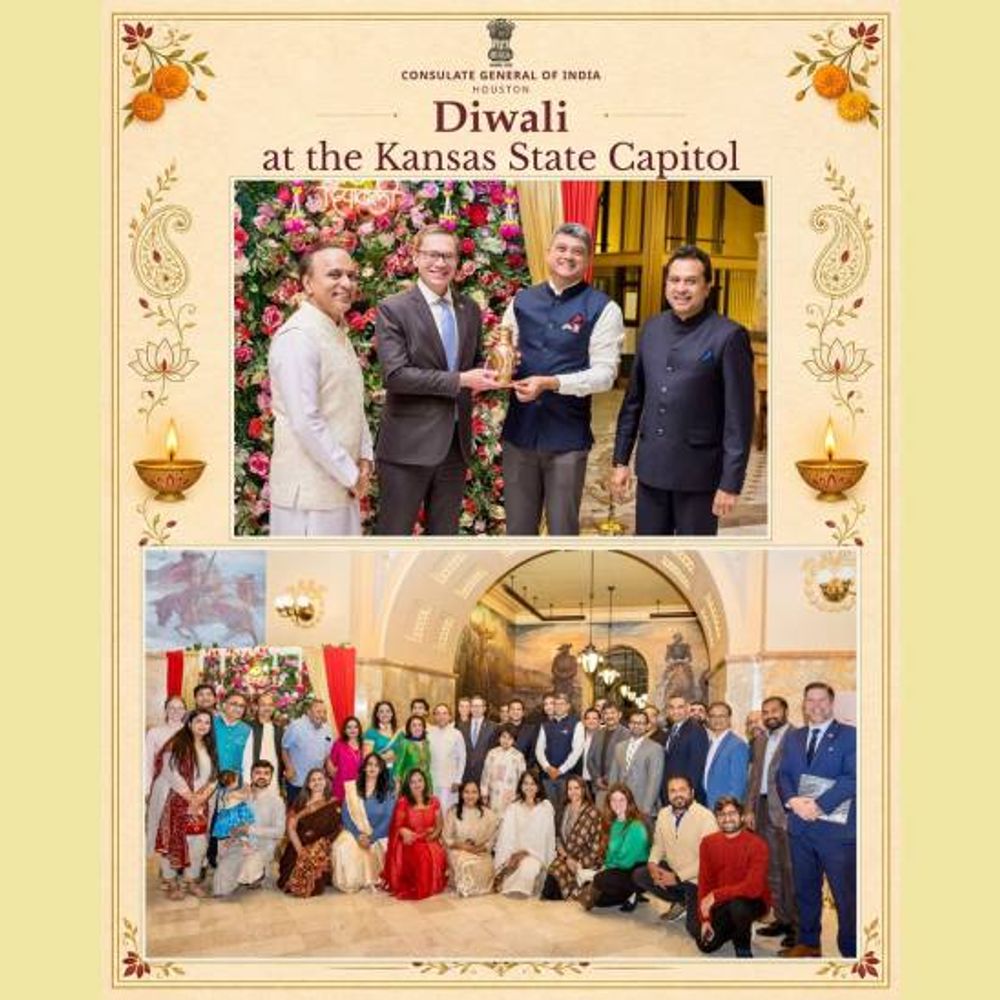
A Gujarati news report says the Kansas State Capitol marked Diwali for the first time, presenting the event as recognition of Indian culture and of the community’s contributions.
In this piece
Divya Bhaskar’s NRG desk reported a first-time Diwali celebration at the Kansas State Capitol, framed as an honor for Indian culture and community…
The Kansas State Capitol has hosted a Diwali celebration for the first time, Divya Bhaskar’s NRG desk reported, describing the occasion as an honor for Indian culture and for the contributions of the Indian community. The item ran in Gujarati and framed the gathering as civic recognition at the seat of Kansas state government.
Divya Bhaskar is a widely read Gujarati news organization, and its NRG section follows stories about non-resident Gujaratis and the broader Indian diaspora. The material circulated with this report consists of that headline. It does not name organizers, quote officials, or describe the program inside the building.
Diwali, widely known as the festival of lights, is one of the central holidays on the Hindu calendar and is also observed by many Jains, Sikhs, and other communities with roots in India. Households mark it by lighting lamps, exchanging sweets, and gathering with family. In countries with large Indian populations, temples and cultural groups often add public programs so neighbors can see the holiday up close.
A celebration at a state capitol sits in a different setting from a home or temple event. The Kansas State Capitol in Topeka is where lawmakers meet and where the state presents itself to residents and visitors. Placing Diwali there, as the report characterizes this occasion, treats the festival as part of public life in Kansas.
The headline stresses contribution as well as culture. Diaspora reporting often uses that language when a community’s work in business, medicine, education, and civic groups is being acknowledged alongside a religious or cultural festival. This story does not spell out which contributions were cited, so the precise tribute remains at the level of the headline’s claim.
Kansas has a smaller Indian American population than several coastal states, but families, students, and professionals have sustained associations and places of worship across the state for years. A first capitol observance fits a wider U.S. pattern in which immigrant communities ask public institutions to recognize major holidays. The Divya Bhaskar item does not compare Kansas with other statehouses or give an attendance figure.
For relatives following the news from India, an NRG report from a Midwestern capitol is a signal that festivals familiar at home are being marked in official American settings. For readers in Kansas, it is a culture story about who is visible in state civic space. Both readings stay within what the headline actually asserts: a first and an honor.
Details that would normally fill out a wire story — lamps or performances, a proclamation, the names of hosts — are absent from the headline as provided. Adding them would invent a program the source does not describe. The report’s date line and any photo caption were also not part of the text supplied with the headline.
What comes next is likewise open. Community groups and state offices sometimes return the following year and sometimes do not; this account does not say whether another Diwali at the capitol is planned. Anyone seeking a schedule, a guest list, or an official statement will need the full Divya Bhaskar story or a release from Kansas authorities.
Taken on its own terms, the news is straightforward. A Diwali celebration at the Kansas State Capitol was reported as a first, and it was presented as public recognition of Indian culture and of the Indian community’s contribution. Further specifics remain outside what this dispatch can confirm.
Primary source: Divya Bhaskar NRG. Newzly rewrites and structures source reporting for clarity; verify critical details at the original.