Kansas State Capitol Hosts First Diwali Celebration
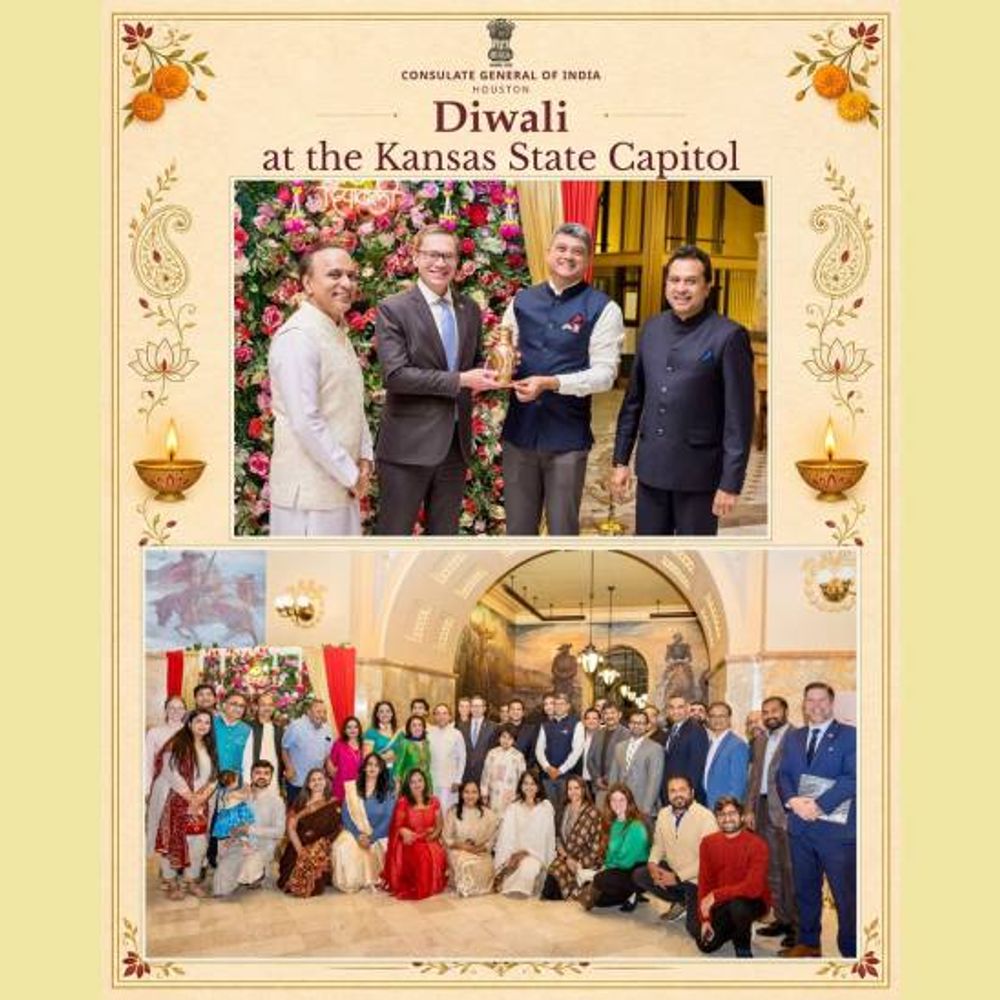
The Kansas State Capitol hosted its first Diwali celebration, according to Divya Bhaskar NRG, recognizing Indian culture and the Indian community’s contributions in a setting associated with state government.
In this piece
A Diwali celebration at the Kansas State Capitol marked a first for the venue, according to Divya Bhaskar NRG. The report’s headline described the occasion as…
The Kansas State Capitol hosted its first Diwali celebration, according to a headline published by Divya Bhaskar NRG. The report described the occasion as an acknowledgment of Indian culture and the contributions of the Indian community, bringing the festival into a prominent state government setting.
The milestone is specific to the Capitol: the supplied headline identifies this as the first celebration there, rather than the first Diwali observance anywhere in Kansas. That distinction places the news in the context of recognition at a particular public institution, without establishing a broader history of celebrations across the state.
Diwali, widely known as the festival of lights, is celebrated in several religious and cultural traditions, with customs varying among communities. Its themes commonly include light overcoming darkness and the renewal of hope. Those associations provide cultural context for the occasion, but the available source material does not describe which traditions were represented at the Capitol event.
The headline presents the celebration as honoring both culture and community contributions. Those are related but distinct aspects of the occasion: one concerns the visibility of a festival and its traditions, while the other concerns recognition of the people who sustain that cultural life. The supplied material does not specify which contributions were highlighted or whether any individuals received recognition.
Holding a cultural celebration at a state capitol gives it a different setting from a private or community gathering. In this case, the reported significance lies in the festival’s presence within a government venue. That alone does not establish an official proclamation, a legislative action or a change in state policy, none of which is identified in the available material.
The source provided for this article contains a headline but no accompanying article text or summary. It does not establish the event’s date, identify its organizers or name participating officials and community representatives. Attendance figures, speeches and details of the program therefore cannot be independently described from the supplied information.
Those limits leave the scale and format of the celebration unclear, even as the headline establishes the central reported milestone. It would be premature to characterize the gathering as a statewide initiative or a recurring Capitol program. The narrower account is that a first Diwali celebration took place at the venue and was framed as recognition of Indian culture and community contributions.
Whether the celebration will return to the Kansas State Capitol is not stated in the supplied material. Further reporting from the source or information from organizers would be needed to establish future plans. For now, the reported first marks an occasion of cultural recognition, rather than a confirmed annual tradition.
Primary source: Divya Bhaskar NRG. Newzly rewrites and structures source reporting for clarity; verify critical details at the original.