Karnataka High Court Directs State to Clarify Excise Licence Transfer Rules
The Karnataka High Court has called on the state government to clarify Rule 17A of the excise licensing rules, warning that administrative ambiguities and routine referrals to civil courts harm businesses and state revenue.
In this piece
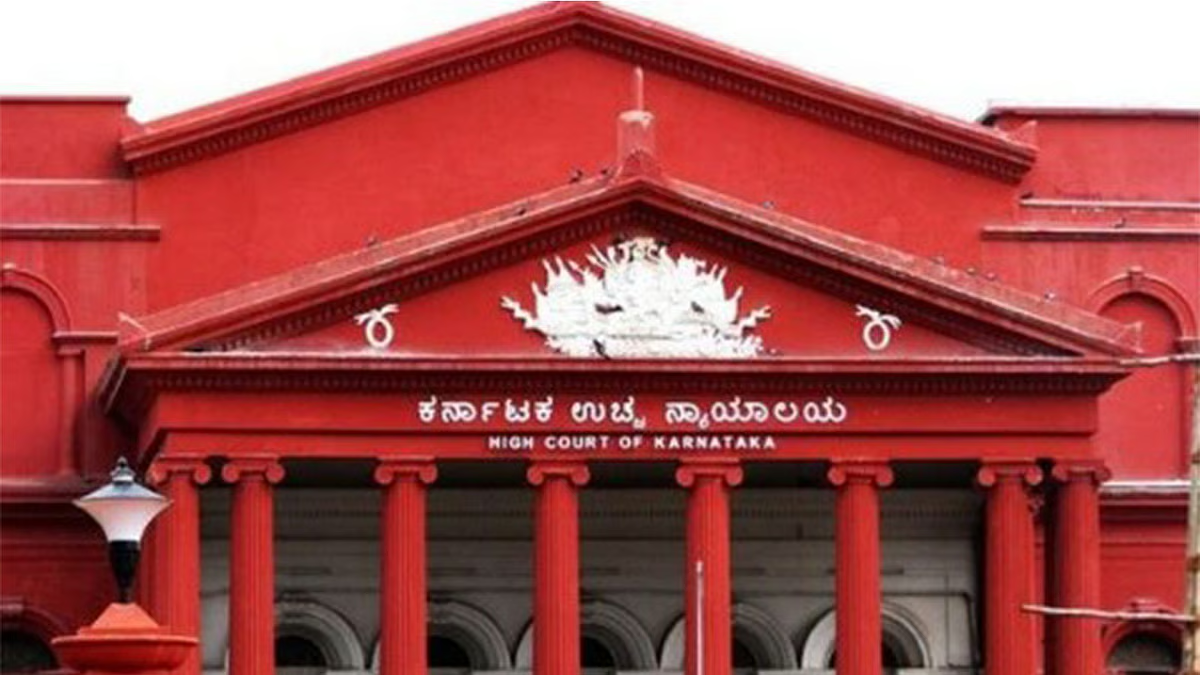
The Karnataka High Court has directed the state government to streamline norms for transferring liquor licences to legal heirs following a licensee's death.…
The Karnataka High Court has directed the state government to review and clarify the legal framework governing the transfer of excise licences to legal heirs following the death of a licensee. Justice Lalitha Kanneganti observed that existing statutory gaps under Rule 17A of the Karnataka Excise Licences (General Conditions) Rules, 1967, have generated widespread ambiguity and unnecessary disputes. The court stressed that clear guidelines are needed to prevent prolonged legal battles and administrative gridlock across the state.
In her ruling, Justice Kanneganti noted that excise authorities routinely reject licence transfer applications whenever an objection is filed by third parties or distant relatives. Officials have developed a widespread administrative practice of treating every competing claim as a complex title dispute that requires a formal declaration or succession certificate from a civil court. The bench pointed out that this mechanical approach creates unjustified hurdles for rightful statutory heirs seeking to continue lawful family enterprises.
The controversy centers on Rule 17A, which allows the transfer of a liquor licence to a deceased person’s legal heir but omits precise definitions of who qualifies under conflicting scenarios. The statutory provision currently lacks explicit mechanisms to distinguish between legitimate intestate succession and rival claims founded on contested wills. Without statutory clarity, excise authorities frequently struggle to assess the evidentiary weight of affidavits, consent letters, and testamentary claims submitted during transfer proceedings.
The High Court emphasized that excise commissioners and departmental officers cannot arbitrarily refuse licence transfers or insist on civil court decrees as a matter of routine. Justice Kanneganti observed that when primary statutory heirs recognized under succession laws offer unanimous consent, parental or collateral relatives cannot stall the administrative process merely by brandishing an unprobated or disputed will. The bench underscored that administrative bodies hold a responsibility to examine genuine family consents before delegating the matter to the judiciary.
The bench highlighted that subjecting licence holders to multi-year civil suits carries severe economic repercussions for both businesses and the state exchequer. While family members remain entangled in adversarial litigation before civil courts, operational excise licences remain vulnerable to non-renewal, suspension, or administrative forfeiture. Consequently, viable commercial establishments face abrupt shutdowns, leading to job losses and an avoidable reduction in state excise revenue.
The court also highlighted regulatory concerns arising from recent policy shifts that channel lapsed or forfeited liquor licences into public auctions. Justice Kanneganti pointed out that prolonged succession litigation creates an acute risk of permanently extinguishing a family business before courts can settle the dispute. Once a licence lapses or is reallocated through public bidding, the underlying enterprise is destroyed, leaving the ultimate winner of the civil suit without an effective legal remedy.
To address these administrative bottlenecks, the High Court urged the state administration to invoke its rule-making powers under Section 71 of the Karnataka Excise Act. The bench outlined several key areas requiring legislative or administrative intervention, including unambiguous criteria for determining primary legal heirs. The court also called for explicit norms governing how disputed wills should be handled and demanded precise parameters for identifying the rare instances where civil court adjudication is genuinely indispensable.
By establishing transparent procedural safeguards, the court noted that the state can safeguard revenue collection while protecting families from protracted and exhausting litigation. The ruling places the responsibility on the Karnataka government to modernize excise regulations and reduce avoidable burdens on the state judicial system. Legal observers expect the excise department to formulate detailed circulars or propose statutory amendments to align licensing practices with the court's directives.
Primary source: Google News Karnataka. Newzly rewrites and structures source reporting for clarity; verify critical details at the original.