world·Tamil Nadu·Madurai District
Karthigai Deepam Lit at Traditional Spot Atop Thirupparankundram Amid Pillar Row
Authorities lit the traditional Karthigai Deepam lamp atop Thirupparankundram hill amid heavy security, following intense court arguments and political protests regarding a stone pillar identified as a British-era survey marker.
In this piece
The ceremonial Karthigai Deepam lamp was lit at its customary location on Thirupparankundram hill in Tamil Nadu following intense judicial scrutiny and heavy…
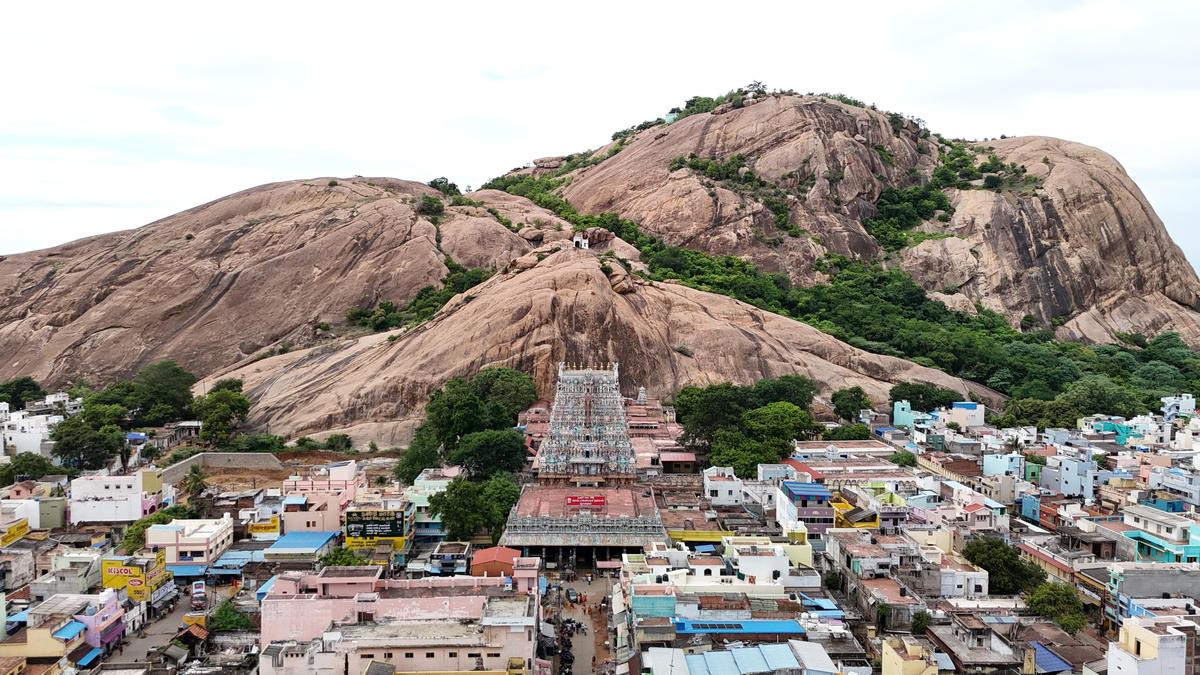
The sacred Karthigai Deepam lamp was lit at its traditional hilltop location at Thirupparankundram on Tuesday evening under extensive security arrangements. The ceremonial lighting proceeded after days of escalating administrative disputes, judicial hearings at the Madras High Court, and political friction across Tamil Nadu.
Heightened security measures led to widespread preventive police actions aimed at averting communal disturbances near the hill. Police stopped Union Minister of State L. Murugan from traveling toward Thirupparankundram, prompting him to condemn the administrative curbs as an assault on democratic rights. Simultaneously, Tamil Nadu Bharatiya Janata Party leader Nainar Nagenthran was taken into custody in Tirunelveli while traveling toward the temple site.
At the center of the standoff is a dispute over the religious status of a hilltop stone structure referred to by petitioners as a deepathoon, or ceremonial lamp pillar. Hindu organizations and temple petitioners approached the courts seeking permission to light the Karthigai Deepam lamp directly at this stone pillar, which stands near the Hazrat Sultan Sikandar Badusha Auliya Dargah near the hill summit.
The Tamil Nadu government and state archaeology officials firmly opposed lighting the lamp at the stone pillar, presenting findings that identified the structure as a British-era triangulation survey marker. State officials emphasized that the pillar was erected during colonial topographical mapping exercises rather than for religious rites or temple ceremonies. The administration argued that repurposing a colonial surveying installation into a site of active worship would set a troubling precedent across the state.
The issue sparked rapid legal maneuvering before the Madras High Court, where a single-judge bench initially criticized the administration for imposing restrictive measures and ordered that the lamp be lit at the pillar. However, the legal proceedings quickly shifted as the state government challenged the directives before higher judicial benches. The courts weighed religious freedom arguments under Article 25 against the district administration's assessments of public peace and established customary practice.
State authorities and temple administration representatives maintained that historical records designate an established customary spot on the hill, known as the Deepa Mandapam near the Uchipillaiyar temple, for lighting the annual lamp. They reiterated that departing from century-old customs risked generating communal friction on a shared hill revered by diverse communities. The government deployed substantial police contingents across Madurai and surrounding checkpoints to restrict unauthorized gatherings.
The controversy quickly reverberated across the political landscape of Tamil Nadu, drawing sharp rebukes from opposition parties against the ruling state administration. Opposition leaders alleged that the heavy-handed police restrictions were intended to curtail the rights of Hindu devotees participating in an ancient festival. In response, ruling officials maintained that police protocols were neutral, evidence-based measures designed to prevent law-and-order disruptions and uphold interfaith harmony.
Thirupparankundram hill has long held cultural significance as one of the six sacred abodes of Lord Murugan alongside the centuries-old Sufi dargah near the summit. Local civic observers and historians noted that preserving this delicate coexistence requires strict adherence to documented temple customs and verified archaeological evidence. Legal experts also noted that defining sacred landmarks on shared public hilltops remains a sensitive test of administrative neutrality.
With the ceremonial lamp successfully lit at the designated traditional site, local authorities indicated that security cordons would remain active until festival crowds disperse. Further hearings and comprehensive reviews of the archaeological documentation concerning the summit marker are expected in court in the coming weeks. For now, the successful completion of the ritual brought relief to local residents and pilgrims after days of acute tension.
Primary source: Google News India. Newzly rewrites and structures source reporting for clarity; verify critical details at the original.