Kerala Probes Discrepancies in State Air Quality Data Following Public Scrutiny
The Kerala government has appointed an expert panel to examine sharp discrepancies between official pollution readings and independent sensors, as differing metrics leave citizens and authorities questioning the state's actual air quality.
In this piece
Kerala has initiated an investigation into significant differences between official air pollution data and measurements from third-party sensor networks. While…
The Kerala government has launched an inquiry into widespread discrepancies between official air quality measurements and independent environmental monitoring platforms. Following mounting public confusion and concern, authorities have formed a specialized expert committee to determine why state-run monitors reflect markedly cleaner conditions than third-party tracking networks.
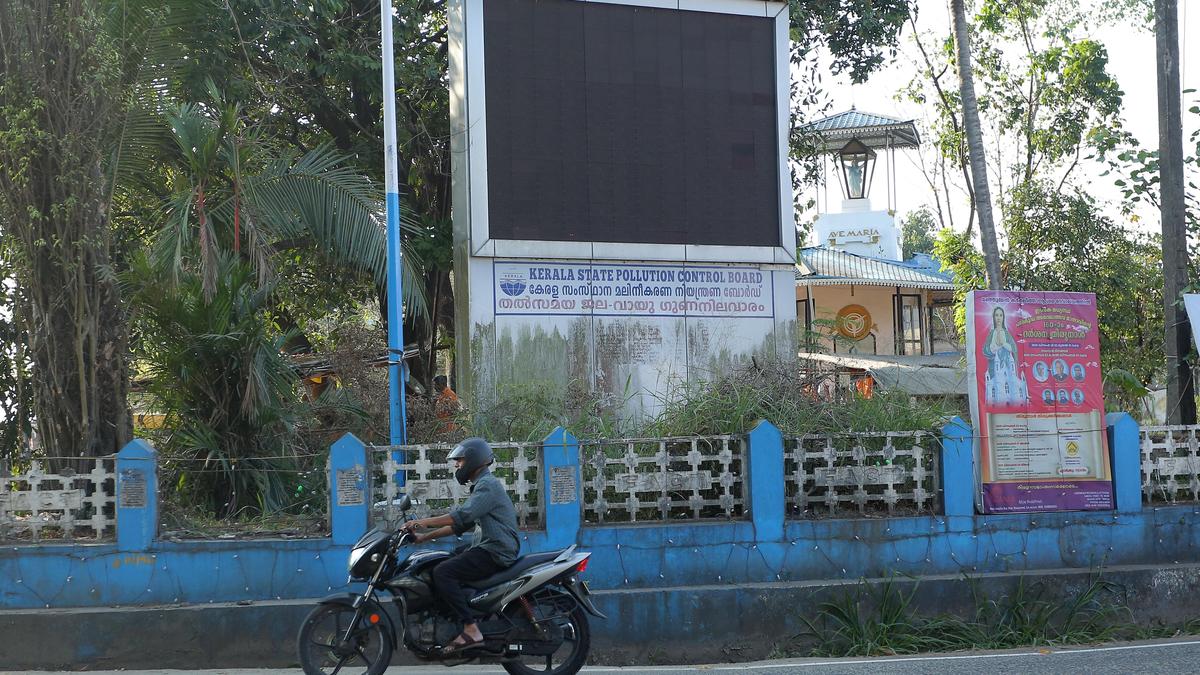
Official monitoring stations operated by the Kerala State Pollution Control Board, functioning in accordance with Central Pollution Control Board guidelines, have consistently reported air quality in acceptable ranges. According to state figures, pollution levels across most parts of Kerala remain within the good, satisfactory, or moderate categories, showing no immediate signs of acute atmospheric degradation.
In contrast, several alternative platforms, commercial low-cost sensor arrays, and satellite-derived assessment systems present a far more troubling outlook. These independent metrics frequently categorize ambient air in rapidly urbanizing districts, particularly major hubs such as Kochi and Thiruvananthapuram, as falling into the poor category.
To resolve the conflicting data streams, the state administration constituted an expert technical committee tasked with evaluating sensor accuracy and methodology. The panel includes Suresh Ramasubramanya Iyer, a Senior Fellow and Area Convenor at The Energy and Resources Institute in New Delhi, and Dr. George K. Varghese, a professor at the National Institute of Technology Calicut, alongside the Chairperson of the Kerala State Pollution Control Board.
Technical observers note that variations often arise from differing calibration standards, sensor placements, and measurement technologies. Official regulatory stations rely on standardized, continuous ambient air quality monitoring equipment that follows strict statutory protocols, whereas consumer-grade sensors and remote sensing algorithms can be influenced by local microclimates, relative humidity, or uncalibrated particulate estimates.
The divergence in pollution readings has created significant operational challenges for both environmental planners and residents seeking reliable health advisories. When independent apps signal hazardous or poor air while official dashboards announce satisfactory conditions, public trust in regulatory oversight weakens, complicating community responses during pollution spikes.
Environmental researchers emphasize that Kerala's dense linear settlement patterns and rising vehicular congestion make accurate environmental surveillance critical. Urban centers like Kochi face ongoing industrial emissions, transport-related dust, and periodic waste-management challenges that demand reliable baseline measurements to formulate effective municipal interventions.
Beyond diagnosing the fundamental causes behind the data mismatch between official and non-governmental trackers, the expert committee has been given an actionable policy remit. The members are charged with recommending comprehensive mitigation strategies to protect vulnerable urban populations and strengthen the state's environmental response framework.
The findings of the panel are expected to guide future investments in regional monitoring infrastructure and determine whether regulatory networks need expansion. State officials hope the unified scientific evaluation will resolve contradictory signals, establish transparent environmental reporting, and provide a verified scientific foundation for future air quality policy across Kerala.
Primary source: Google News Kerala. Newzly rewrites and structures source reporting for clarity; verify critical details at the original.