King tides and storms bring continued flooding along Pacific coast
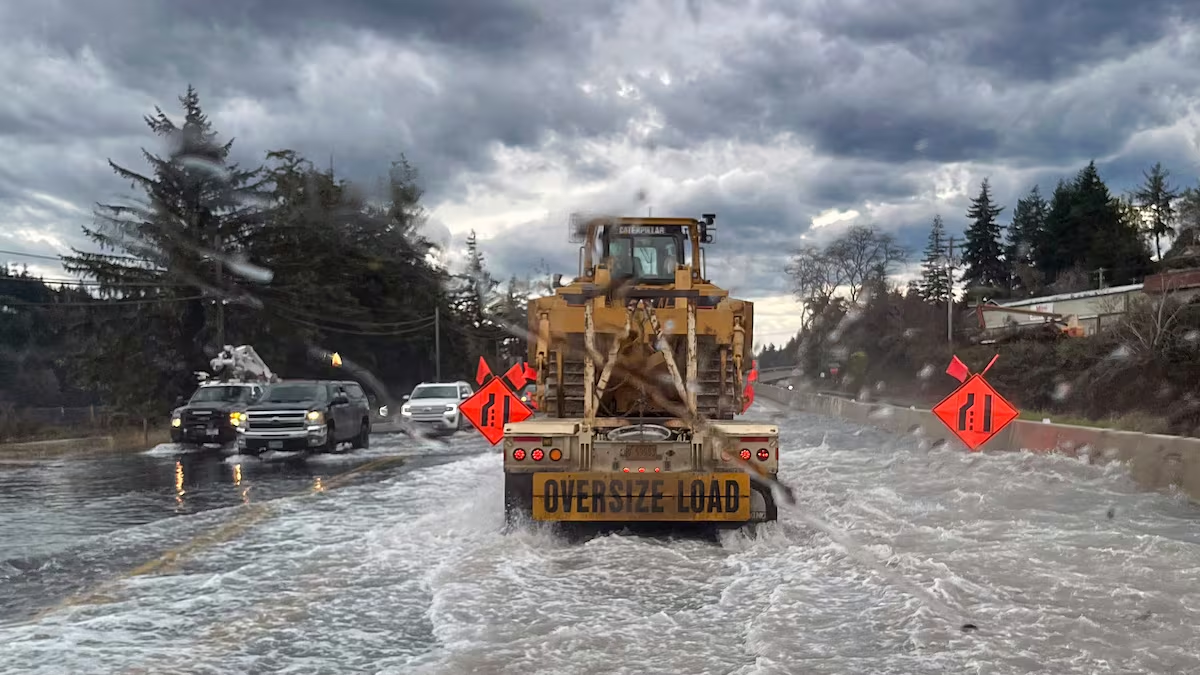
King tides and storms are continuing to cause flooding along the Pacific coast, Oregon Public Broadcasting reports, highlighting the risks when unusually high tides coincide with unsettled weather.
In this piece
Flooding continues along the Pacific coast as king tides and storms combine, according to Oregon Public Broadcasting. The available report excerpt does not…
King tides and storms are continuing to cause flooding along the Pacific coast, according to Oregon Public Broadcasting. The report identifies unusually high tides and storm conditions as contributing factors, but the supplied excerpt does not specify which communities are affected or how extensive the flooding has become.
The combination matters because coastal water levels reflect more than the tide alone. A high tide establishes the starting level from which storm-driven water and waves can reach farther inland, potentially exposing places that remain dry during more ordinary conditions. The severity depends on how those influences overlap at a particular location.
King tide is a commonly used term for exceptionally high tides associated with the alignment and relative positions of the Earth, moon and sun. These tides are predictable astronomical events rather than storms themselves. Their arrival does not automatically mean damaging flooding will occur, but it can reduce the margin between normal coastal water levels and nearby land.
Storms can add a separate set of pressures through wind, waves and rainfall. Depending on local conditions, those effects can increase coastal flooding or make it harder for water to drain away. The available OPB excerpt does not establish which of those processes is most important in the flooding it describes, or whether their contributions vary along the coast.
That distinction is important when assessing a report covering a broad coastline. Conditions at one beach, bay or waterfront do not necessarily describe conditions elsewhere, even during the same high-tide cycle. Local shoreline shape, elevation and exposure can influence where water reaches, so the regional headline alone cannot establish the risk at any individual property or route.
The supplied material contains no figures for damage, evacuations or transportation disruptions. It also provides no named locations, official warnings or accounts from residents. Those omissions limit what can be concluded about the consequences: the report supports that flooding is continuing, but not a more detailed assessment of its scale or impact.
For coastal communities, the underlying concern is the timing of high water relative to storm conditions. A predictable tide can coincide with weather whose strength, track and effects are less certain. Understanding that overlap requires location-specific forecasts and observations rather than assuming that all parts of the Pacific coast face the same conditions at the same time.
What happens next will depend on subsequent tide cycles and how the storms develop. The supplied excerpt offers no timetable for improvement or indication of whether flooding is expected to worsen. OPB's report points to a continuing coastal flooding situation, while the local extent, consequences and outlook remain unspecified in the material available.
Primary source: Google News Oregon. Newzly rewrites and structures source reporting for clarity; verify critical details at the original.