world·Dadra and Nagar Haveli and Daman and Diu
Kolkata hosts workshop on strengthening sub-national SDG monitoring
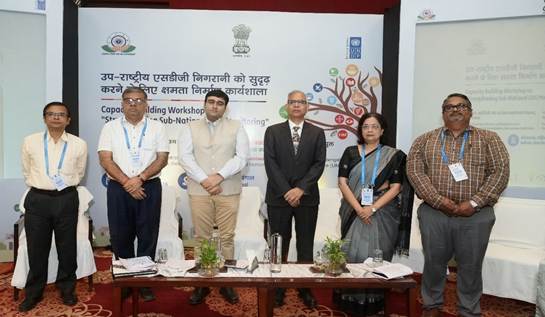
A one-day capacity-building workshop in Kolkata, West Bengal, focused on strengthening sub-national monitoring of the Sustainable Development Goals, highlighting the role of local data in tracking development progress.
In this piece
A one-day workshop in Kolkata focused on building capacity to monitor the Sustainable Development Goals below the national level, according to a Press…
A one-day capacity-building workshop on strengthening sub-national monitoring of the Sustainable Development Goals was organised in Kolkata, West Bengal, according to a Press Information Bureau headline. The event focused on monitoring development progress below the national level, where more detailed information can help make differences between areas visible.
The supplied material identifies the workshop’s theme and location but does not include the full government release. It provides no event date, names of organisers or participants, session details or announced outcomes, limiting what can be confirmed about the programme beyond its stated purpose.
The Sustainable Development Goals, commonly known as the SDGs, provide a framework for assessing progress across interconnected economic, social and environmental priorities. Monitoring that progress requires indicators that can show changes over time, rather than relying only on broad statements of policy intent or individual examples of improvement.
Sub-national monitoring brings that assessment closer to the places where development policies are implemented. National figures can describe an overall trend, but they do not necessarily show whether progress is evenly distributed across states, districts or other administrative areas. More detailed measurement can help identify those differences without assuming that every locality faces the same conditions.
Capacity building in this field concerns the ability to produce, understand and use development data. Relevant challenges can include maintaining consistent definitions, assessing the availability of information and ensuring that comparisons are meaningful. The supplied headline does not establish which of these issues were covered during the Kolkata workshop or whether any particular methods were demonstrated.
The distinction between measuring activity and measuring results is important for development monitoring. Delivering a programme and demonstrating a change in people’s circumstances are related but different tasks, and each requires appropriate evidence. A monitoring framework can support that distinction, although it cannot by itself establish why a particular outcome occurred.
Reliable local information can also help inform planning by showing where evidence is strong and where gaps remain. Missing or outdated data can make an assessment incomplete, while differences in measurement can complicate comparisons between areas. These are broader considerations relevant to the workshop’s theme, not findings attributed to its participants.
The immediate confirmed development is the organisation of the one-day workshop in Kolkata. Further details from the full release would be needed to establish its institutional scope, the practical guidance offered and any agreed next steps. Whether the event leads to changes in reporting practices, additional training or stronger monitoring arrangements cannot be determined from the supplied material.
Primary source: Google News Dadra and Nagar Haveli and Daman and Diu. Newzly rewrites and structures source reporting for clarity; verify critical details at the original.