Ladakh Records 25% Rise in Black-Necked Crane Population
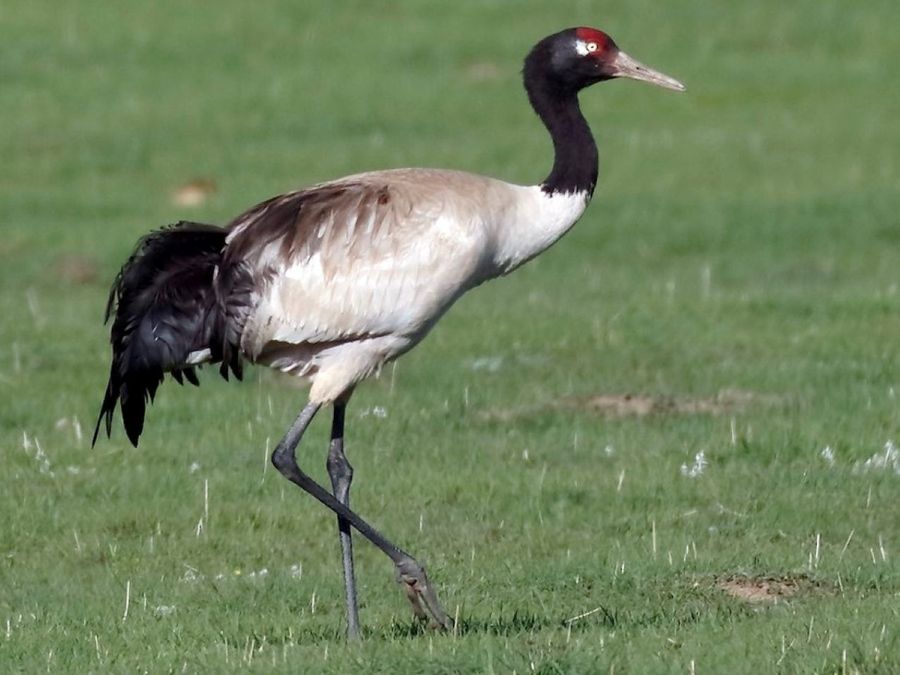
Ladakh's black-necked crane population reached 108 in 2026, marking a 25 percent annual surge driven by targeted on-ground protection, community stewardship, and successful breeding across high-altitude wetlands.
In this piece
The black-necked crane population in Ladakh rose nearly 25 percent to 108 birds in 2026, up from 87 recorded the previous year. Wildlife surveys across key…
The population of the black-necked crane, the official state bird of Ladakh, has recorded a significant rise across its high-altitude breeding grounds. According to survey findings released by wildlife authorities, the regional count reached 108 birds in 2026, representing an increase of nearly 25 percent compared to the 87 individuals documented during the 2025 census.
The demographic breakdown from the latest breeding-season assessment highlights notable reproductive gains across the cold desert landscape. The 2026 tally comprises 86 adult birds and 22 juveniles, improving upon the 70 adults and 17 juveniles recorded during the previous year's survey.
The upward trajectory reflects a sustained multi-year recovery for the vulnerable species across Ladakh, continuing a steady growth pattern observed since 2021. Wildlife officials noted that consistent tracking during consecutive nesting cycles has provided clearer visibility into the distribution and fledging success of the rare wetland birds.
The highest concentrations of the cranes were documented across the Changthang plateau, which hosts some of India's most ecologically sensitive alpine wetlands. Chushul emerged as the top site with 16 recorded birds, closely followed by Tsokar and Kargyam with 15 cranes each, while Korzok recorded 14 individuals.
Together, these four primary wetland habitats account for more than 56 percent of the total black-necked crane population counted in the union territory. The concentration underscores the critical ecological importance of the Changthang basin's shallow freshwater marshes and brackish water bodies, which provide vital nesting platforms and foraging resources.
Wildlife authorities and local administration officials attributed the encouraging population growth to intensified community engagement across pastoral settlements. Targeted initiatives, including youth-centered conservation programs and the regional Black-necked Crane Festival, have helped foster local stewardship among nomadic communities sharing these high plateaus.
Crucial on-ground protection measures have also mitigated severe historical threats to breeding pairs and fledglings. The Environment Protection Force, comprised of inducted ex-servicemen, has maintained active field patrols around fragile nesting pockets to safeguard eggs and chicks from attacks by free-ranging dogs.
The black-necked crane is revered in regional culture and serves as a vital bioindicator of alpine wetland health. Because the species depends on undisturbed mudflats, sedge meadows, and shallow lake margins during its brief summer breeding window, population shifts directly mirror broader ecological equilibrium in the fragile Trans-Himalayan biome.
Despite the positive census numbers, conservationists emphasize that high-altitude wetland habitats remain vulnerable to climatic shifts, human encroachment, and shifting water tables. Unseasonal temperature variations and altered glacial melt patterns can quickly alter marsh water depths, leaving ground nests exposed to predators or unexpected flooding.
Wildlife managers and conservation partners plan to continue systematic breeding-season tracking alongside expanded habitat management protocols across the Changthang range. Sustained community vigilance and structured wetland monitoring will remain central to safeguarding key breeding corridors as Ladakh balances local development with fragile ecological preservation.
Primary source: Google News Ladakh. Newzly rewrites and structures source reporting for clarity; verify critical details at the original.