Leclerc Edges Verstappen to Set Austin Practice Pace
Ferrari's Charles Leclerc topped the opening practice session for the United States Grand Prix, finishing 0.084 seconds clear of Red Bull's Max Verstappen in Austin.
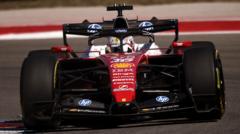
Ferrari driver Charles Leclerc set the standard during opening practice for the United States Grand Prix at the Circuit of the Americas, outpacing Red Bull rival Max Verstappen by just 0.084 seconds. Leclerc produced a benchmark lap time of 1:36.052 around the 5.513-kilometer Austin venue, positioning the Italian outfit strongly in the early running. Verstappen slotted into second place, while McLaren driver Lando Norris followed closely to secure the third quickest time.
The session marked the commencement of a pivotal race weekend in Austin, with teams immediately tasked with evaluating aerodynamic updates and mechanical setup balances. With limited track time available before competitive sessions get underway, teams placed a heavy emphasis on gathering consistent lap data across varying tire compounds. Leclerc demonstrated immediate confidence behind the wheel, posting purple sector times through the demanding uphill first sector.
Verstappen mounted a late challenge during soft-tire qualifying simulations, pushing his Red Bull machine to within a tenth of Leclerc's benchmark. Despite contending with slight balance variations through the circuit's bumpy sections, the reigning world champion demonstrated competitive long-run performance. His immediate proximity to Leclerc indicated that Red Bull had arrived in Texas prepared to fight for top honors across the sprint weekend.
Behind the leading pair, Norris confirmed McLaren's ongoing form by securing third place, finishing within touching distance of the top benchmark. The British driver methodically worked through setup checks, optimizing downforce levels to counter the undulating nature of the Circuit of the Americas. Norris’s strong opening run reinforced expectations that McLaren would feature centrally in the podium battle as the weekend progresses.
Elsewhere along the pit lane, teams balanced performance testing against broader engineering assessments. Carlos Sainz, operating in a different technical capacity during the session, carried out extensive data collection and aerodynamic evaluation programs rather than targeting pure lap times. The differing run plans highlighted the contrasting strategic priorities across garages as engineers sought to correlate wind-tunnel simulations with live track feedback.
Austin's Circuit of the Americas presents one of the most physically demanding tests of the Formula 1 season, combining extreme elevation changes with high-speed flowing bends. Managing tire degradation remains a primary challenge, particularly through the long, sweeping triple-apex right-hander in the third sector. Leclerc and Ferrari appeared to find an early sweet spot, maintaining tire compliance without sacrificing traction through the circuit's tighter, low-speed hairpins.
The narrow margin separating the top three drivers underscored how tight the competitive order remains among the sport's frontrunning teams. In modern Formula 1, small fractional gains in car balance and corner exit speeds frequently dictate grid positions and strategic flexibility. With Red Bull, Ferrari, and McLaren separated by tenths, precision across engineering decisions will carry heightened significance throughout the event.
Track conditions are expected to evolve significantly as rubber continues to be laid down across subsequent sessions. Temperatures and wind gusts at the Austin venue can dramatically alter aerodynamic stability, especially through the open, exposed sections of the back straight. Teams will spend the coming hours analyzing telemetry readouts to refine suspension damping and wing angles ahead of the decisive sessions.
With Leclerc having drawn first blood on Friday morning, the focus shifts toward the upcoming competitive outings at the United States Grand Prix. While opening practice provides an instructive preliminary glimpse, qualifying and race trim will ultimately decide whether Ferrari can convert its early speed into sustained victory. Verstappen and Norris will be eager to counter as setup adjustments are finalized for the sessions ahead.
Primary source: BBC Sport. Newzly rewrites and structures source reporting for clarity; verify critical details at the original.