Liquid Network Hackers Transfer 598.5 Bitcoin After Months of Dormancy
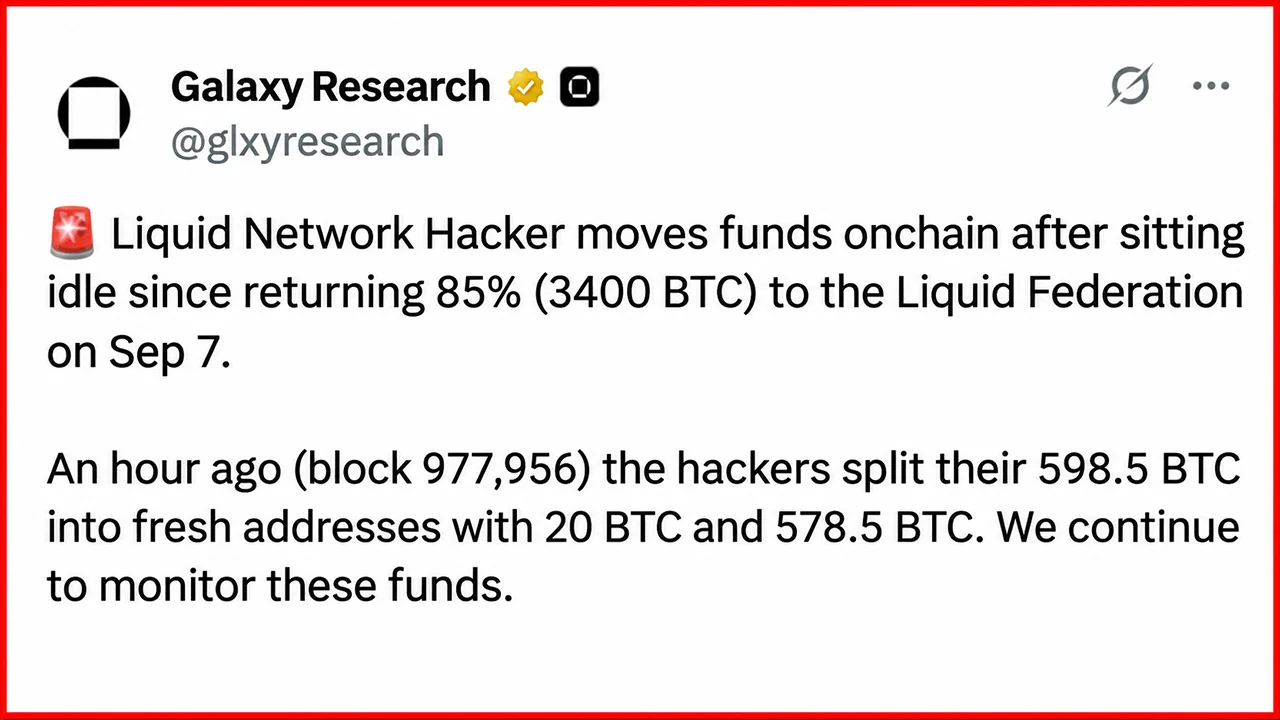
Perpetrators behind the $320 million Liquid Network exploit have transferred 598.5 Bitcoin worth $35.5 million into two new wallets, breaking nearly three months of on-chain dormancy following the September security breach.
In this piece
Hackers behind the September Liquid Network exploit have moved 598.5 Bitcoin valued at $35.5 million into two fresh addresses after nearly three months of…
Perpetrators behind the major Liquid Network exploit have transferred 598.5 Bitcoin valued at approximately $35.5 million into two new unhosted addresses. The unexpected on-chain transaction marks the first significant movement of these stolen funds following nearly three months of complete inactivity. Security monitors and market watchers quickly identified the transfer as the funds departed the dormant addresses associated with the original breach.
According to reporting from Bitcoin.com News, the cryptocurrency was split across two newly generated destinations in a coordinated transfer. The relocation of the digital assets comes in the aftermath of the massive September security breach that drained roughly $320 million from the network. While the transferred sum represents only a portion of the total loot, the activity signals renewed effort by the hackers to manipulate the proceeds.
Prolonged dormancy is a frequent pattern observed among high-profile cryptocurrency exploiters. Cybercriminals who siphon millions in digital assets routinely allow stolen reserves to sit untouched for weeks or months to minimize immediate exposure. By waiting out the peak period of forensic attention, threat actors often hope automated surveillance and tracking intensity will cool before initiating fund movements.
Because public blockchain ledgers record every transaction transparently, forensic analysts and automated tracking tools flag movements from tagged illicit wallets almost instantaneously. When illicit assets suddenly shift into fresh addresses, security researchers monitor whether the balances will be routed toward decentralized mixers, cross-chain bridges, or non-compliant trading platforms. Every subsequent transaction generates a permanent digital trail that investigators can follow.
Liquidating stolen Bitcoin presents severe logistical hurdles for malicious actors trying to convert digital tokens into spendable fiat currency. Regulated cryptocurrency exchanges around the world enforce stringent know-your-customer standards and anti-money laundering compliance checks. Any deposit originating directly or indirectly from tagged theft addresses faces a high likelihood of immediate seizure or account freezing by compliance teams.
To circumvent these barriers, sophisticated cybercriminals often employ complex obfuscation techniques, including transaction peeling and chain-hopping through multiple assets. These strategies involve breaking down large token sums into smaller, fragmented amounts across dozens of secondary transactions. Analysts will be observing whether the two recipient addresses begin dispersing the Bitcoin into smaller tranches in the coming days.
The original September security breach, which compromised roughly $320 million, ranks among the most substantial cryptocurrency thefts of the year. Exploits of this magnitude demonstrate the persistent security and architectural vulnerabilities that threaten complex blockchain ecosystems. Such incidents consistently prompt calls across the sector for enhanced infrastructure audits and more resilient multi-signature authorization frameworks.
Beyond the immediate technical fallout, the sudden reactivation of stolen funds carries potential implications for broader market sentiment. Market participants closely watch whether sudden dumps of large Bitcoin holdings could exert localized downward pressure on trading pairs. With more than $35 million now mobilized, liquidity providers and market makers are tracking the recipient addresses to gauge potential order-book impacts.
As blockchain intelligence firms and community investigators maintain an active watch on the two new destination wallets, the industry awaits further developments. The next series of transactions will likely reveal whether the perpetrators intend to test exchange deposit limits or further layer the funds across privacy protocols. Until those transfers occur, the global crypto ecosystem remains on alert for any additional signs of activity from the compromised assets.
Primary source: Bitcoin.com News. Newzly rewrites and structures source reporting for clarity; verify critical details at the original.