Liquid Network Restores Bitcoin Reserves Following September Exploit
The Liquid Network has restored full bitcoin backing for its LBTC token after depositing 250 BTC, closing out the reserve deficit created by a September security exploit.
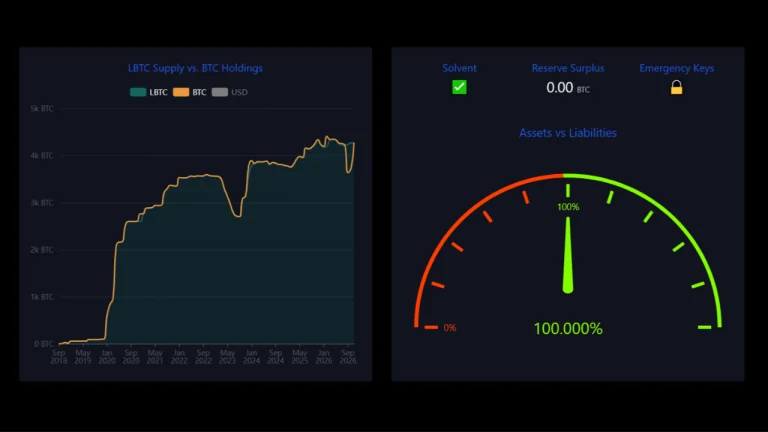
The Liquid Network, a prominent Bitcoin sidechain, has officially restored its bitcoin reserves following an exploit that left its balance sheet impaired earlier this autumn. The network's native LBTC token is now once again fully backed by underlying bitcoin on a strict one-to-one basis. The development marks a critical recovery milestone for the specialized platform, which is widely utilized by trading desks and cryptocurrency businesses for high-speed settlements.
Confirmation of the full recapitalization came through Samson Mow, a former Blockstream executive closely linked to the platform's development ecosystem. Mow reported that a final allocation of 250 BTC had been successfully deposited into the network's backing reserves, closing out the remaining shortfall stemming from the incident. The addition effectively eliminates the collateral deficit that had persisted since the breach occurred.
The reserve deficit originated in September, when the Liquid Network suffered a security breach that compromised a portion of its digital asset treasury. Although comprehensive post-mortem specifics remain tied to existing disclosures, the hack immediately introduced a balance sheet shortfall for the sidechain. Market participants were left tracking the progress of remediation efforts across subsequent weeks as operators worked toward a comprehensive solution.
As a Bitcoin sidechain, the Liquid Network operates as a secondary settlement layer designed to facilitate rapid, confidential inter-exchange transfers. In standard operations, every LBTC circulating across the sidechain is intended to be verifiably pegged to an equivalent amount of native bitcoin locked in reserve. Any compromise to that backing directly threatens the economic peg and challenges the core operational assumptions of the platform.
When collateral shortfalls emerge in tokenized asset systems, users face solvency risks and potential liquidity freezes across secondary trading markets. For arbitrageurs and institutional entities that rely on Liquid for capital efficiency, an undercollateralized bridge introduces severe counterparty uncertainty. Closing the reserve gap was therefore essential to preventing cascading discount pressures on LBTC across external venues.
Replenishing the compromised treasury required coordinating substantial digital asset capital to satisfy outstanding obligations without fracturing ongoing network operations. By injecting the final 250 BTC, stakeholders successfully brought total reserve balances back into alignment with issued liabilities. The step completes a structured recovery program aimed at restoring complete economic stability to the ecosystem.
The successful resolution stands out within a broader cryptocurrency sector frequently plagued by unresolved security exploits and prolonged platform insolvencies. Over recent years, many secondary networks and decentralized cross-chain protocols facing major attacks have failed to fully compensate users or restore compromised backing assets. In that broader operational climate, the full remediation of the Liquid Network shortfall represents a notable exception.
The incident simultaneously highlights the complex operational and security challenges facing federated sidechain architectures. While federations offer enhanced transaction throughput and specialized privacy features, they also rely on specialized node operators and custodial configurations to manage reserves. Ensuring resilient internal controls remains a paramount concern for federated models operating under high-value institutional settlement demands.
Looking ahead, attention will likely center on whether network operators implement heightened security measures and ongoing audit mechanisms to prevent future vulnerabilities. While restoring the full backing of LBTC resolves pressing balance sheet concerns, sustained adoption will depend on continuous technical verification. Platform participants and institutional partners will be watching closely to see how the sidechain hardens its architecture against potential future threats.
Primary source: Bitcoin.com News. Newzly rewrites and structures source reporting for clarity; verify critical details at the original.