Malaysia's Ex-PM Najib Razak Released From Prison to Serve Sentence Under House Arrest
Former Malaysian Prime Minister Najib Razak has left Kajang Prison to serve the rest of his corruption sentence under house arrest following a royal pardon and the payment of a multimillion-dollar fine.
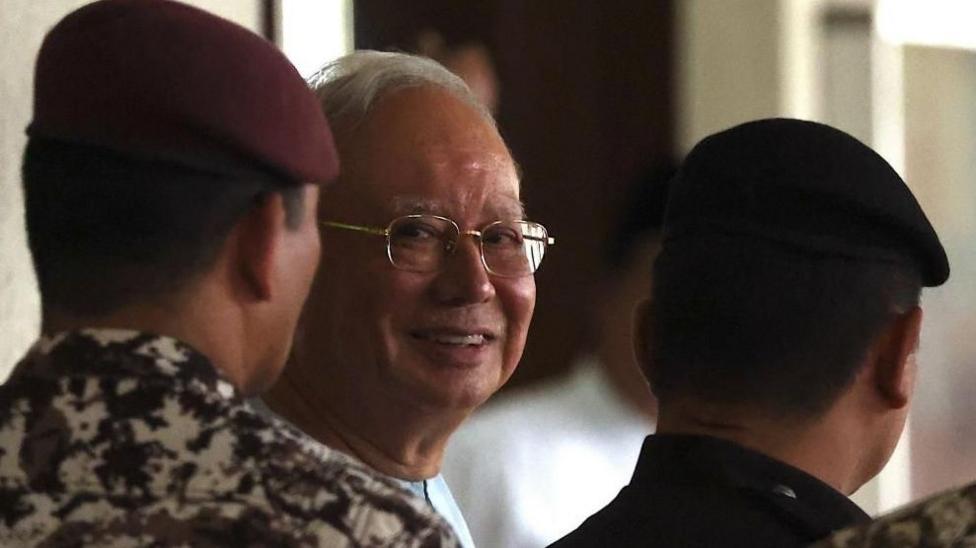
Former Malaysian Prime Minister Najib Razak was released from Kajang Prison to serve the remainder of his criminal sentence under house arrest. A heavy police convoy escorted the 73-year-old former leader to his residence in Kuala Lumpur, concluding four years of incarceration tied to the multibillion-dollar 1MDB sovereign wealth fund scandal.
The transfer was authorized following a conditional royal pardon issued by Malaysia's King Sultan Ibrahim, which permitted Najib to serve out his reduced term at home. Under the terms of the royal decree, the clemency was contingent on the full payment of a 50 million ringgit, or roughly 12.3 million dollar, court-imposed fine.
The financial penalty was settled through a crowdfunding campaign organized by Najib's long-time political base, the United Malays National Organisation (UMNO). Party leaders and supporters rallied contributions across the country to meet the court deadline, demonstrating the enduring loyalty the former prime minister still commands within his traditional political apparatus.
Despite the settlement of the fine, Najib's release encountered eleventh-hour legal complications that temporarily stalled the transfer. The Attorney General's Chambers moved to freeze the process while seeking urgent judicial guidance regarding Najib's separate pending criminal indictments and trial proceedings.
The administrative delay prompted a firm response from the Malaysian national palace, which emphasized that the monarch's constitutional prerogative and decree must be executed without obstruction. Palace representatives reiterated that royal pardons hold supreme executive weight under Malaysian law once the formal conditions are met by the petitioner.
The Kuala Lumpur High Court subsequently intervened to clear the path for the former prime minister's release by issuing a fresh transfer directive. Judicial officials affirmed that procedural questions regarding separate cases did not invalidate the royal decree governing his current sentence, enabling authorities to finalize the logistical arrangements for his departure.
Najib was originally sent to prison in 2022 after exhausting his final appeals in a conviction stemming from the looting of SRC International, a former unit of the 1MDB development fund. Investigators in multiple countries found that billions of dollars were illicitly siphoned from the state investment vehicle into private offshore accounts, real estate portfolios, and luxury assets.
The decision to grant house arrest has reignited intense debate across Malaysia regarding judicial accountability and equal treatment under the law. Anti-corruption watchdogs and opposition figures have voiced concern over perceived leniency toward high-profile politicians, while Najib's allies argue that his age and contributions to the nation warrant humanitarian consideration.
Najib is slated to remain confined to his Kuala Lumpur home under strict surveillance conditions until August 2028, when his custodial sentence formally expires. He continues to contest additional corruption charges connected to broader transactions within the 1MDB enterprise, meaning his protracted legal battles will remain a fixture of Malaysian politics for years to come.
Primary source: BBC World. Newzly rewrites and structures source reporting for clarity; verify critical details at the original.