world·Manipur·Senapati District
Manipur CM Calls for Revival of Indigenous Games at Haomee Wrestling Finale
At the closing of the Manipur State Haomee Wrestling Championship in Senapati, Chief Minister Yumnam Khemchand Singh urged modernization of traditional sports to secure youth participation and counter career concerns.
In this piece
Manipur Chief Minister Yumnam Khemchand Singh called for the revival and modernization of indigenous games at the Haomee wrestling finale in Senapati.…
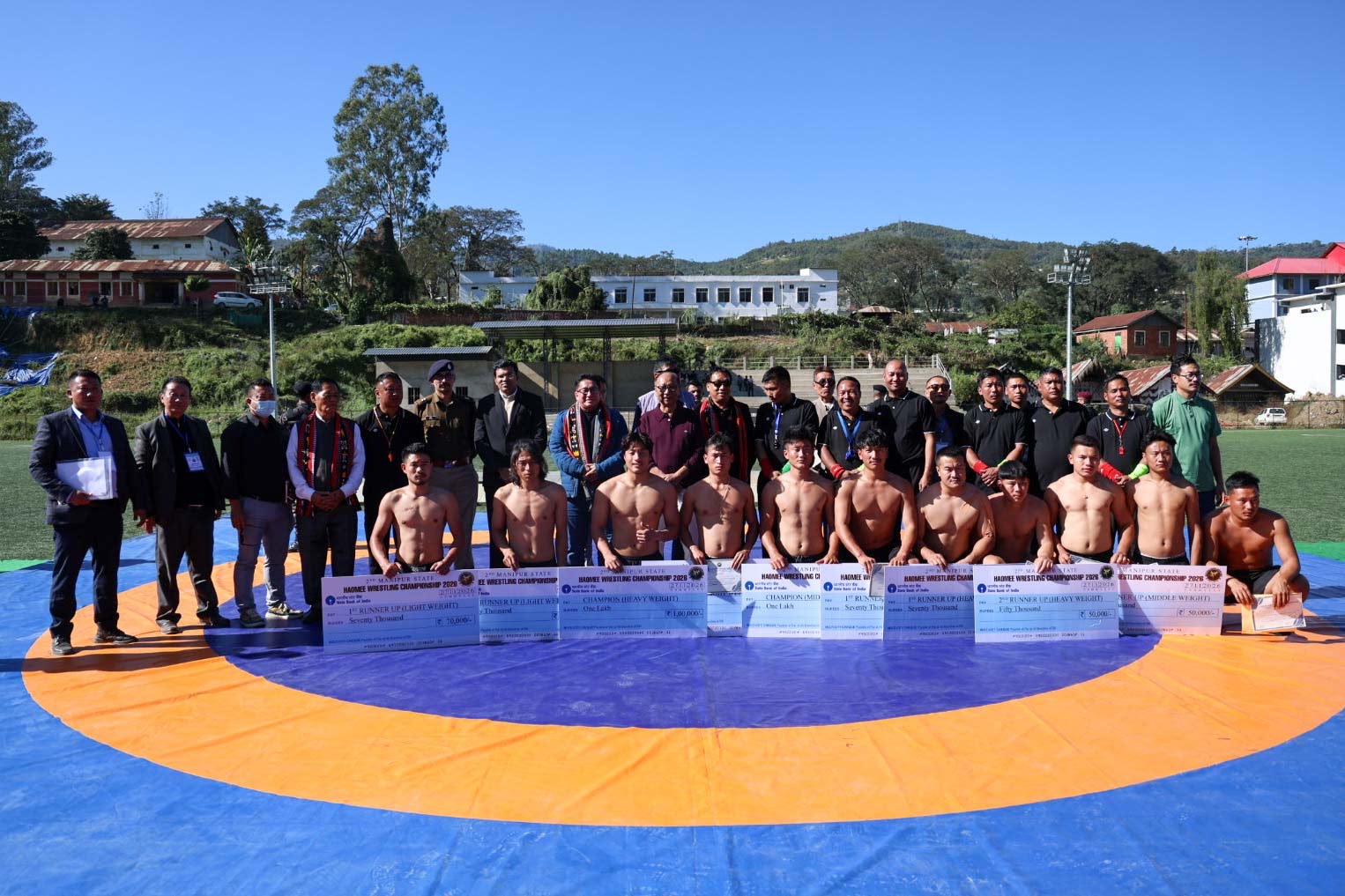
Manipur Chief Minister Yumnam Khemchand Singh called for a concerted effort to preserve and modernize the state's traditional games during the valedictory ceremony of the 2nd Manipur State Haomee Wrestling Championship in Senapati district. Addressing athletes, officials, and community members gathered at the Senapati Mini Stadium, the chief minister underscored the deep cultural significance of indigenous sporting disciplines. He stressed that preserving ancestral heritage requires active institutional backing and widespread public participation across all communities.
During his address, the chief minister highlighted a major hurdle confronting indigenous sports: the prevailing misconception among youth that traditional athletics offer limited career and employment opportunities. He cautioned that this widespread reluctance among the younger generation threatens to push centuries-old athletic traditions toward gradual extinction. To counteract this trend, he urged stakeholders to establish clearer incentives and support mechanisms for local competitors.
Singh pointed out that indigenous disciplines must adapt to contemporary sporting formats to attract larger domestic and international audiences. He emphasized that traditional games should be updated in terms of presentation, packaging, and tournament structures while strictly preserving their fundamental cultural ethos and rules. By striking this balance, he argued, regional sports can generate broader commercial and sporting interest without sacrificing historical identity.
The state-level championship was organized by the Senapati District Wrestling Association, Manipur, drawing dozens of competitors from various areas. The tournament featured around 77 wrestlers who competed across different categories, showcasing local grappling techniques and physical conditioning. The event served as a competitive platform aimed at reviving traditional wrestling traditions that have historically bonded local populations.
The tournament operates under the banner of Haomee, an indigenous concept that symbolizes the shared heritage and unity among the diverse ethnic communities inhabiting Manipur. Organizers emphasized that reviving such traditional pastimes plays a vital role in bridging cultural divides and fostering inter-community camaraderie. Attendees noted that grassroots athletic gatherings provide a rare and valuable space for shared cultural expression amid regional challenges.
The closing function brought together several prominent figures alongside the chief minister, including local Member of the Legislative Assembly J. Kumo Sha and Federation of Haomee president Sapamcha Jadumani. Their presence underscored growing institutional interest in elevating grassroots sporting infrastructure in Manipur's hill districts. Leaders in attendance reiterated the need for regular competitive circuits to keep traditional sports vibrant throughout the calendar year.
Manipur has long enjoyed a reputation as one of India's foremost sporting hubs, producing world-class athletes across modern disciplines such as boxing, weightlifting, and football. However, sports advocates in the state have increasingly expressed concern that indigenous games risk being overshadowed by mainstream Olympic disciplines. Advocates argue that formal recognition and structured financial backing could allow indigenous martial traditions to gain recognition comparable to traditional combat sports elsewhere in Asia.
Beyond wrestling, several traditional Manipuri sports face similar pressures regarding documentation, infrastructure, and generational retention. Community elders and sports organizers have frequently pointed out that lack of standard arenas and formal training academies discourages sustained youth engagement. Bridging these logistical gaps remains a focal point for organizations striving to turn indigenous pastimes into viable athletic pursuits.
Moving forward, sports administrators and community bodies in Manipur are looking to build upon the momentum generated by the Senapati tournament. Officials plan to explore avenues for expanding traditional wrestling circuits and integrating indigenous games into broader cultural and sporting festivals across the state. Sustaining youth interest will depend largely on whether state authorities and local sporting bodies can successfully translate policy encouragement into viable career pathways for emerging wrestlers.
Primary source: Google News Manipur. Newzly rewrites and structures source reporting for clarity; verify critical details at the original.