Manipur Pledges to Become Child Marriage-Free State by 2030
Manipur has officially committed to becoming a child marriage-free state by 2030, following a statewide consultation in Imphal where child rights authorities and civil society groups pledged coordinated action against underage unions and child exploitation.
In this piece
Manipur has set an official target to eradicate child marriage across the state by 2030 following a high-level consultation in Imphal. Child protection…
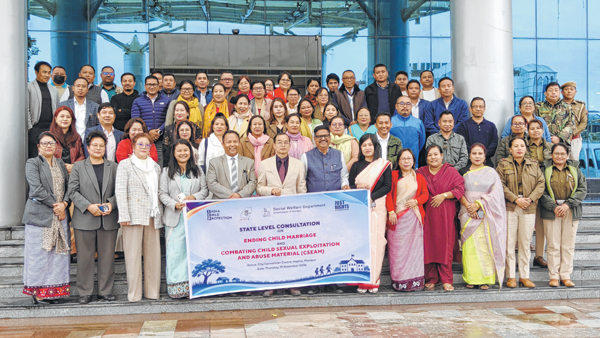
The state of Manipur has formally committed to eliminating child marriage across its territory by 2030, following a high-level state consultation held in Imphal. The declaration was adopted during a gathering at the City Convention Centre, where government authorities, child welfare bodies, and civil society organizations pledged unified action to end the practice. Representatives at the convention took a collective oath to uphold the fundamental rights of children, ensuring safe childhoods, uninterrupted schooling, and opportunities for dignified futures.
The initiative was organized jointly by the Manipur Commission for Protection of Child Rights and the state Social Welfare Department. They partnered with national advocacy and child protection networks, including India Child Protection and Just Rights for Children, to formulate the strategic roadmap. Beyond addressing underage unions, the consultation also targeted the eradication of Child Sexual Exploitation and Abuse Material, linking marriage prevention directly with broader online and offline child safety mechanisms.
Under the declaration, participating stakeholders committed to enforcing zero tolerance for child marriages in both urban and rural jurisdictions. Community members, administrative bodies, and civil society groups agreed to refuse participation in or facilitation of ceremonies involving minors. The framework emphasizes early reporting, vigilance by grassroots institutions, and prompt administrative intervention whenever early marriage arrangements are identified.
The pledge aligns with statutory mandates established under the Prohibition of Child Marriage Act and the Manipur Prohibition of Child Marriage Rules. These legal instruments empower local child marriage prohibition officers and village-level authorities to intervene, halt illegal ceremonies, and initiate judicial proceedings against organizers. Despite existing laws, social workers note that economic distress, informal customs, and localized vulnerabilities often enable underage unions to persist under the radar.
Manipur's target directly reinforces national child protection priorities, notably India's nationwide Bal Vivah Mukt Bharat campaign aimed at creating a child marriage-free country. The 2030 horizon also synchronizes with the United Nations Sustainable Development Goals, specifically Target 5.3, which calls for the global elimination of all harmful practices including child, early, and forced marriage. Aligning state-level machinery with these broader benchmarks enables Manipur to draw upon established monitoring frameworks and multi-agency resources.
Advocates at the consultation emphasized that child marriage severely curtails educational attainment and perpetuates intergenerational cycles of poverty. Young girls subjected to early marriage face heightened risks of early pregnancy, maternal complications, psychological trauma, and economic disenfranchisement. By securing children's rights to remain in formal education, state bodies aim to strengthen social resilience and provide adolescents with viable economic independence.
A crucial component of the consultation centered on combating child sexual exploitation and abuse material, reflecting emerging hazards facing youth. Organizers noted that digital proliferation requires law enforcement, child welfare committees, and educational institutions to adopt proactive surveillance and reporting systems. Integrating digital safety with marriage prevention strategies reflects an updated approach to child vulnerability in increasingly connected environments.
Implementing the 2030 roadmap across Manipur will require overcoming structural hurdles, particularly in remote hill districts and communities experiencing recent socioeconomic disruption. Displaced populations and communities under severe stress often face heightened protection risks, making institutional surveillance more difficult. Child rights activists stress that continuous community outreach and trust-building will be necessary to ensure reporting mechanisms function effectively across every block.
Moving forward, the Manipur Commission for Protection of Child Rights and the Social Welfare Department plan to roll out targeted awareness campaigns and institutional trainings across all districts. Civil society organizations will work alongside local administrative officers to track progress, monitor vulnerable households, and establish community watch groups. State officials maintain that meeting the 2030 deadline depends on sustained inter-agency coordination, robust legal enforcement, and active community refusal to endorse child marriage.
Primary source: Google News Manipur. Newzly rewrites and structures source reporting for clarity; verify critical details at the original.