Marathon Fusion Claims Mercury-to-Gold Breakthrough
The San Francisco startup says it has produced stable gold at ten times a CERN benchmark, but the claim does not establish commercial viability or an imminent threat to gold scarcity.
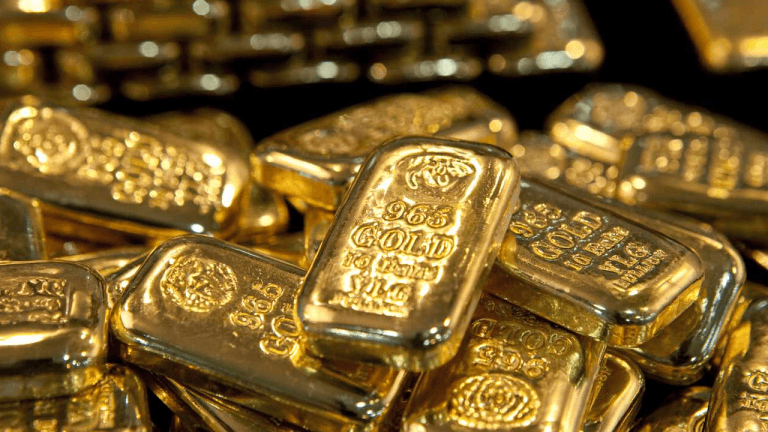
San Francisco startup Marathon Fusion says it has converted mercury into stable gold, claiming a production rate ten times a benchmark reported by CERN. The announcement, described by Bitcoin.com News, raises questions about whether nuclear technology could eventually create a new source of the precious metal, but does not establish commercially meaningful production.
The distinction between producing gold and producing it economically is central to the claim. A laboratory demonstration can establish that a reaction occurs without showing that the resulting material can be recovered in useful quantities or sold for more than it costs to manufacture.
Marathon's approach builds on a research proposal published on arXiv in July 2025. That paper describes using high-energy neutrons from deuterium-tritium fusion to transform mercury into stable gold within a specialized layer surrounding a fusion reactor, known as its blanket.
The proposed pathway starts with mercury-198 and leads to gold-197, a stable form of the precious metal. This is nuclear transmutation rather than chemistry: changing an element requires altering its nucleus, not simply rearranging atoms through chemical reactions.
The earlier paper used neutron-transport simulations to explore how the process might operate in a power plant. Its authors argued that the blanket could support gold production while preserving electricity generation and the production of tritium, a fuel needed to sustain the fusion system. Those findings describe a modeled reactor configuration, not demonstrated commercial output.
Marathon's website presents gold as a potential additional revenue stream for fusion plants. In that vision, mercury isotopes in the blanket help multiply neutrons while enabling the co-production of electricity, tritium and gold. The commercial rationale is therefore broader than manufacturing a precious metal: gold sales could help improve fusion economics.
The comparison with CERN requires particular care because the underlying processes differ. CERN reported in May 2025 that near-miss interactions between lead nuclei at the Large Hadron Collider could remove protons and create gold nuclei. Those nuclei rapidly fragmented after striking accelerator components, rather than accumulating as recoverable gold.
CERN estimated that its four major experiments produced about 29 picograms of gold during the collider's 2015–2018 run. That exceptionally small quantity illustrates why a large improvement over a particle-physics benchmark does not, by itself, demonstrate industrial scale. A production-rate comparison needs accompanying information about total yield, operating conditions and recovery.
For gold markets, the unanswered question is whether a nuclear process could deliver sustained, economically competitive supplies. The reported rate alone cannot establish that outcome, and it provides no basis for concluding that manufactured gold is about to undermine the metal's scarcity. Scientific feasibility and a competitive production business remain separate tests.
The next meaningful assessment will depend on experimental measurements that allow the claimed result and its scale to be evaluated. Production quantities, material characteristics, recovery performance and costs would help connect the announcement to Marathon's larger vision. Until those questions are resolved, the claim is better understood as a potential technical advance than evidence of an operational gold factory.
Primary source: Bitcoin.com News. Newzly rewrites and structures source reporting for clarity; verify critical details at the original.