Marching bands fundraise to stay in New York after Macy’s Parade delay
A stormy forecast led city officials to postpone the Thanksgiving Day parade, and donors have stepped in so student musicians can afford to remain in New York and still perform.
In this piece
After officials delayed the Macy’s Thanksgiving Day Parade because of a stormy forecast, marching bands turned to fundraising to cover the cost of staying in…
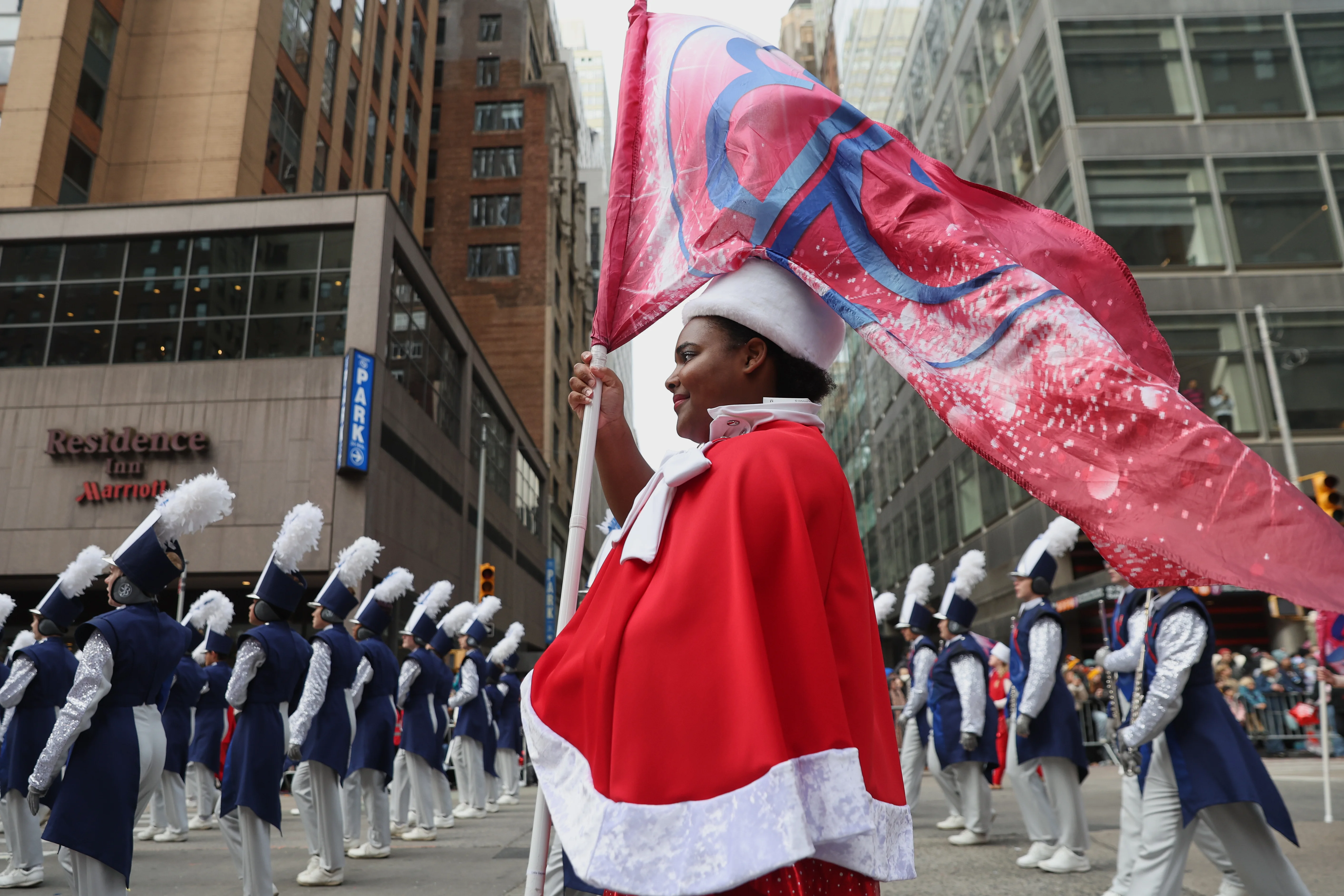
Student marching bands that traveled to New York for the Macy’s Thanksgiving Day Parade are raising money to stay in the city after officials postponed the event, according to NPR Arts & Life.
A stormy weather forecast prompted city officials to delay the parade, a postponement NPR described as historic. Bands that had already arrived faced the cost of remaining longer if they wanted to perform when the procession was rescheduled.
Donors big and small stepped in to help student musicians afford that extra time in New York, NPR reported. The assistance is aimed at keeping the groups in place so they can still march rather than heading home before the delayed parade.
The Macy’s parade is a fixture of Thanksgiving in New York, drawing bands from well beyond the city along with balloons, floats, and broadcast audiences. For many school ensembles, an invitation is a rare trip that families, boosters, and school budgets plan around for months.
A weather delay changes that plan in practical ways. Hotel nights, meals, and local transport do not pause when a performance date moves, and student groups often travel with limited contingency funds. NPR’s account centers on that gap: musicians were already in New York, and staying long enough to perform required new money.
The report does not lay out a single fundraising total, a full list of participating bands, or the revised parade schedule. What it does establish is the pattern of help — contributions from both larger donors and smaller individual gifts — directed at keeping students on the ground for the postponed event.
That support matters because a marching band cannot easily split the difference between going home and waiting. Instruments, uniforms, chaperones, and rehearsal time are organized around one appearance. Missing the parade after traveling to New York would erase the performance the trip was built for, even if the underlying forecast decision was made for safety.
City officials’ choice to delay rather than press ahead in threatening weather fits a broader caution around large outdoor gatherings. Parades concentrate spectators, performers, and tall inflatable elements in streets that high winds and heavy storms can make unsafe. NPR framed the postponement as historic, underscoring how rarely the Thanksgiving procession has been moved.
For the bands, the immediate question is whether fundraising keeps pace with the days they must remain. Donations already reported as coming from donors of different sizes suggest a wide base of help, though NPR did not specify how many groups are fully covered or how long they expect to stay.
Families and band programs watching from home are left to track both the weather decision and the money that determines whether their students are still in New York when officials restart the parade. The public details stop at the delay, the fundraising, and the goal of performing after the postponement.
What happens next depends on when the parade is held and whether the donations continue to cover lodging and related costs until then. NPR’s reporting presents the fundraising as the bridge that lets student musicians stay and take part, without claiming that every band’s expenses are already solved.
Primary source: NPR Arts & Life. Newzly rewrites and structures source reporting for clarity; verify critical details at the original.