world·Meghalaya·West Garo Hills District
Meghalaya’s Wangala Festival Enters Guinness World Records With 1,000-Drum Performance
Meghalaya’s premier post-harvest Garo festival marked its 50th edition with a historic 1,000-drum ensemble in West Garo Hills, setting a Guinness World Record. The milestone celebration highlighted indigenous traditions on an international stage.
In this piece
Meghalaya celebrated the golden jubilee of the Wangala festival in West Garo Hills by setting a Guinness World Record with 1,000 traditional drums. The…
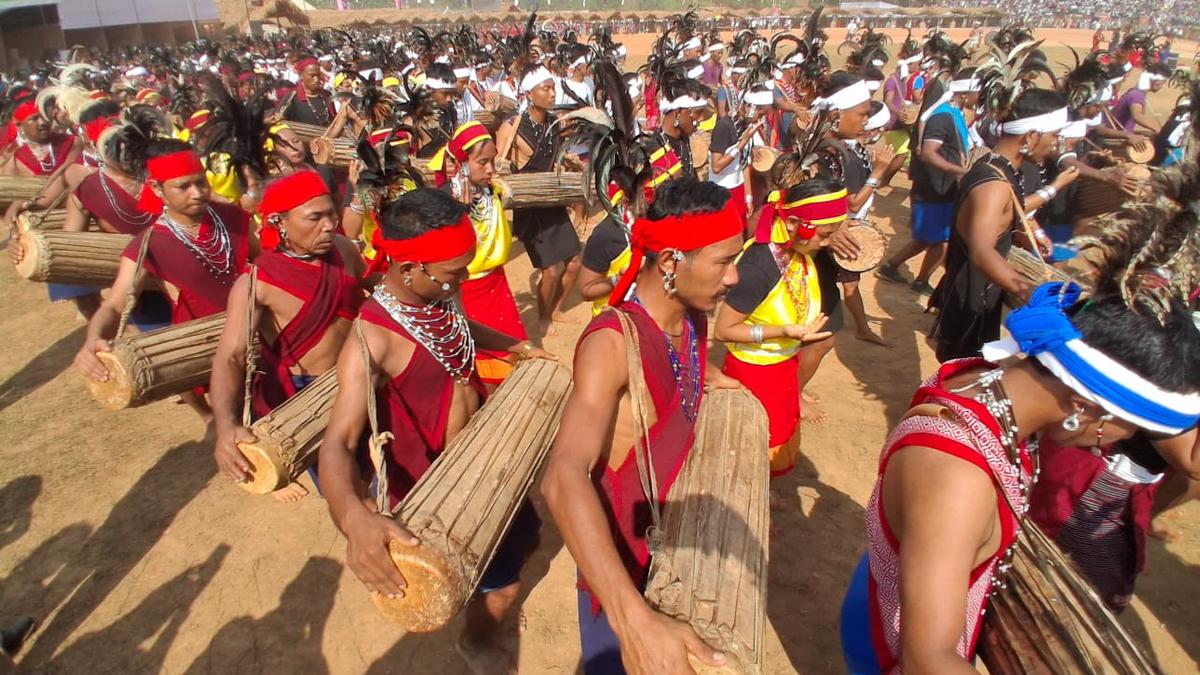
Meghalaya’s renowned Wangala festival marked its golden jubilee with global recognition as a synchronized performance of one thousand traditional drums achieved an official Guinness World Record. The landmark presentation took place at Wangala A’dam in Chibagre, situated near Tura in the West Garo Hills district. Crowds of residents and visitors gathered to witness the massive spectacle, which elevated the indigenous harvest celebration onto the international stage.
Moving beyond its customary hundred-drum showcase, the milestone fiftieth edition brought together one thousand drummers playing the traditional Garo drum, known locally as the dama. The rhythmic beats echoed in unison alongside approximately 1,500 dancers dressed in indigenous festive attire. Adorned in feathered headgear and handwoven fabrics, the performers sustained synchronized choreography that formed the centerpiece of the record-setting demonstration.
Wangala is the premier post-harvest festival of the Garo community, celebrated annually to express gratitude for agricultural bounty. The observance is dedicated to Misi Saljong, revered in indigenous lore as the Sun God of fertility and prosperity. Rooted in seasonal cycles, the ceremonies mark the conclusion of demanding field labor and signal the onset of the winter agricultural recess.
Traditional ceremonies preceding the grand drum ensemble remain central to preserving Garo religious heritage. Rituals such as Rugala, where freshly brewed rice beer is offered, and Cha’chat So’a, involving the ceremonial burning of incense inside the village chief's house, were performed by traditional priests. These solemn invocations pay homage to ancestral spirits and seek blessings before any harvested grain is consumed.
The institutional structure of the festival traces back to 1976, when community elders and state administrators sought a unified platform to protect Garo customs amid modern transitions. Under the guidance of Meghalaya’s founding Chief Minister, Captain Williamson A. Sangma, the festival was organized into the hundred-drums format to encourage wider participation. Over five decades, the gathering has transformed from localized village observances into an organized state-wide cultural movement.
The golden jubilee celebrations drew prominent dignitaries, including Meghalaya Chief Minister Conrad K. Sangma and Union Minister of Tourism and Culture Gajendra Singh Shekhawat. Addressing attendees, officials highlighted the importance of documenting and promoting northeast India's distinct indigenous heritage on global platforms. Government support has increasingly focused on developing dedicated infrastructure, including permanent festival grounds at Wangala A’dam.
Beyond its ceremonial importance, the festival has grown into a major driver for regional tourism, indigenous music, and local craftsmanship. The multi-day gathering offers indigenous artisans, weavers, and food producers direct access to thousands of visitors and commercial opportunities. Community leaders emphasize that public celebrations reinforce tribal unity and foster intergenerational transmission of Garo oral traditions and arts.
As younger generations navigate modernization and migration, the scale of this year's event highlights deliberate community efforts to sustain tribal identity. Organizers noted that engaging thousands of young drummers and dancers ensures that ancient rhythms and practices survive within contemporary society. The international milestone is seen by organizers as proof that indigenous rituals can flourish without sacrificing cultural authenticity.
Looking forward, regional authorities and cultural organizations intend to leverage the world record to expand international cultural exchange and sustainable tourism in the Garo Hills. Future editions are expected to build upon the enhanced infrastructure and heightened global visibility established during the golden jubilee. For the community, the celebration cements a proud legacy, reaffirming that centuries-old traditions remain vital and dynamic.
Primary source: Google News Meghalaya. Newzly rewrites and structures source reporting for clarity; verify critical details at the original.