world·Maryland·Wicomico County
Mental Health Resiliency Program Launches in Maryland for First Responder Families
The First Responders Children’s Foundation has launched the Mental Health Resiliency Program in Maryland, offering free, confidential counseling and wellness support to children of frontline emergency workers.
In this piece
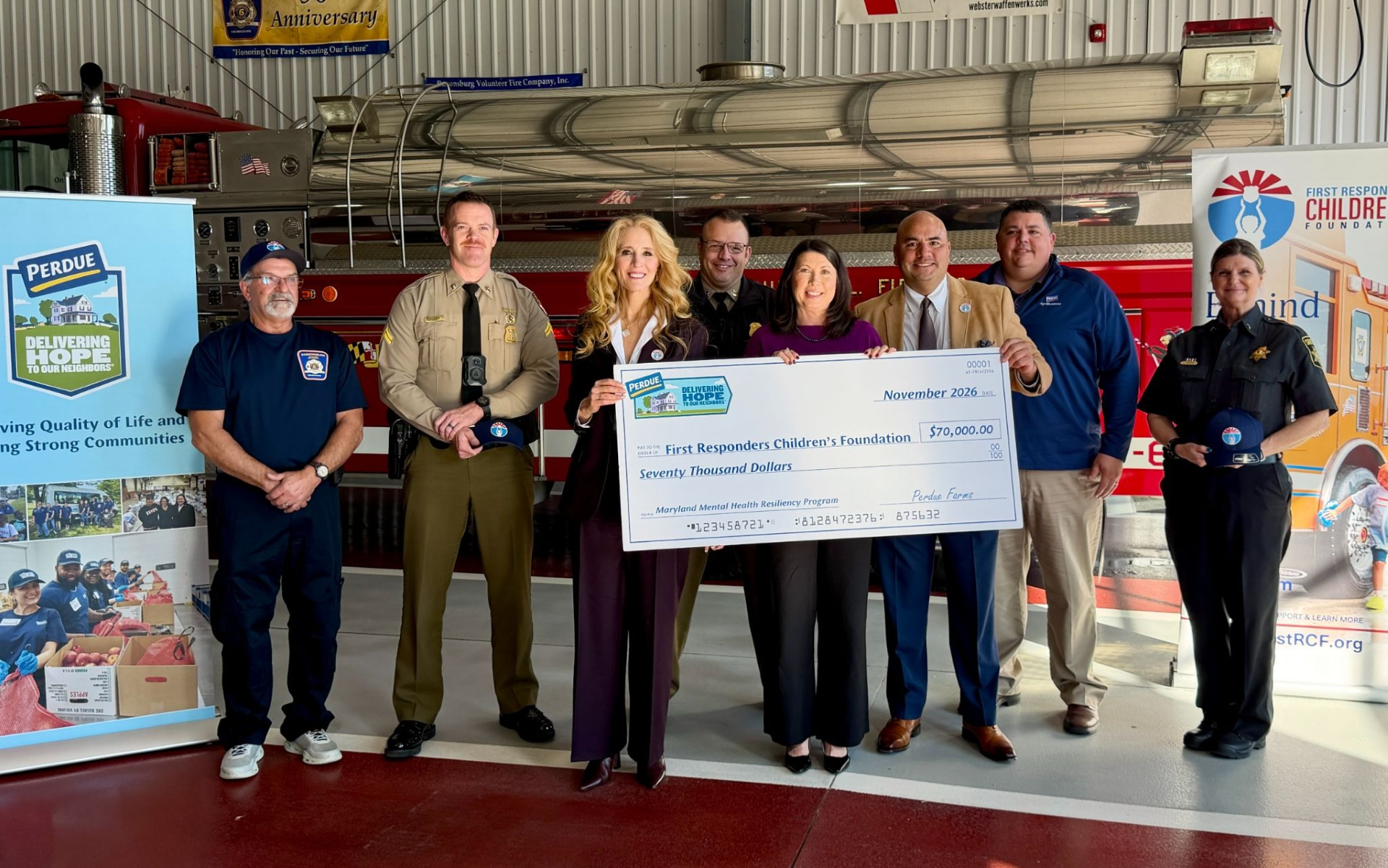
The First Responders Children’s Foundation has rolled out its Mental Health Resiliency Program across Maryland, backed by a $70,000 grant from the Perdue…
A specialized mental health initiative designed to support the families of emergency frontline personnel has officially launched in Maryland. The Mental Health Resiliency Program, established by the First Responders Children’s Foundation, provides free, confidential counseling and behavioral health resources tailored specifically to the children of first responders across the state. Organizers created the initiative to offer structured emotional guidance for young people navigating the unique stresses associated with emergency service households.
The statewide rollout was formally introduced at the Parsonsburg Volunteer Fire Company in Wicomico County, backed by a $70,000 charitable grant from the Franklin P. and Arthur W. Perdue Foundation. Representatives from regional public safety agencies gathered to mark the rollout, emphasizing the critical need for dedicated family wellness services on Maryland's Eastern Shore and beyond. The funding enables immediate access to clinical care without administrative delays.
Eligible participants include the dependent children of firefighters, law enforcement officers, emergency medical technicians, paramedics, 911 dispatch operators, and corrections professionals. Under the program framework, families can schedule short-term individual counseling sessions without copays, out-of-pocket fees, or health insurance verification. By eliminating standard financial and insurance prerequisites, the program seeks to encourage early intervention before acute stress turns into chronic distress.
A foundational pillar of the initiative centers on culturally competent care delivered by licensed clinicians familiar with public safety culture. Mental health professionals working within the program receive specialized training to understand the distinct realities of first responder life, including erratic shift schedules, hypervigilance, and cumulative trauma. This background allows therapists to connect effectively with youth who feel that outside counselors might not comprehend their family realities.
Beyond one-on-one psychological counseling, the initiative incorporates practical parent coaching, interactive resiliency workshops, and structured family wellness retreats. These multifaceted programs are designed to help young people process complex emotions, reduce feelings of isolation, and build resilient coping mechanisms. Parents also receive guidance on recognizing subtle behavioral warning signs and maintaining open lines of communication within high-stress homes.
Children raised in emergency worker families often face elevated risks of secondary traumatic stress and continuous worry regarding their parents' physical safety during duty shifts. Mental health advocates have long observed that while many modern agencies have expanded peer support and crisis intervention for frontline personnel, their immediate family members frequently remain underserved. Bridging this systemic gap has become a primary priority for public health and emergency services leadership.
Community partners noted that securing independent philanthropic backing from the Perdue Foundation ensures privacy for participating households, which can be a decisive factor in treatment uptake. Concerns over professional stigma or potential job repercussions frequently prevent emergency workers from seeking care through municipal employer channels. The non-profit structure provides a discreet, community-based alternative outside typical departmental reporting lines.
Maryland joins a select group of states partnering with the First Responders Children’s Foundation to establish targeted psychological support infrastructures for frontline households. Program coordinators highlighted that proactive resilience training not only supports child development but also reinforces overall family stability and public safety workforce retention. Providing dependable support at home allows emergency responders to carry out their public duties with greater focus and peace of mind.
Confidential intake and enrollment for Maryland first responder families are now underway through both telehealth platforms and participating regional clinician networks. Program directors plan to monitor engagement levels across counties in the coming months, utilizing initial outcomes to guide future grant allocation and service expansion into additional municipalities throughout the state.
Primary source: Google News Maryland. Newzly rewrites and structures source reporting for clarity; verify critical details at the original.