Minnesota Election Recounts Narrow Down With Two Key Races Undecided
Minnesota election officials are working through high-stakes recounts in two razor-thin legislative races, including a state Senate contest separated by just four votes, as canvassing boards prepare to certify final results.
In this piece
Minnesota election officials are completing manual recounts in two razor-thin legislative contests, including a four-vote Senate race in Clay and Becker…
Minnesota election officials are working through detailed recount procedures across key legislative districts following exceptionally narrow margins in the recent elections. With two critical legislative contests commanding statewide attention, bipartisan teams of election observers have begun manually reviewing ballots to establish final vote counts. The reviews aim to ensure every eligible vote was counted accurately before the final results receive official state certification.
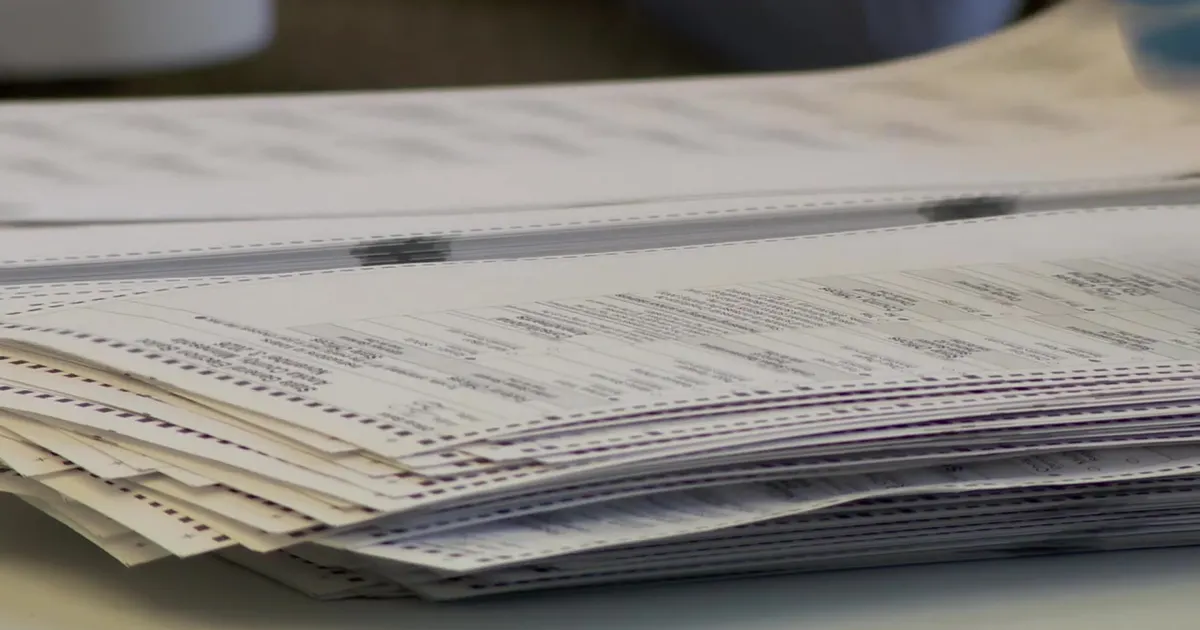
In the northern Twin Cities metropolitan area, election workers completed a comprehensive recount for Minnesota House District 32A in Blaine. Republican incumbent Representative Nolan West successfully defended his legislative seat against Democratic challenger Amanda Matchett following the manual inspection. The local counting process required officials to scrutinize nearly 24,000 physical paper ballots to confirm optical-scanner tabulations.
During the Anoka County review, West’s initial election-night lead of 22 votes narrowed slightly to a final margin of 17 votes. Bipartisan observers examined individual ballots for voter intent, checking for stray marks or light pencil shading that digital scanners might have missed or flagged. Anoka County canvassing officials were scheduled to meet to formally accept and certify the updated tally.
Attention has now turned to western Minnesota, where the state’s tightest undecided race entered its manual recount phase in Senate District 4. The sprawling legislative district encompasses 114 voting precincts distributed across Clay and Becker counties. County auditors and election staff coordinated the recount logistics to ensure strict adherence to state auditing standards.
In that high-stakes Senate contest, Democratic-Farmer-Labor incumbent Senator Rob Kupec entered the recount trailing Republican challenger Austin Peterson by a razor-thin margin of just four votes. Peterson, a member of the Hawley school board, maintained the slight edge after local election-night tallies were compiled. Recount proceedings in the district commenced on Monday morning, with election administrators expecting to wrap up the count by Tuesday.
Under Minnesota election law, candidates qualify for a publicly funded recount when the final margin of victory falls within 0.5 percent of the total votes cast. Bipartisan teams sit at designated counting tables to visually inspect every paper ballot, sorting them into accepted piles or setting aside challenged ballots for judicial or canvassing review. The meticulous process ensures that scanner errors or ambiguous markings do not alter the true voter intent.
Election analysts and state administrators note that recounts in Minnesota historically produce very small shifts in overall vote totals. Because modern optical scanning equipment tabulates paper ballots with high precision, changes of more than a handful of votes across thousands of ballots are extremely rare. Unless recount workers uncover an uncounted batch of ballots or a systemic mechanical fault, leads of even a few votes typically hold.
Other closely watched legislative contests across the state have already cleared their recount hurdles and moved toward certification. In Washington County, a separate razor-thin Senate race featuring Republican Senator Karin Housley concluded with her victory confirmed. Those completed reviews demonstrated the consistency of the initial machine counts, providing a blueprint for the remaining district tallies.
Despite the lingering recounts and the exceptionally tight margins in individual districts, the overall balance of power at the State Capitol is not in doubt. The Democratic-Farmer-Labor Party is slated to maintain its control of both the Minnesota House and Senate heading into the upcoming legislative session. Even if the remaining undecided races break for challengers, legislative leadership structures will remain largely intact.
Once county election administrators finalize their manual tallies, the updated results will be transmitted to local and state canvassing boards for final certification. Any lingering challenges over disputed ballots will be resolved under state election protocols before certificates of election are formally issued. The conclusion of the remaining counts will bring final closure to Minnesota’s competitive legislative election cycle.
Primary source: Google News Minnesota. Newzly rewrites and structures source reporting for clarity; verify critical details at the original.