Missing 8-Km Stretch on Mumbai-Goa Highway Triggers Rs 2,000 Crore Cost Overrun
Nearly two decades after work began, an eight-kilometre gap across five stalled packages has triggered a Rs 2,000 crore cost overrun on the Mumbai-Goa highway in Maharashtra, pushing full completion to 2027.
In this piece
An investigative report reveals that approximately eight kilometres of the Mumbai-Goa highway remain incomplete across five delayed packages in Maharashtra,…
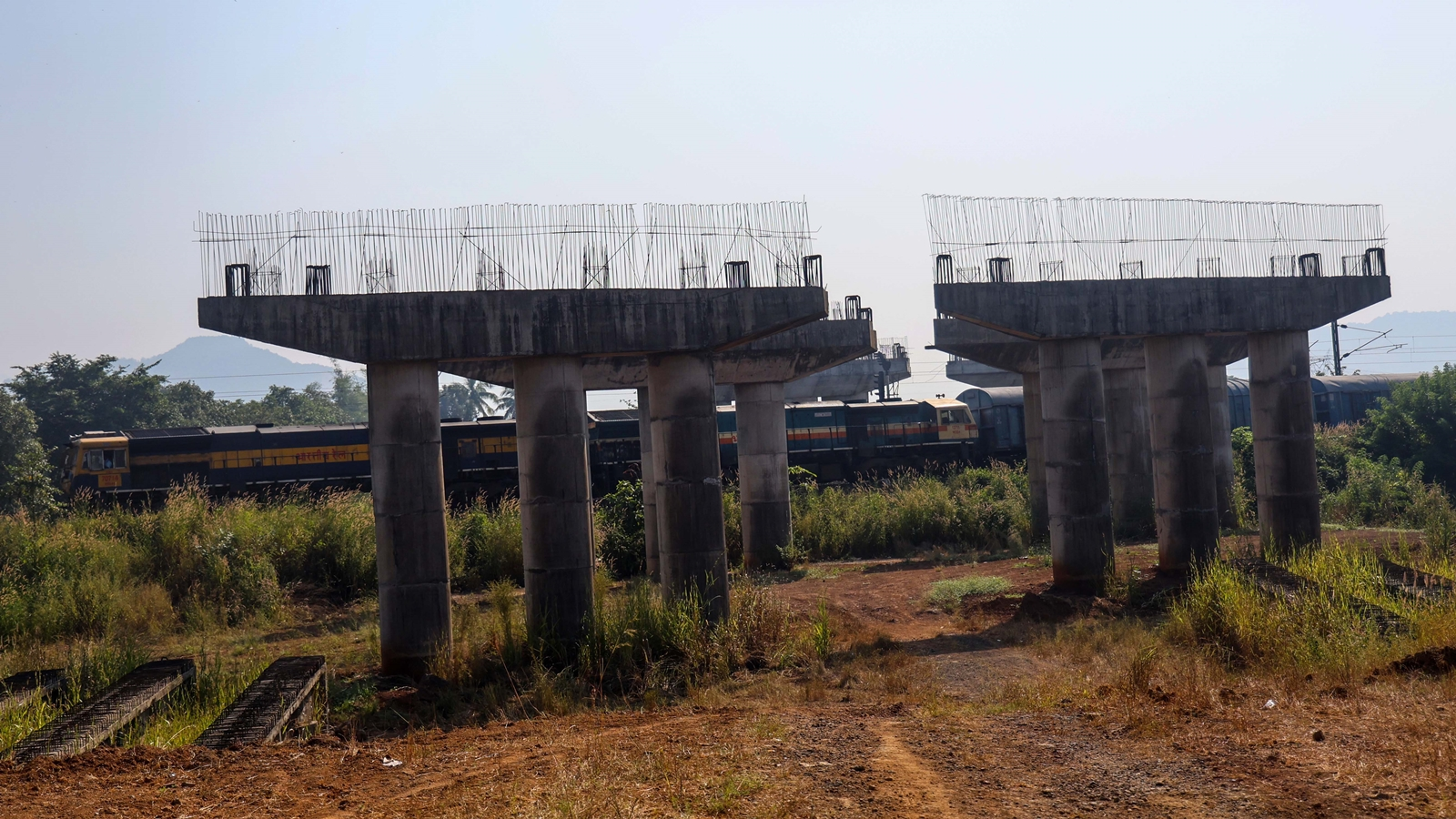
Nearly two decades after it was first approved, the four-laning of the crucial Mumbai-Goa highway remains incomplete due to a stubborn gap of approximately eight kilometres. An investigative report by The Indian Express revealed that this missing stretch, divided across five troubled project packages in Maharashtra, has triggered an estimated cost overrun exceeding Rs 2,000 crore. The findings underline how procedural paralysis and corporate defaults have hobbled one of western India's most significant coastal infrastructure initiatives.
National Highway 66, which connects the commercial metropolis of Mumbai to the tourist state of Goa, is technically close to 99 percent complete along its wider expanse. Yet the small, disconnected patches of unfinished roadway continue to create severe bottlenecks, nullifying many of the efficiency gains promised by the modernization effort. Motorists traveling through the Konkan region still face sharp slowdowns, detours, and rough unpaved surfaces where work remains stalled.
The fiscal toll of these protracted delays has dramatically altered the economics of the corridor. Initial expenditure projections for the Maharashtra portion stood at approximately Rs 12,532 crore, but cumulative costs have now surged past Rs 18,100 crore, representing an escalation of more than 44 percent. Much of this financial inflation stems from successive rounds of contract retendering, price adjustments for construction materials, and the administrative expenses of maintaining incomplete sites.
According to the investigation, deep-seated contractor distress lies at the core of the five delayed packages. Several construction companies that won execution contracts ran into acute liquidity crises, defaulted on high-value bank loans, or entered formal insolvency resolution. As cash flows dried up, heavy equipment stood idle and essential earthworks ground to a halt for extended stretches of time.
The project was further complicated by regulatory and legal scrutiny directed at some of the involved commercial entities. Certain firms were flagged on caution lists maintained by financial regulators, while others came under examination by central investigative authorities for financial irregularities. Confronted with chronic defaults and stalled progress, the National Highways Authority of India and state agencies repeatedly terminated agreements, initiating lengthy rebidding procedures.
Field-level hurdles and evolving engineering requirements also compounded the construction stalemate across the rugged Konkan terrain. Officials noted that prolonged land acquisition battles with local property owners consistently delayed site handovers to working contractors. Subsequent design modifications, including newly mandated vehicular underpasses and pedestrian pathways requested by nearby villages, required additional approvals and disrupted planned construction schedules.
The prolonged saga has triggered widespread public frustration, particularly during monsoon months and holiday rushes when traffic snarls and road accidents intensify. The crisis even prompted public remorse from Union Minister for Road Transport and Highways Nitin Gadkari, who openly voiced deep embarrassment over the project's chronic delays. He noted that despite repeated departmental interventions, systemic execution failures had severely undermined the credibility of the highway upgrade.
Completing the highway is widely viewed as vital for the economic revival of Maharashtra's coastal districts. Seamless four-lane transit along National Highway 66 would slash travel times between Mumbai and Goa from over ten hours to roughly five to six hours. Regional trade associations emphasize that faster logistics would dramatically benefit perishable agricultural cargo, coastal fisheries, and rural eco-tourism ventures that currently struggle with inadequate connectivity.
Highway authorities have now established an updated target of April 2027 to finish the remaining eight kilometres and finally dedicate the full corridor. Fresh contracts have been issued with tighter supervision protocols to prevent further slippage on the lingering five packages. However, regular commuters and local residents remain guarded in their optimism, noting that multiple past deadlines have expired without the promised uninterrupted highway.
Primary source: Google News Goa. Newzly rewrites and structures source reporting for clarity; verify critical details at the original.