Movistar Plus+ and Arte France Partner on Real-Life Crime Thriller 'Killing a Bear'
Spanish platform Movistar Plus+ and ARTE France have partnered on 'Killing a Bear,' a six-part crime thriller inspired by the real-life investigation into the death of a Pyrenean brown bear during pandemic lockdowns.
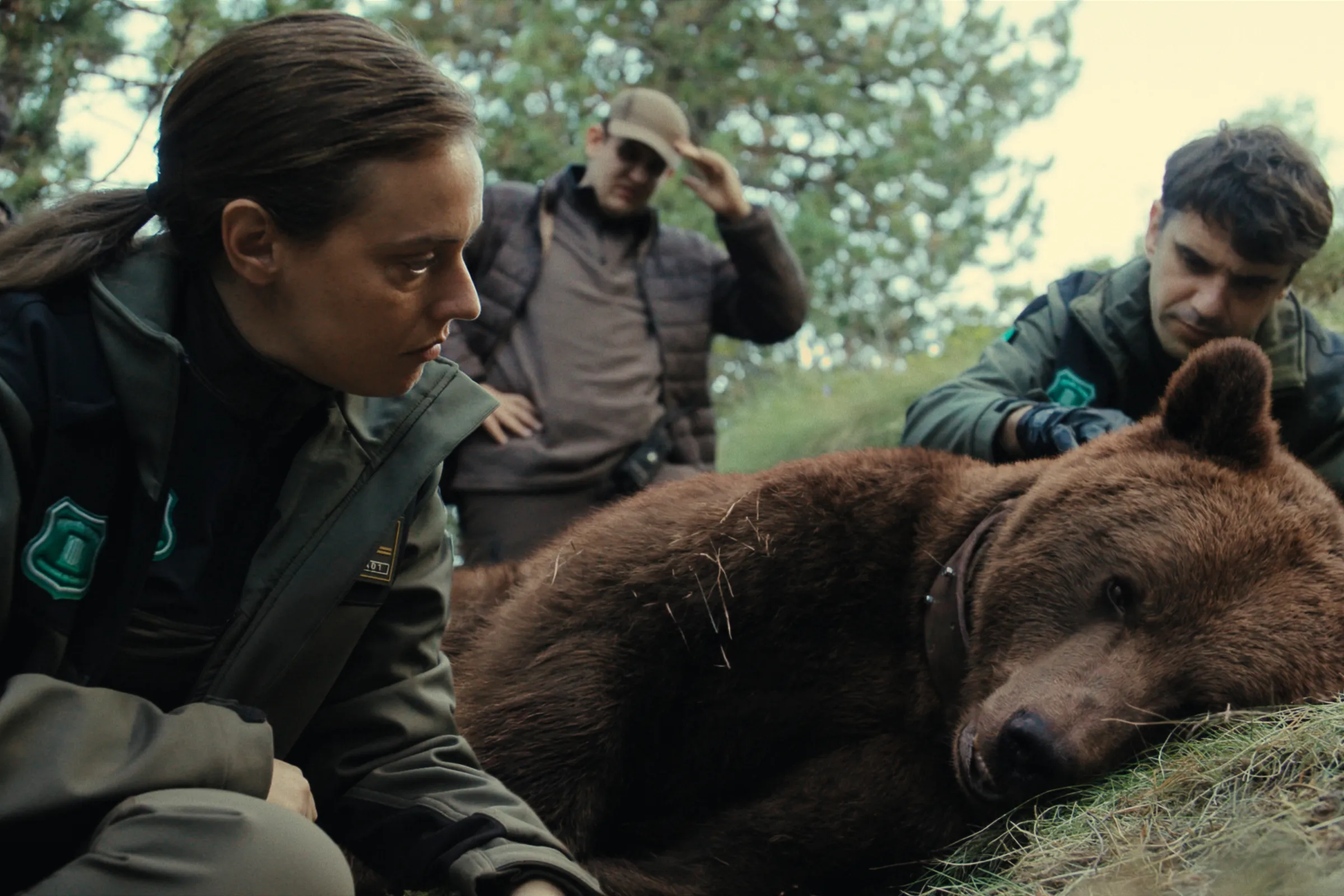
Spanish streaming platform Movistar Plus+ and Franco-German broadcaster ARTE France have partnered to produce "Killing a Bear" ("Matar a un oso"), an upcoming six-part crime thriller series created by brothers Jorge and Alberto Sánchez-Cabezudo. Produced in collaboration with Kubik Films, the high-profile drama presents an unconventional twist on the procedural format by placing the death of a protected animal at the heart of a full-scale homicide investigation.
The series is inspired by real events that unfolded in Spain's mountainous Aran Valley during the strict COVID-19 pandemic lockdowns in 2020. Local authorities discovered the lifeless body of Cachou, an infamous Pyrenean brown bear whose controversial predatory behavior had long agitated regional farmers and livestock owners.
Rather than treating the animal's death as routine wildlife mortality, a regional court launched an unprecedented judicial inquiry backed by forensic post-mortems and wiretaps. The case quickly evolved into an environmental murder mystery when toxicological tests confirmed that the bear had been deliberately poisoned with antifreeze.
The creative reins are held by Jorge and Alberto Sánchez-Cabezudo, the acclaimed showrunning duo behind landmark Spanish dramas such as "Crematorio," "La Zona," and "Nos vemos en otra vida." Directorial duties on the project are shared between Jorge Sánchez-Cabezudo and filmmaker Borja Soler.
The production features an ensemble cast led by veteran Spanish actor Eduard Fernández, alongside María Rodríguez Soto, Miki Esparbé, Pol López, Nora Navas, and Àlex Monner. The ensemble portrays the fractured community of forest rangers, judicial officers, local politicians, and valley residents drawn into the turbulent probe.
The announcement arrives at a moment when procedural dramas dominate the international programming landscape. According to research firm Ampere Analysis presented at the MIPCOM trade market in Cannes, crime titles accounted for 27 percent of all scripted television orders globally in the first half of 2026, representing the single most commissioned TV genre worldwide.
Ampere Analysis data further revealed that crime formats comprised an overwhelming 61 percent of top-ranking series from major global platforms. In a market saturated with conventional detective narratives, broadcasters and streamers are aggressively seeking singular premises that refresh familiar investigative tropes while addressing urgent contemporary dilemmas.
By examining the bear's suspicious demise, the series probes the friction between ancestral mountain traditions, rural economic survival, and European conservation mandates. The narrative illustrates how the introduction of reintroduced apex predators became an ideological flashpoint, polarizing long-time residents and urban environmental policymakers.
"Killing a Bear" debuted publicly before industry audiences and critics on the European festival circuit, including screenings at the Valladolid International Film Festival (SEMINCI) and the Serielizados Fest. The screenings highlighted the project as a prime showcase for prestige Spanish drama competing on the global market.
The six-episode series is scheduled to make its exclusive streaming premiere on Movistar Plus+ on December 10, 2026, followed by international broadcast windows via ARTE France. Industry observers will be watching closely to see whether the production's blend of ecological drama and rural noir can stand out in a fiercely competitive global television marketplace.
Primary source: Variety. Newzly rewrites and structures source reporting for clarity; verify critical details at the original.