world·Nagaland·Chümoukedima District
Nagaland Officials Train on Countering Counterfeit Medicine Threats
Health officials and law enforcement personnel in Nagaland convened for an intensive workshop in Chümoukedima to bolster inter-agency coordination, investigative methods, and detection techniques against counterfeit pharmaceuticals.
In this piece
Nagaland's Directorate of Health and Family Welfare hosted an anti-counterfeit medicine training programme in Chümoukedima for police and regulatory officials.…
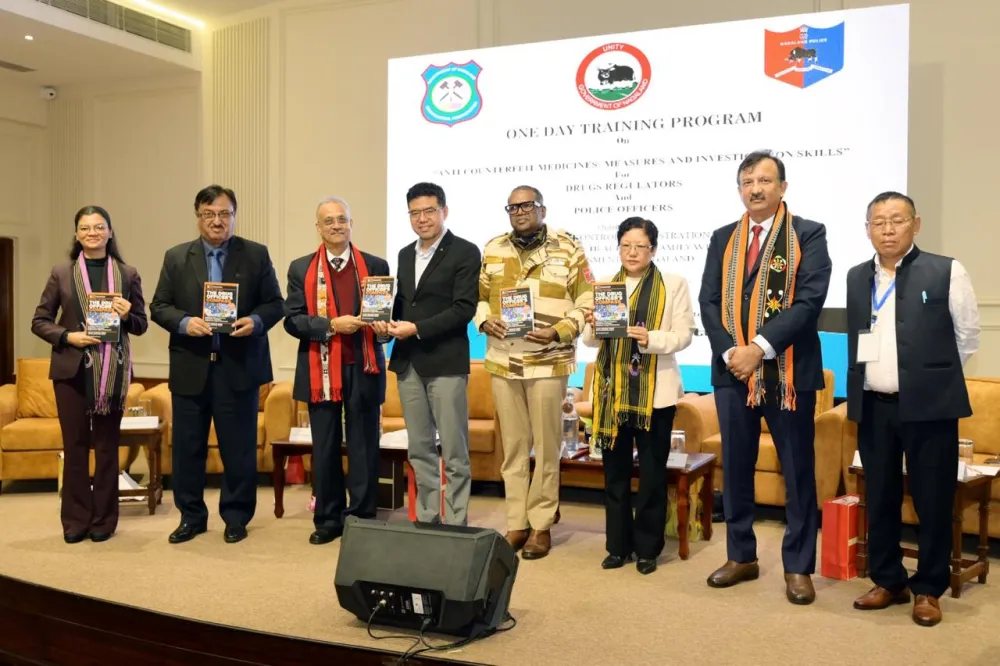
State authorities, law enforcement officials, and healthcare regulators gathered in Chümoukedima, Nagaland, for a specialized one-day training workshop aimed at combating the rising public health threat of counterfeit and substandard pharmaceuticals. Organized by the Directorate of Health and Family Welfare, the programme brought together frontline personnel to bolster vigilance across the region's pharmaceutical supply chain.
The inaugural session was led by senior state administrators, including Health and Family Welfare Secretary S. Tainiu, Additional Director General of Police for Law and Order Sandeep M. Tamgadge, and Director of Health Dr. Imotemsu. Addressing the assembly, officials stressed that safeguarding medicine integrity requires seamless coordination between regulatory monitors and uniformed police officers.
Organizers highlighted the pressing need to equip local enforcement teams with technical diagnostic tools and statutory knowledge to disrupt illicit distribution networks. By bridging the operational divide between public health inspectors and criminal investigators, the initiative seeks to identify counterfeit consignments before they reach vulnerable patients in retail pharmacies.
Dr. Keshav Kumar, former Director General of Police in Gujarat and former Joint Director of the Central Bureau of Investigation, conducted a detailed technical session focusing on investigative protocols. He walked participants through procedural methodologies required to build legally robust cases, emphasizing the collection of forensic evidence to secure court convictions against counterfeiters.
Lalit Goel, a retired Drugs Controller from the Food and Drugs Administration of Haryana, led a focused module on the vital role of packaging in detecting spurious items. His session, titled Significance of Labeling in Detection of Spurious/Counterfeit Drugs/Medicines, instructed attendees on spotting typographic discrepancies, invalid batch prints, and unauthorized security seals.
During the event, dignitaries and state health officials also formally unveiled a specialized reference book authored by Goel on pharmaceutical enforcement. The publication is designed to serve as an operational field guide for inspectors navigating regulatory compliance and fraud detection during routine and targeted market inspections.
Practical enforcement strategies were further explored by Omprakash Sadhwani, a retired Joint Commissioner with Maharashtra's FDA, who shared case studies from complex pharmaceutical probes. Sadhwani detailed field-tested techniques for trailing illicit shipments, auditing suspicious wholesale inventories, and conducting coordinated multi-agency raids on counterfeit manufacturing hubs.
Modern technical tracking mechanisms were reviewed by Madhubanti Das, a research associate working in anti-counterfeiting data management and pharmacopoeia analysis. Das presented on the deployment of a centralized counterfeit medicine databank, demonstrating how digital analytics, real-time intelligence feeds, and cross-jurisdictional reporting assist regulators in tracking suspicious batches.
Counterfeit medicines pose severe therapeutic hazards, ranging from treatment failure and toxic ingredient exposure to the accelerated emergence of antimicrobial resistance. For northeastern states such as Nagaland, where complex transit corridors can complicate supply chain surveillance, proactive inter-agency screening is essential to protect clinical safety.
Moving forward, state authorities indicated that insights gained from the training will be integrated into ongoing inspection routines and joint enforcement operations. Officials underscored that continuous professional training and real-time inter-departmental communication remain the most effective defenses against the penetration of fraudulent drugs into Nagaland's healthcare ecosystem.
Primary source: Google News Nagaland. Newzly rewrites and structures source reporting for clarity; verify critical details at the original.