Nagaland's Escalating Climate Disasters Demand Urgent Overhaul in Relief, Response and Reporting
Devastating landslides and floods in Nagaland have exposed critical vulnerabilities in disaster response, relief funding, and media coverage, prompting mounting calls from experts and local communities for urgent systemic reforms across the state.
In this piece
Severe monsoon landslides and flooding in Nagaland have triggered urgent demands for comprehensive overhauls in disaster relief, warning systems, and news…
Mounting climate-induced disasters across Nagaland have intensified calls from local communities and environmental experts for an overhaul of the state's disaster response, relief mechanisms, and media coverage. Following devastating monsoon landslides and flash floods that swept through eastern districts, regional observers warn that existing crisis systems are failing to match the speed and severity of shifting weather patterns.
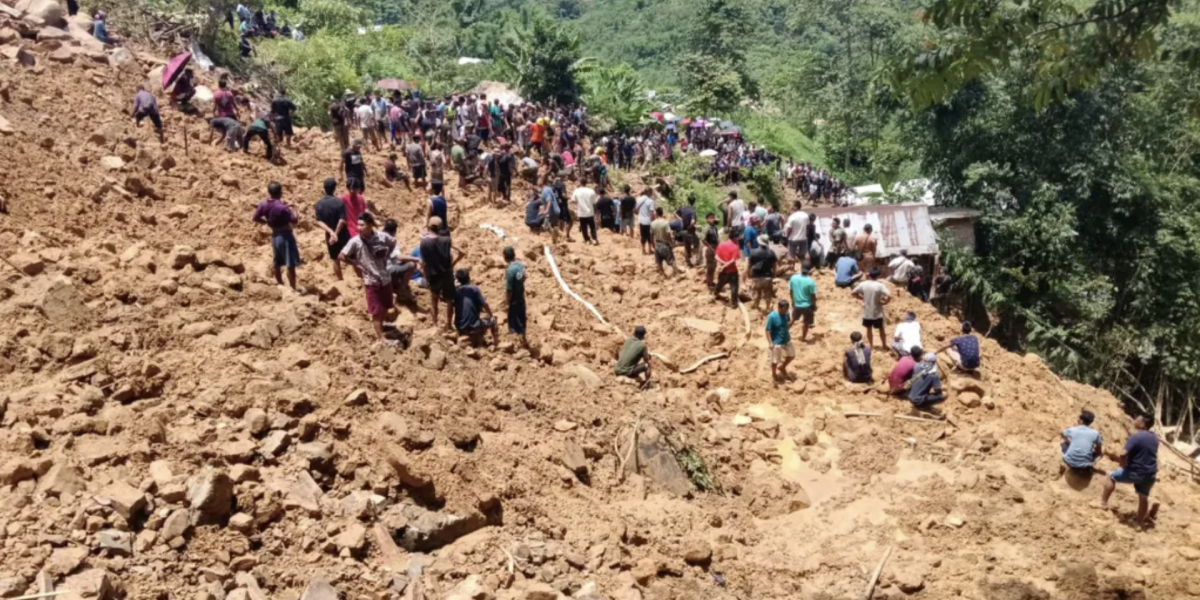
The vulnerabilities of the region were laid bare when a catastrophic landslide struck Mon town early on the morning of July 19. The disaster was part of a broader wave of extreme weather that claimed 11 lives across the state, leaving trails of debris that cut off connectivity and paralyzed community life in remote hilly settlements.
Government assessments revealed the widespread scope of the devastation, recording that the extreme weather affected more than 28,000 families across 280 villages and municipal wards. The torrential rains caused structural damage to 1,746 homes and inundated or eroded approximately 1,593 acres of vital agricultural and cultivated land, stripping rural agrarian households of their primary livelihoods.
Nagaland's rugged topography makes its steep mountain slopes particularly susceptible to intense surface runoff and slope destabilization during monsoon downpours. Unprecedented localized rainfall events, including frequent cloudbursts, have triggered rapid soil erosion and dislodged fragile hillsides, overwhelming historical drainage channels and unpaved arterial roadways.
In the immediate aftermath of the July calamities, the Nagaland government sanctioned 70 lakh rupees in relief assistance to assist affected populations. However, civil society groups and local community leaders criticized the funding as severely inadequate, pointing out that modest emergency allocations barely scratch the surface of rebuilding shattered houses, clearing massive blockages, and reviving washed-out farmland.
Analysts emphasize that administrative responses remain largely reactive, focusing on short-term monetary compensation rather than comprehensive disaster prevention and mitigation. Deficits in local early warning systems and a lack of granular meteorological data mapping have left hillside communities with little advance notice when heavy precipitation threatens to trigger catastrophic mudslides.
Compounding the crisis is a chronic deficiency in reporting, as catastrophic weather events in Northeast India frequently receive negligible attention from national mainstream news outlets. Local commentators note that underreporting trivializes slow-onset ecological emergencies, reducing public awareness and limiting national pressure for substantial disaster relief funds and institutional reform.
The lack of climate-resilient engineering standards has further exacerbated the destruction, as roads and basic civic infrastructure are repeatedly constructed without detailed geological terrain surveys. When seasonal floods and landslides sever isolated transit corridors, emergency responders often struggle for days to deliver medical aid, food supplies, and heavy machinery to stranded villagers.
Environmental specialists and regional advocates argue that Nagaland must transition away from makeshift administrative quick fixes toward evidence-based climate adaptation strategies. Developing precise micro-level rainfall tracking, reinforcing fragile slopes, and strictly regulating construction in recognized high-risk geological corridors are cited as critical measures to prevent future loss of life.
As changing climate patterns threaten to produce even more frequent and severe weather extremes across the Eastern Himalayas, state authorities face growing pressure to formulate enduring resilience frameworks. Meaningful progress will depend on pairing enhanced financial relief with systematic reporting and robust community-level preparedness before the next monsoon season arrives.
Primary source: Google News Nagaland. Newzly rewrites and structures source reporting for clarity; verify critical details at the original.