NASA Launches Mid-Power Electric Rocket Challenge for U.S. Companies
NASA has opened a new commercial challenge asking U.S. companies to design mid-power Hall effect thruster prototypes, aiming to advance high-efficiency electric rocket propulsion for future space missions.
In this piece
NASA has launched a competition inviting U.S. companies to build working prototypes of mid-power Hall effect thrusters. The electric propulsion systems use…
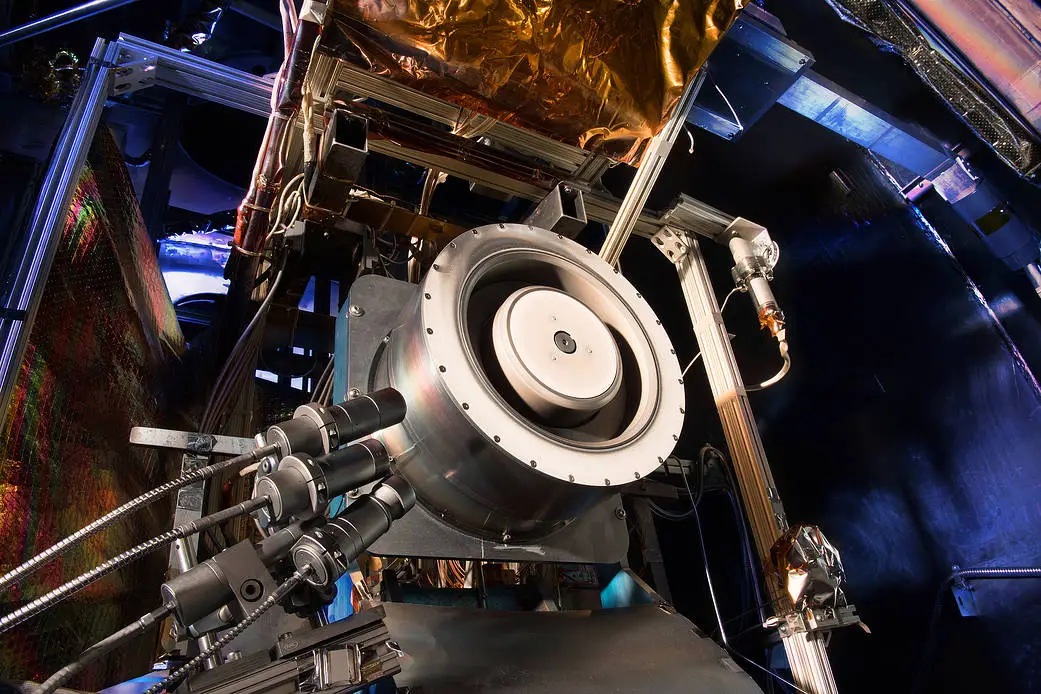
NASA has launched a new technology competition inviting commercial companies across the United States to develop and build working prototypes of mid-power Hall effect thrusters. The initiative aims to spur domestic innovation in electric propulsion systems that the agency considers essential for the future of space exploration and orbital operations. By engaging private industry, the challenge seeks to accelerate the maturation of advanced spacecraft maneuvering capabilities.
Hall effect thrusters are an advanced category of electric propulsion that use an electric field to accelerate a propellant gas, typically xenon or krypton, to generate forward momentum. By expelling ionized particles at significantly higher exhaust velocities than traditional rocket engines, the thrusters achieve extraordinary fuel efficiency. This design allows spacecraft to execute prolonged propulsion maneuvers without carrying prohibitive amounts of heavy chemical fuel.
While conventional chemical thrusters remain necessary for the immense thrust required during initial launch from Earth, electric propulsion provides distinct advantages once a spacecraft is operating in space. The steady, low-thrust output can be maintained continuously over weeks or months, gradually achieving high speeds while preserving valuable payload capacity. Consequently, the technology has become an indispensable option for satellites, deep-space probes, and complex orbital transport vehicles.
NASA's focus on the mid-power segment addresses a vital tier in the aerospace propulsion spectrum. Mid-power thrusters are engineered to bridge the performance gap between low-power units utilized on small orbital satellites and high-power thruster arrays designed for massive interplanetary transport ships. Creating reliable prototypes in this power bracket could unlock new operational flexibility for both robotic science missions and commercial orbital logistics.
The competition is being coordinated through NASA's technology development framework, which regularly employs prize challenges and crowdsourcing mechanisms to engage the broader commercial sector. By offering a structured competition rather than traditional contracting, the agency encourages non-traditional aerospace firms and established defense contractors alike to present innovative technical approaches. This strategy promotes competitive prototyping while driving down long-term development costs for public missions.
As global space activity intensifies, efficient orbital maneuvering has become a critical operational requirement for both government agencies and commercial satellite operators. Hall effect thrusters provide the precise orbital station-keeping, collision avoidance, and trajectory correction capabilities required in increasingly crowded orbital environments. Advancing mid-power thruster reliability will ensure that future American spacecraft can maneuver effectively and sustainably during extended orbital lifespans.
The propulsion challenge also aligns with NASA's broader strategic objective of fostering a resilient domestic industrial base for critical aerospace technologies. By challenging U.S. companies to build and demonstrate functional hardware, the program helps build sovereign engineering expertise and commercial manufacturing readiness. A strong supply chain for electric thrusters ensures that NASA and commercial partners have dependable domestic access to vital flight hardware.
Participating teams are expected to design and fabricate prototype thrusters that undergo rigorous performance and durability assessments to demonstrate compliance with agency technical standards. The data and operational insights gathered throughout the competition will help NASA engineers evaluate the readiness of mid-power electric propulsion concepts. Looking ahead, successful thruster designs could be integrated into future deep-space exploration architectures, lunar transit missions, and commercial satellite platforms.
Primary source: NASA Breaking News. Newzly rewrites and structures source reporting for clarity; verify critical details at the original.