Nearly a Fifth of S&P 500 Tied to Leaders Without Clear Successors
With nearly a fifth of the S&P 500 tied to three executives without clear successors, Jensen Huang's departure from Nvidia and Elon Musk's reactions highlight mounting governance concerns across major U.S. markets.
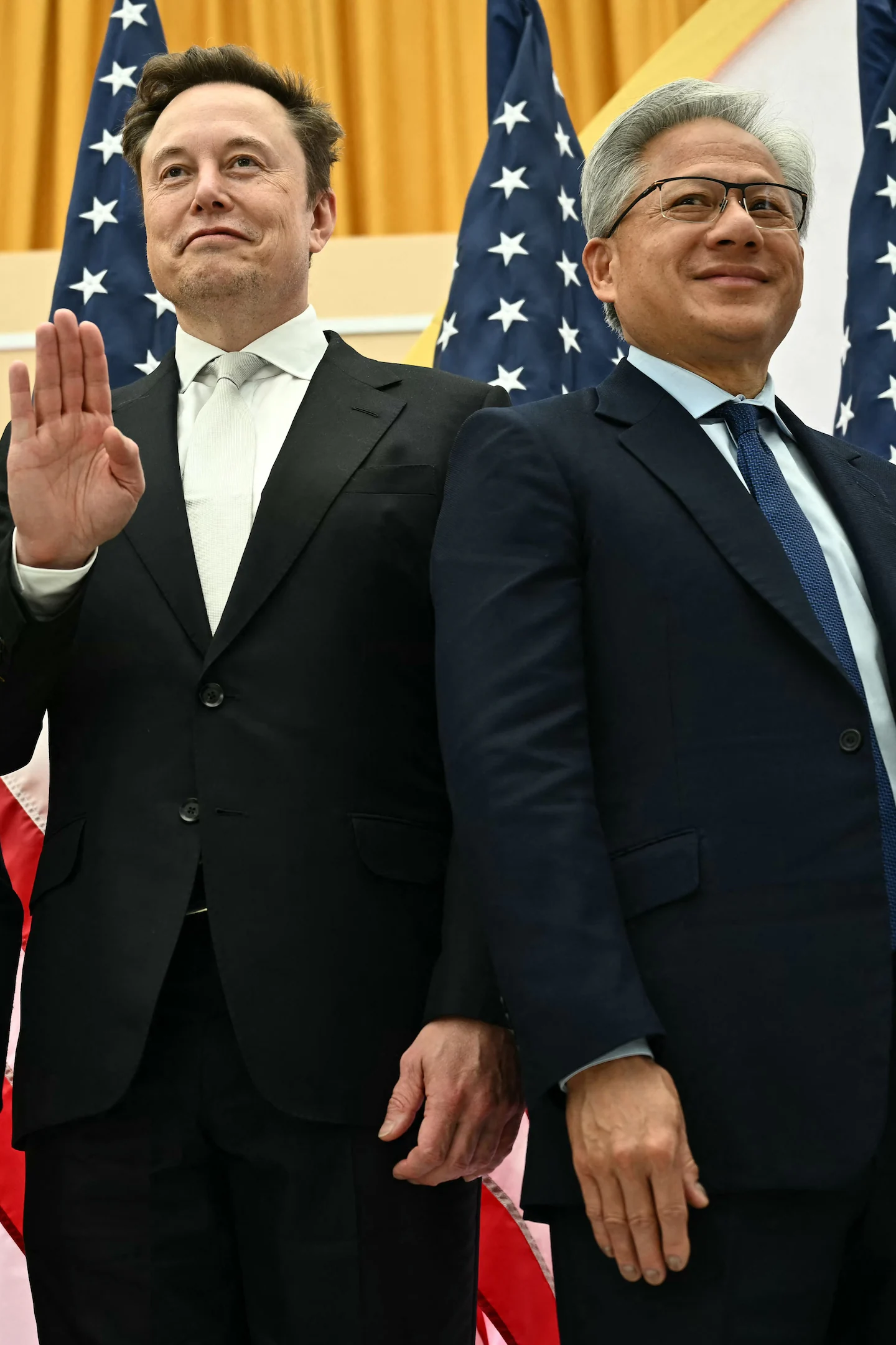
In this piece
Nearly twenty percent of the S&P 500's value is linked to three corporate leaders who lack designated successors. Following Jensen Huang's recent resignation…
A significant concentration of the United States stock market remains closely tethered to a handful of high-profile corporate leaders who lack designated successors, raising fresh governance alarms across Wall Street. According to a Washington Post report, nearly a fifth of the value of the benchmark S&P 500 index is tied to three prominent chief executives whose corporate futures remain undetermined. The issue was thrust back into the spotlight following the unexpected resignation of Jensen Huang from Nvidia last week.
The leadership shakeup at Nvidia quickly prompted public commentary from other corporate chiefs navigating similar succession dilemmas. Tesla and SpaceX chief executive Elon Musk engaged with an observation on the social media platform X, where a user argued that an organization cannot simply replace an iconic founder. Musk endorsed the sentiment directly, responding with the phrase "True words" to acknowledge the unique vulnerability facing founder-led mega-cap enterprises.
For Musk's corporate empire, questions surrounding governance and long-term continuity are far from unprecedented. Investors and corporate governance specialists at both electric vehicle maker Tesla and aerospace manufacturer SpaceX have spent years grappling with the absence of formalized, transparent succession roadmaps. The heavy reliance on Musk's singular vision, public persona, and day-to-day decision-making has created persistent anxiety among major institutional shareholders.
The departure of Huang from Nvidia serves as a stark case study of how rapidly executive turnover can rattle modern financial markets. Having steered the semiconductor giant through the artificial intelligence boom into one of the world's most valuable public corporations, Huang's exit immediately forced markets to evaluate operational resilience without its long-serving helmsman. His departure demonstrated the precarious balance between visionary founder stewardship and institutional stability.
The broader concern reflects an era of unprecedented market concentration, where a select cluster of mega-cap technology corporations disproportionately drives the broader benchmark indices. When nearly twenty percent of an index as central as the S&P 500 is exposed to the career trajectories of just three individuals, personal career decisions transform into systemic market risks. Portfolio managers and retirement funds face heightened exposure to key-person dependencies that extend far beyond standard business cycle risks.
Corporate governance experts have persistently warned that excessive dependence on dominant personalities complicates board oversight and succession planning. Public boards are legally obligated to protect shareholder value by ensuring robust contingency plans for chief executive transitions, whether planned or abrupt. However, charismatic founders frequently wield substantial voting control and public influence, making it exceedingly difficult for directors to publicly groom or introduce alternative leadership.
The dynamic also creates internal organizational challenges within the companies themselves, where potential heirs apparent are rarely positioned to step out of the founder's shadow. The sentiment acknowledged by Musk reflects the widespread belief that replacing a transformational founder requires more than identifying an experienced corporate manager. Companies often struggle to convince investors that future leadership can replicate the visionary instincts and risk tolerance of their pioneering forebears.
Looking ahead, institutional investors are anticipated to intensify pressure on public corporate boards to clarify emergency protocols and multi-year succession strategies. While executive departures such as Huang's highlight the inevitable transitions facing corporate giants, the path toward institutional continuity remains delicate for founder-dominated enterprises. How boards navigate these generational shifts will likely determine not only the valuation of individual firms, but also the stability of the broader financial markets tied directly to their fortunes.
Primary source: Yahoo Finance Markets. Newzly rewrites and structures source reporting for clarity; verify critical details at the original.