world·Delhi·New Delhi District
Nepal Prime Minister Balen Shah Arrives in India for Talks With Modi on Aid and Energy
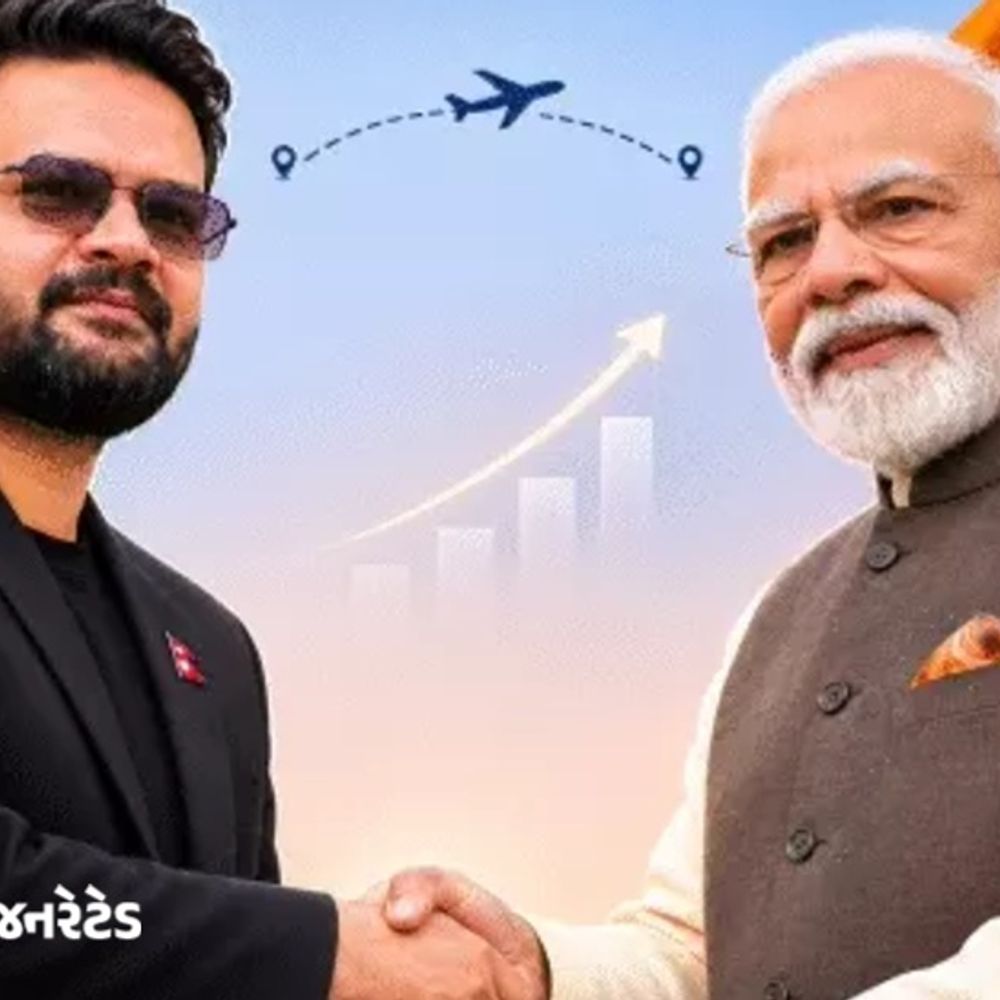
Nepali Prime Minister Balen Shah began his maiden official visit to India on Monday, holding delegation-level talks with Prime Minister Narendra Modi in New Delhi focused on infrastructure funding, new air routes, and cross-border energy cooperation.
In this piece
Nepal Prime Minister Balen Shah arrived in New Delhi for high-level bilateral talks with Indian Prime Minister Narendra Modi. The discussions centered on…
Nepali Prime Minister Balendra Shah arrived in New Delhi on an official two-day visit to hold high-level bilateral discussions with Indian Prime Minister Narendra Modi. The trip marks Shah's first overseas bilateral visit since assuming office, following a formal invitation extended by the Indian leadership. Both leaders convened at Hyderabad House for extensive delegation-level talks aimed at strengthening long-standing diplomatic and economic ties.
During the initial engagements, External Affairs Minister S. Jaishankar met with Prime Minister Shah to review the comprehensive partnership between the two neighboring countries. The visiting leader was also scheduled to call on Indian President Droupadi Murmu as part of the diplomatic protocol. Senior officials from both sides joined the deliberations to address regional trade, transport corridors, and mutual strategic interests.
A primary item on Kathmandu's agenda is securing financial support and concessional assistance to accelerate reconstruction in regions severely impacted by recent natural disasters and flooding. Nepalese representatives placed a formal proposal for a substantial economic package, estimated at approximately two billion dollars, to bolster public infrastructure, road networks, and rehabilitation initiatives. The funds are expected to provide fiscal relief and restore damaged connectivity across several vulnerable Nepalese provinces.
Kathmandu also pressed for expanded aviation connectivity, specifically requesting the opening of additional entry air routes through Indian airspace to facilitate smoother commercial operations. Nepalese authorities have sought enhanced access to support newly constructed international airports in Bhairahawa and Pokhara, which rely heavily on efficient regional flight paths. Improved air corridor permissions from India are viewed as essential for boosting Nepal's tourism sector and regional air travel efficiency.
Cross-border energy cooperation emerged as another pivotal pillar during the discussions, building on recent framework pacts between the two Himalayan nations. Indian investment in Nepal's vast hydroelectric potential remains central to both nations' clean energy transitions, allowing Kathmandu to export surplus electricity to Indian grids. The leaders reviewed several ongoing power generation and transmission line projects designed to enhance energy security on both sides of the border.
From New Delhi's perspective, the bilateral summit presents significant avenues to deepen private and public sector investment in Nepal's developing economy. Indian enterprises have expressed strong interest in expanding operations within manufacturing, renewable energy, and digital infrastructure across the border. Facilitating cross-border payments, modernizing border checkpoints, and reducing transit friction were emphasized to support growing trade volumes.
Beyond traditional connectivity and infrastructure, both delegations examined collaboration in emerging domains such as technology, innovation, and startup ecosystems. Officials explored joint programs to encourage technical education, digital capacity building, and sports exchanges, reflecting Shah's focus on youth-centric governance. Expanding digital financial linkages and interoperable payment systems also featured prominently in the bilateral dialogue.
As part of the summit, Prime Minister Modi and Prime Minister Shah jointly inaugurated completed bilateral energy and infrastructure initiatives through virtual ceremonies. The two governments also formalized several memorandums of understanding and bilateral agreements, cementing shared commitments across commerce and connectivity. These agreements are intended to provide institutional backing for ongoing projects and streamline future joint ventures.
The summit reflects an effort by both New Delhi and Kathmandu to maintain steady bilateral momentum amidst complex geopolitical dynamics in South Asia. India continues to anchor its regional policy in its Neighborhood First doctrine, prioritizing robust border security and economic integration with its immediate neighbors. For Nepal, balancing domestic economic recovery with strong regional partnerships remains vital for sustaining post-disaster growth.
Bilateral working groups and joint technical committees are expected to convene in the coming months to implement the agreements reached during the visit. Officials from both ministries indicated that progress on air corridor authorizations and financing modalities will be monitored closely through established diplomatic mechanisms. As Prime Minister Shah concludes his tour, the bilateral trajectory will depend on how swiftly both capitals translate high-level discussions into measurable cross-border infrastructure on the ground.
Primary source: Divya Bhaskar International. Newzly rewrites and structures source reporting for clarity; verify critical details at the original.