Netanyahu and Eisenkot meet after unity government offer
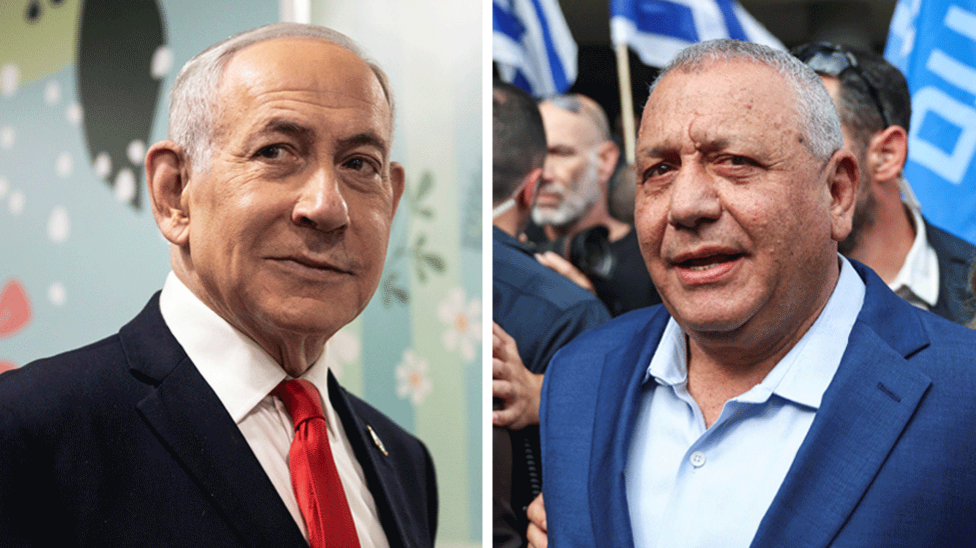
Israel’s caretaker prime minister and political rival Gadi Eisenkot have held talks after Benjamin Netanyahu proposed a unity government aimed at ending an election deadlock.
In this piece
Caretaker Prime Minister Benjamin Netanyahu and Gadi Eisenkot have met after Netanyahu proposed a unity government. The talks are framed as an effort to break…
Caretaker Prime Minister Benjamin Netanyahu and Gadi Eisenkot have met after Netanyahu proposed a unity government, according to a BBC World report. The meeting places two Israeli leadership rivals in direct talks at a moment when forming a stable government has proved difficult.
The account of the encounter is brief. It establishes that the talks followed Netanyahu’s proposal and that the discussions are tied to efforts to break an election deadlock. It does not describe where the meeting took place, how long it lasted, or what was said.
Netanyahu is identified as caretaker prime minister, a role that keeps an incumbent in office while a new government has yet to be formed. Eisenkot is described as a leadership rival rather than as a partner already inside a governing arrangement. Their meeting therefore marks contact across a political divide, not confirmation that a joint administration is in place.
A unity government, in the sense used in the report, would bring rival political camps into a shared administration instead of leaving government formation to one bloc alone. Such proposals typically surface when election results do not produce a clear path to a majority. The BBC report frames Netanyahu’s offer in those terms, without setting out the offer’s terms.
Election deadlock matters because day-to-day authority continues under a caretaker while larger decisions about the next government remain unresolved. Parties and leaders can negotiate, but the public record of this particular meeting does not show whether those negotiations have moved beyond an initial discussion.
The political weight of the talks rests on the identities of the two men and on the stated aim of the proposal. A caretaker prime minister seeking a unity arrangement with a rival signals that routine coalition-building has not, on the evidence of the report, produced a settled outcome. Whether Eisenkot treats the proposal as a basis for further bargaining is not stated.
No public commitments, vote totals, timelines, or draft agreements are included in the source material. Any reading that the sides are close to a deal, or that the talks have already failed, would go beyond what has been reported. The only firm development is that they met after the proposal was made.
For Israelis watching the government-formation process, the meeting is a sign that channels between rivals remain open. It does not, by itself, show how other political figures might respond, or whether a broader arrangement is even under discussion. Those questions sit outside the published account.
What happens next depends on whether the two sides continue talking and whether a unity proposal can attract enough support to end the deadlock. The report does not say that further meetings are scheduled, nor does it say that the proposal has been rejected.
Until the participants or their offices provide a fuller account, the significance of the talks is limited to what is known: a caretaker prime minister and a rival sat down after a unity government was proposed, with the stated purpose of trying to break an election deadlock. The outcome of that effort remains open.
Primary source: BBC World. Newzly rewrites and structures source reporting for clarity; verify critical details at the original.