world·Louisiana·Orleans Parish
New Orleans River Cruise Ship Partially Sinks Following Tanker Collision
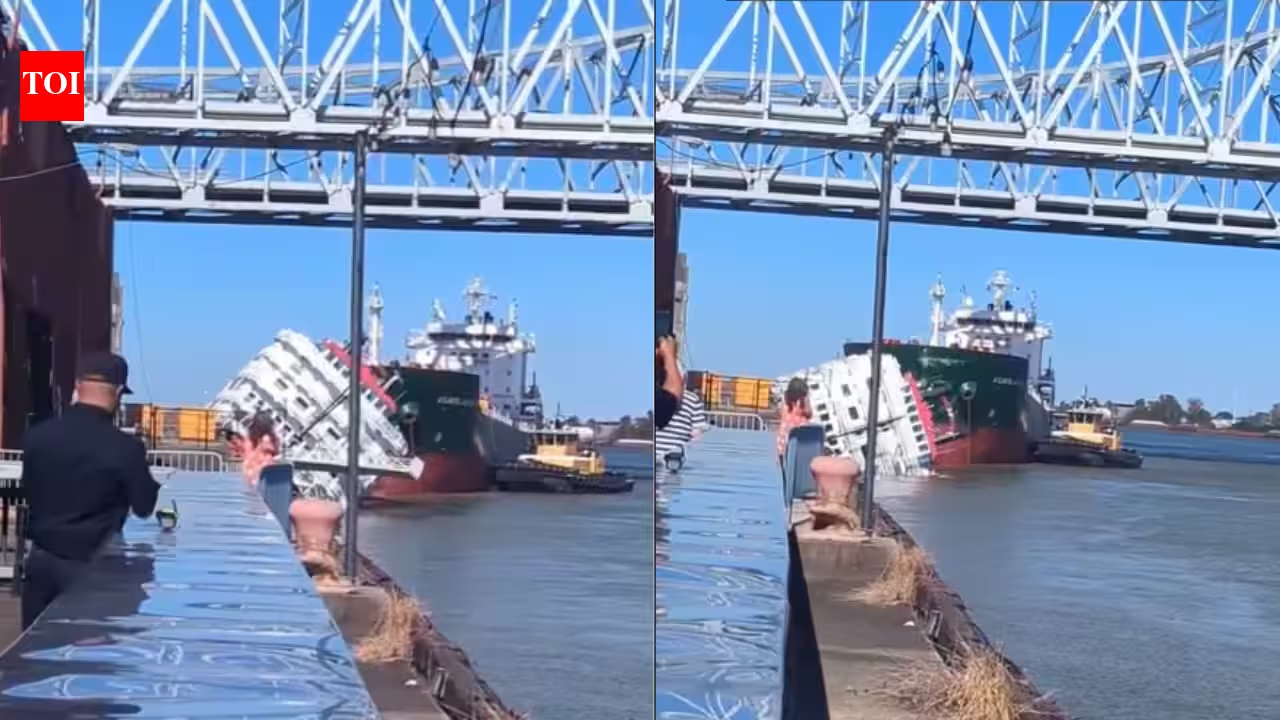
A paddlewheel river cruise boat partially sank along the Mississippi River in New Orleans following a collision with an industrial tanker, prompting dramatic water rescues and multiple hospitalizations.
In this piece
A river cruise ship carrying over 100 passengers partially sank in New Orleans after being struck by an asphalt tanker on the Mississippi River. Emergency crews…
A paddlewheel river cruise ship carrying roughly 130 passengers and crew members partially sank along the Mississippi River in New Orleans after colliding with a commercial tanker. Emergency responders rushed to the scene near the Port of New Orleans as the tourist vessel began taking on water and listing heavily. Search-and-rescue teams immediately initiated evacuations to pull individuals from the water and escort stranded passengers to safety.
The collision occurred when the commercial asphalt carrier Atlantic Asphalt struck the docked river cruise vessel American Heritage. The force of the heavy impact breached the cruise boat's hull, forcing multiple people into the river wearing emergency life jackets. Harbor patrol units and nearby maritime vessels quickly deployed rescue craft to retrieve victims from the strong river currents.
Dozens of emergency vehicles gathered along the riverbank as local paramedics set up triage staging areas to assess the injured. Emergency medical personnel transported at least twelve individuals to area hospitals for evaluation and treatment, primarily for hypothermia, shock, and impact-related injuries. Officials reported that all passengers and crew members were ultimately accounted for following extensive multi-agency sweeps of the vessel and surrounding shoreline.
The incident prompted a massive coordinated response from regional emergency agencies, including the U.S. Coast Guard, Port NOLA Harbor Police, and the New Orleans Fire and Police departments. First responders worked rapidly to stabilize the listing vessel and prevent it from completely slipping beneath the surface of the river. Specialized marine rescue teams remained deployed along the riverfront to verify that no individuals remained trapped in flooded lower compartments.
To facilitate emergency operations and prevent secondary accidents, the U.S. Coast Guard implemented an immediate temporary closure of commercial traffic along the affected stretch of the lower Mississippi River. The waterway serves as one of North America's busiest transit corridors, handling large container carriers, bulk freighters, and petroleum tankers daily. Maritime authorities restricted movement to maintain a clear safety perimeter for emergency craft, salvage boats, and environmental protection units.
The Mississippi River corridor around New Orleans presents significant navigational complexity, where narrow commercial shipping lanes frequently intersect with domestic passenger tourism docks. High river currents, shifting sandbars, and tight maneuvering zones demand precise harbor pilotage for heavy industrial freighters. While collisions in the port area remain relatively rare, encounters involving large cargo vessels pose substantial hazards to lighter passenger-carrying riverboats.
The American Heritage, operated by American Cruise Lines, is a traditional paddlewheel-style vessel designed for multi-day heritage cruises along the historic waterways of the American South. The vessel typically carries domestic and international travelers exploring regional landmarks between New Orleans and upper Mississippi ports. Tour operators and port officials expressed shock over the collision involving a docked vessel in a designated passenger berthing zone.
Environmental safety units and port engineers initiated preliminary inspections to assess potential chemical hazards, oil spills, or fuel leaks stemming from the breached vessels. Specialized containment booms were placed on standby to mitigate any potential leakage from the asphalt tanker or the cruise boat's onboard fuel reserves. Early assessments indicated no widespread hazardous discharge, though structural integrity monitoring of neighboring docks continues.
Federal maritime safety investigators have initiated a comprehensive inquiry into the operational circumstances that led to the collision. The investigation will examine communications between harbor pilots, bridge crew logs, propulsion systems, and steering mechanics aboard the commercial tanker. Investigators will also analyze local river conditions, visibility factors, and port radar recordings to determine why the cargo vessel struck the berthed passenger ship.
Local authorities and emergency agencies plan to transition operations from active rescue to salvage and environmental remediation over the coming days. Maritime contractors will coordinate efforts with the Coast Guard to safely refloat or remove the compromised cruise boat while minimizing disruptions to vital Mississippi River commerce. Official findings regarding the mechanical or navigational factors responsible for the accident will be released following technical reviews by federal investigators.
Primary source: Google News India. Newzly rewrites and structures source reporting for clarity; verify critical details at the original.