New York City Lawmakers Propose Ban on Boiling Lobsters Alive in Restaurants
New York City council members have introduced legislation to prohibit restaurants from boiling lobsters and crabs alive, citing scientific evidence that crustaceans feel pain and urging more humane culinary practices.
In this piece
New York City Council members have introduced a bill to ban restaurants from boiling live lobsters and crabs. Citing mounting scientific consensus on crustacean…
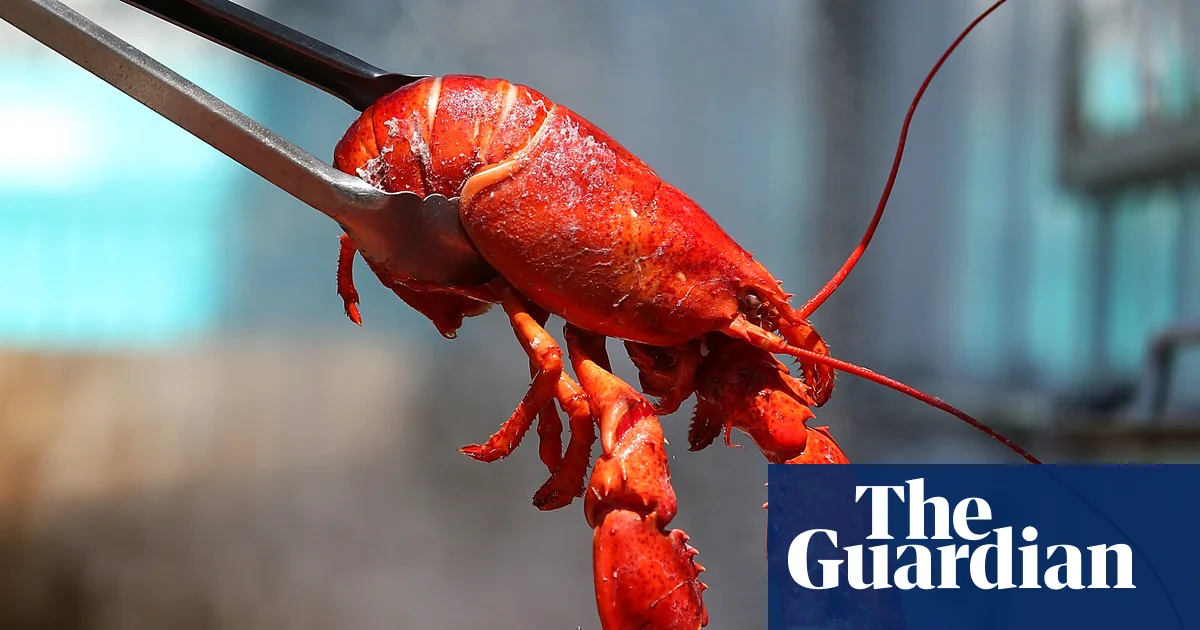
New York City lawmakers have introduced a measure that would prohibit restaurants and food-service establishments from boiling live lobsters, crabs, and other crustaceans. The bill, sponsored by Council Members Oswald Feliz of the Bronx and Harvey Epstein of Manhattan, seeks to eliminate a centuries-old culinary practice in the city's dining establishments. Under the proposal, commercial kitchens would be required to render the marine animals unconscious before cooking them.
The legislation, introduced as Intro 1188, targets food-service operations rather than retail seafood markets or home cooks. Under the proposed enforcement framework, restaurants violating the restriction would initially receive a formal warning without a financial penalty. Subsequent violations would carry civil fines of up to $100 per infraction, enforced through municipal administrative hearings.
Sponsors emphasized that the proposal is not intended to remove seafood from dinner tables or restrict menus across the five boroughs. Restaurants would remain entirely free to serve lobster rolls, whole crustaceans, and crab dishes as long as the kitchen uses humane dispatch techniques prior to thermal preparation. Permissible methods would include electrical stunning, rapid chilling through freezing, or mechanical destruction of the central nervous system.
In advancing the measure, Feliz argued that plunging live creatures into scalding water constitutes an unnecessary and inhumane form of suffering that modern kitchens should abandon. He described boiling an animal alive as the textbook definition of animal cruelty, contending that culinary tradition should evolve alongside scientific understanding. The sponsors maintained that adopting straightforward pre-cooking protocols allows hospitality businesses to uphold animal welfare standards without disrupting customer dining experiences.
The legislative initiative reflects a broader shift within animal cognition research regarding the neurological capabilities of decapod crustaceans. Recent studies have demonstrated that lobsters, crabs, and crayfish possess complex sensory receptors and nervous systems capable of processing physical trauma and experiencing pain. Researchers have documented physiological stress responses, avoidance behaviors, and prolonged distress when these animals encounter sudden extreme heat or noxious stimuli.
Council members noted that New York City would be aligning itself with several international jurisdictions that have already enacted similar legal protections. Switzerland banned the practice of boiling live lobsters in 2018, requiring either electrical stunning or mechanical destruction before cooking. Countries such as Norway, Austria, New Zealand, and parts of Australia have also introduced statutory protections recognizing crustacean sentience and outlawing live immersion.
Despite backing from animal rights organizations, the proposal has encountered skepticism and outspoken resistance from segments of the city's restaurant industry. Several chefs and hospitality operators questioned the practicality of the mandate, warning that specialized stunning equipment can be prohibitively expensive for small independent eateries. Critics also argued that local lawmakers are imposing excessive regulatory burdens on food establishments already grappling with high operating expenses and supply chain pressures.
Supporters of the measure countered that compliance does not necessarily require costly technological investments like industrial electric stunners. Advocates pointed out that placing crustaceans in deep chill or ice-water baths slows their metabolism into a torpor-like state, rendering them insensitive before preparation. They stressed that many fine-dining establishments and European restaurants already employ these low-cost methods as standard culinary protocol without compromising food safety or culinary quality.
The bill will now proceed to the City Council's Committee on Consumer and Worker Protection for formal review and public hearings. Lawmakers plan to hear testimony from seafood distributors, culinary professionals, and veterinary scientists before determining whether the measure will advance to a full council vote. If approved, the policy would establish New York City as the first major American municipality to outlaw the live boiling of crustaceans.
Primary source: Google News New York. Newzly rewrites and structures source reporting for clarity; verify critical details at the original.