North Carolina tops NC State 35-6 in Tar Heels–Wolfpack football result
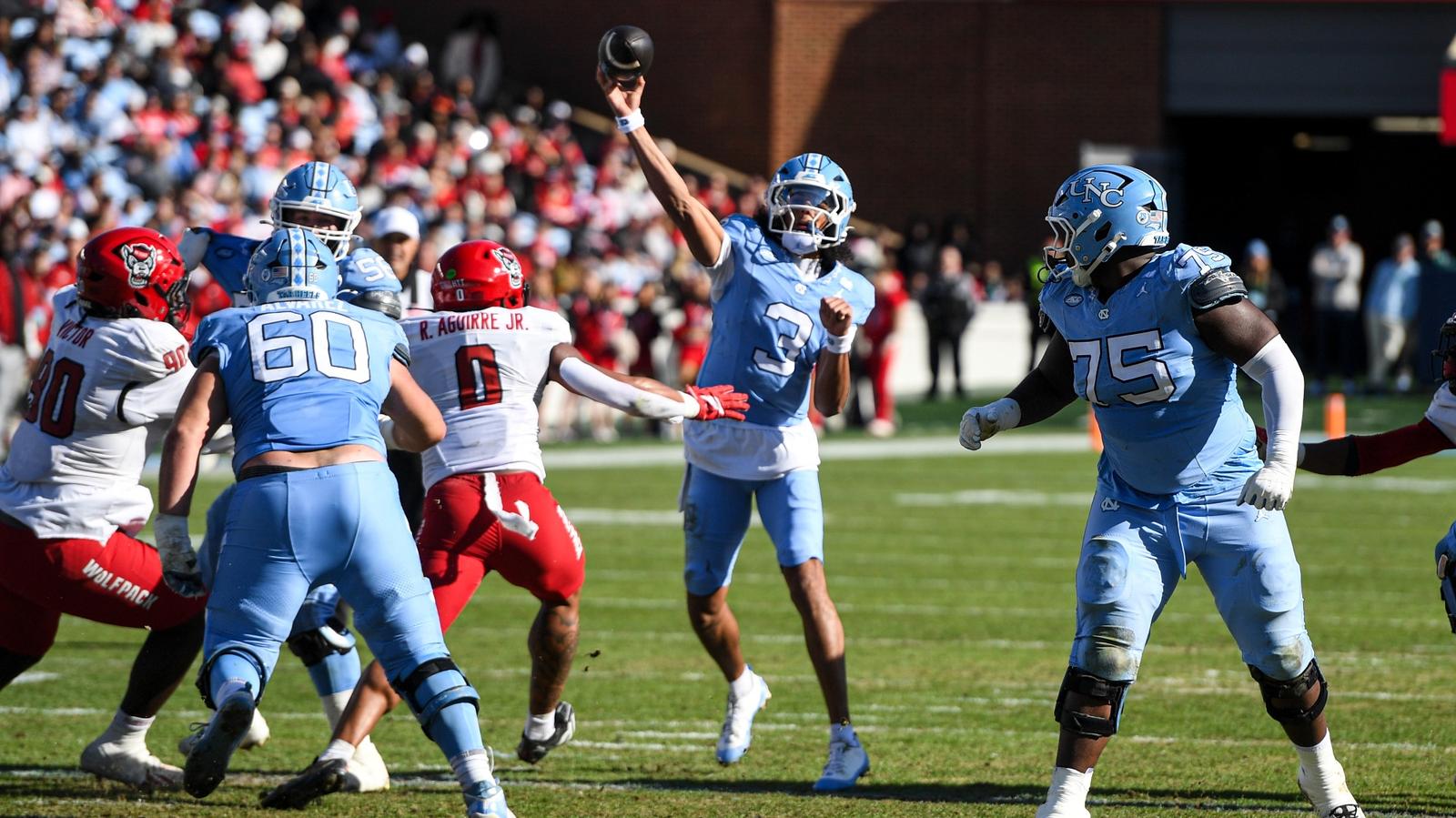
University of North Carolina Athletics reported a 35-6 football win for the Tar Heels over the NC State Wolfpack, a decisive in-state result carried on a North Carolina news feed.
In this piece
North Carolina’s football program posted a 35-6 victory over NC State, according to a University of North Carolina Athletics item distributed via Google News…
North Carolina defeated NC State 35-6, according to a University of North Carolina Athletics report headlined “Tar Heels Blast Wolfpack, 35-6.” The item appeared on a Google News feed for North Carolina and identifies the result by the programs’ long-used nicknames: the Tar Heels and the Wolfpack.
The published score is the central fact available from the source. A 35-6 final indicates a multi-score margin, which is why the athletics department’s headline describes the outcome as a blowout rather than a narrow win. No play-by-play, scoring summary, or statistical appendix is included in the material reviewed here.
The University of North Carolina and North Carolina State University field the football teams known as the Tar Heels and the Wolfpack. Both are public universities in North Carolina, and their football programs meet as an in-state rivalry. The athletics-site headline frames this meeting as a Tar Heels win by 29 points.
Beyond the final score and the two programs, the source does not name a stadium, a city, a kickoff time, or a date. It also does not say whether the game was a conference contest, a nonconference game, or a postseason matchup. Those details cannot be supplied from the item as distributed.
The report likewise omits individual performances. No quarterback, rusher, receiver, or defender is named, and no yardage, turnover, or third-down figures appear. Any account of how the points were scored would go past what University of North Carolina Athletics stated in the headline and feed summary that are available.
A 35-point total for the winning side and a 6-point total for the losing side is a lopsided college football score on its face. Six points is consistent with a single touchdown without a successful extra point, or with two field goals, but the source does not say which. The margin alone is what the athletics department chose to emphasize.
For readers following North Carolina college football, the result matters because it records a clear separation between two in-state programs in this meeting. Rivalry games often carry attention beyond a single win-loss line, yet this wire item does not describe rankings, bowl implications, or season records for either team. Those standings are not stated and are not assumed here.
The distribution path is straightforward. The story is credited to University of North Carolina Athletics and surfaced through Google News North Carolina. That places the account with the winning program’s athletics site rather than with an independent game story that might include quotes from both sidelines.
Because the source is limited to the headline and a short feed credit, uncertainty should stay attached to everything except the reported winner, loser, and score. North Carolina is the team associated with the Tar Heels; NC State is the team associated with the Wolfpack; the score given is 35-6. Venue, attendance, weather, injuries, and coaching comments are not in the item.
What happens next is also outside the source. The athletics report does not list either team’s following opponent, a television window, or a conference standing update. Fans and later game notes would need a fuller box score or a subsequent release before those points can be reported as fact.
Until a more complete recap is published, the durable news is the result itself: the Tar Heels beat the Wolfpack 35-6, as stated by University of North Carolina Athletics and carried on a North Carolina news feed. Further detail on how the game unfolded has not been provided in the material used for this account.
Primary source: Google News North Carolina. Newzly rewrites and structures source reporting for clarity; verify critical details at the original.