Nvidia Board Reportedly Prepares to Oust Huang, Putting Succession in Focus
Reports that Nvidia’s board is preparing to remove Jensen Huang have unsettled investors, while earlier leadership changes at Intel and McDonald’s illustrate the importance—and limits—of succession planning.
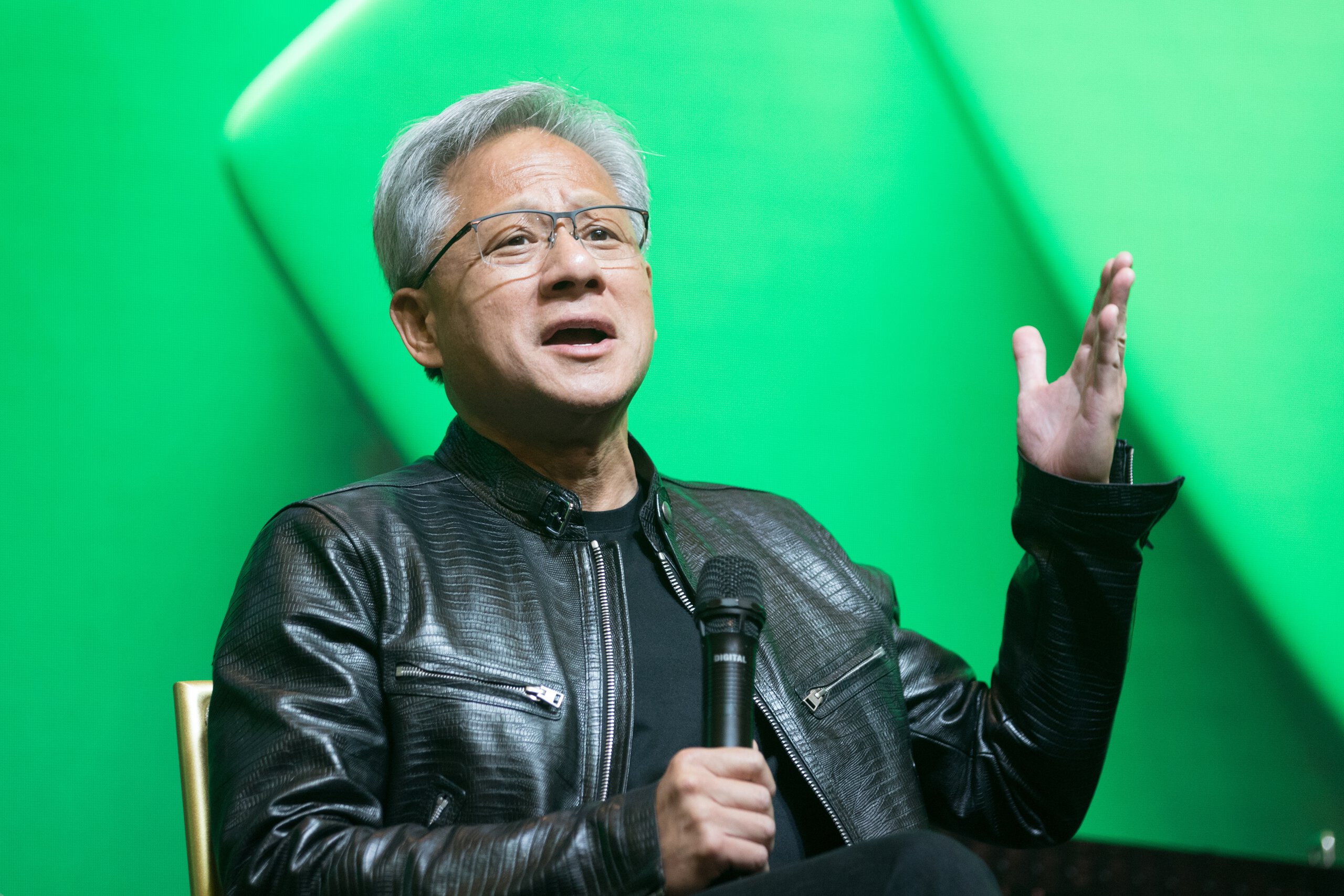
Nvidia’s board is preparing to oust founder and chief executive Jensen Huang, The Wall Street Journal reported on November 11, according to Reuters. The report followed allegations about his personal relationships and raised an immediate question for investors: who would lead the chipmaker if its longtime chief departs?
The New York Times reported that Huang had a relationship with Kimberly Powell, Nvidia’s vice president of healthcare, according to accounts published by Reuters and Axios. The reported preparations for his removal remain distinct from a completed board decision; Reuters said directors could meet as soon as Wednesday to determine his future.
The supplied 24/7 Wall St. account put Nvidia’s after-hours decline at 7.4%, to $160.95, while other contemporaneous reports described a fall of roughly 8%. Those figures represent trading snapshots rather than a final assessment of the financial consequences of any leadership change. They nevertheless indicate the immediate market sensitivity surrounding Huang’s position.
Huang founded Nvidia in 1993 and has served as its chief executive since inception, according to the company’s executive biography. That unusually long tenure makes a potential transition more than a routine personnel announcement. Investors would need to assess how responsibility and decision-making would transfer from the executive who has led the company throughout its history.
Intel’s 2018 leadership change offers one comparison. The company announced Brian Krzanich’s resignation on June 21 after determining that a past consensual relationship with an employee violated its non-fraternization policy. Intel appointed chief financial officer Bob Swan as interim chief executive while its board searched for a permanent replacement.
McDonald’s took a different succession approach when it announced Steve Easterbrook’s departure on November 3, 2019. Its board said he had violated company policy and demonstrated poor judgment involving a consensual relationship with an employee. The company immediately named Chris Kempczinski, previously president of McDonald’s USA, as president and chief executive.
The distinction between those announcements was clear: Intel installed an interim leader while beginning a search, whereas McDonald’s named a permanent successor immediately. Both companies had executives available to assume responsibility. But only McDonald’s resolved the permanent leadership question in the announcement of its outgoing chief’s departure.
The supplied account says Intel subsequently trailed the S&P 500 by 17 percentage points over a year, while McDonald’s outperformed the benchmark. It presents successor readiness as the explanation for those contrasting outcomes. That interpretation requires caution: two companies’ returns across different periods do not isolate succession planning from other business and market influences.
For Nvidia, the historical examples therefore offer a governance framework rather than a reliable stock-market forecast. A named successor, the scope of that executive’s authority and whether an appointment is interim or permanent would help investors evaluate continuity. None would, by itself, establish how the shares should perform afterward.
The next development is whether Nvidia’s board confirms a leadership decision and explains any transition arrangements. Until then, the reported preparations should not be treated as an announced dismissal. Intel and McDonald’s show how differently boards can handle an abrupt departure, but they do not settle the outcome for Nvidia or its shareholders.
Primary source: Yahoo Finance Markets. Newzly rewrites and structures source reporting for clarity; verify critical details at the original.