Nvidia May Face More Adversarial Post-Election Washington, Report Says
Nvidia could face rising political and regulatory pressure in Washington post-election, as reports suggest CEO Jensen Huang's relationship with Donald Trump may not shield the chipmaker from scrutiny.
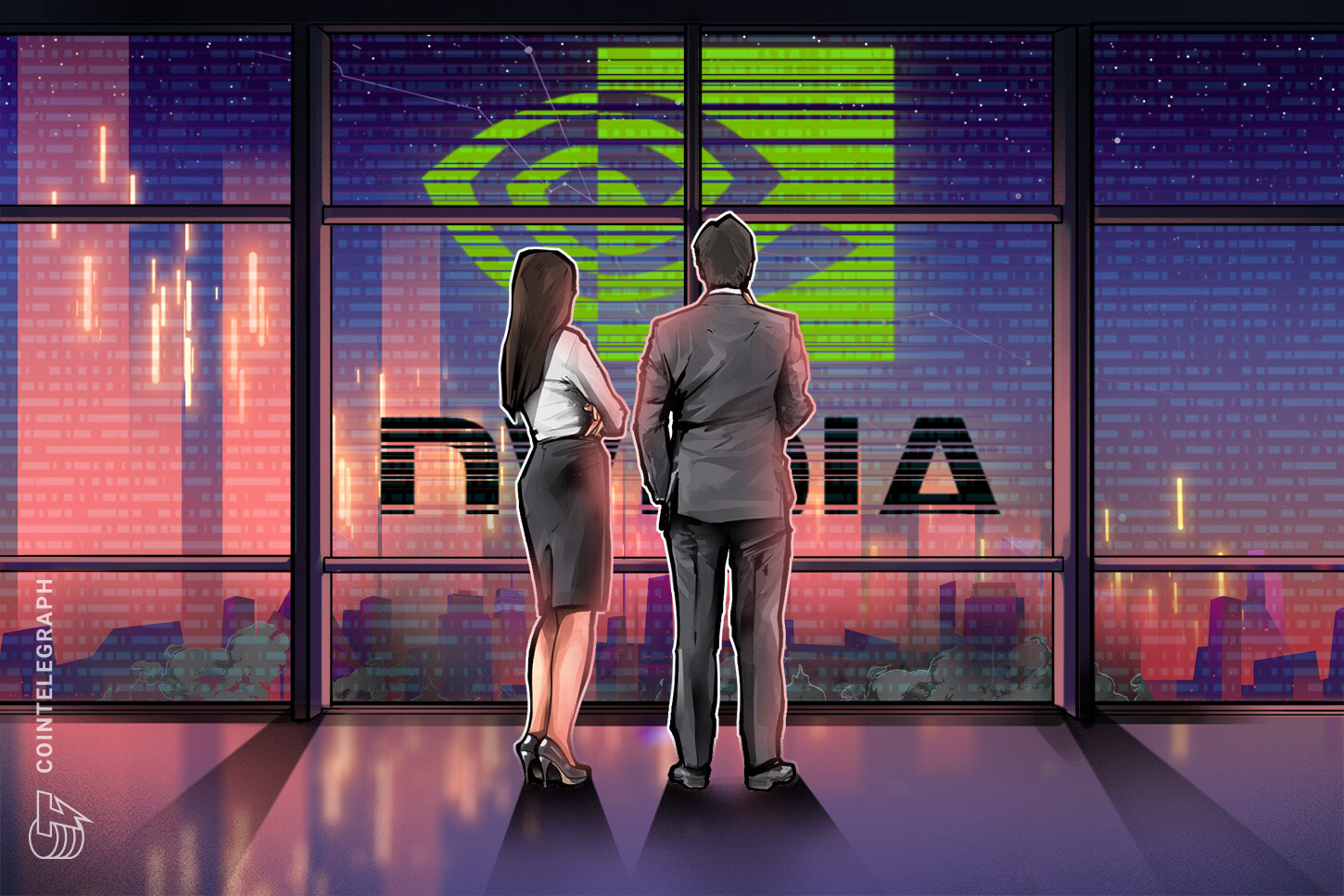
Nvidia could encounter an increasingly contentious political and regulatory climate in Washington following the U.S. presidential election, according to a report from Semafor cited by CoinTelegraph. The report indicates that existing ties between chief executive Jensen Huang and President Donald Trump are unlikely to insulate the artificial intelligence chipmaker from broader governmental friction.
The assessment points to mounting bipartisan focus on leading technology corporations, suggesting that personal diplomacy may have limited leverage against broader policy headwinds. While corporate leaders often seek constructive dialogues with incoming administrations, the institutional machinery governing technology policy operates across multiple federal agencies and legislative committees.
Nvidia has risen to global prominence as the preeminent designer of advanced graphics processing units that power modern artificial intelligence models. That dominant commercial standing has inevitably placed the semiconductor giant under a much stronger spotlight from federal regulators, national security officials, and economic policymakers in Washington.
Over recent years, the semiconductor sector has transitioned from a specialized industrial segment into a cornerstone of geopolitical and economic strategy. Federal authorities have increasingly scrutinized the distribution of advanced microchips, implementing stringent export controls designed to restrict access to sensitive computational technologies abroad.
Beyond international trade restrictions, dominant technology firms face growing bipartisan scrutiny over market competition and supply chain resilience. Federal regulators have maintained a close watch on potential anticompetitive practices within the rapidly expanding artificial intelligence ecosystem, where computing power remains concentrated among a small number of key suppliers.
Semafor's reporting underscores that these institutional and policy pressures are deeply rooted across Washington's governing bodies. Even if top corporate executives maintain cordial or communicative relationships with the executive branch, regulatory agencies and congressional oversight bodies frequently pursue their own statutory mandates and policy agendas.
Industry observers note that the broader technology landscape is bracing for complex policy shifts in the post-election environment. Navigating federal export compliance, trade policies, and potential antitrust inquiries requires sustained engagement with career regulators whose priorities extend well beyond political cycles.
For semiconductor manufacturers and AI hardware developers, the political stakes remain particularly high as governments worldwide evaluate the societal and national security implications of cutting-edge computing infrastructure. Decisions rendered in the capital regarding trade policy, tariffs, and technology governance carry immediate ramifications for global supply chains.
As Washington transitions into its next political chapter, Nvidia and its peers will likely face continued examination across regulatory and legislative fronts. Observers and market participants will be watching closely to see how federal authorities balance the promotion of domestic technological innovation against rigorous oversight and national security considerations.
Primary source: CoinTelegraph. Newzly rewrites and structures source reporting for clarity; verify critical details at the original.