Only 6% of Andhra Pradesh Schools Conduct Lab Tests on Midday Meals, UNICEF Survey Finds
Only 6% of government schools in Andhra Pradesh conduct laboratory testing on midday meals, exposing critical gaps in food safety verification and infrastructure across the state, according to a UNICEF-backed assessment.
In this piece
A joint assessment by UNICEF and Samagra Shiksha revealed that just 6% of Andhra Pradesh schools send midday meals for external laboratory testing. While most…
Only six percent of government schools in Andhra Pradesh conduct laboratory tests on midday meals served to students, according to a recent assessment supported by UNICEF. The study, conducted in collaboration with Samagra Shiksha, highlights significant blind spots in systematic food safety and quality assurance across the state's school feeding ecosystem.
While the survey found that 78 percent of schools carry out routine internal sampling and daily checks managed by school staff, 94 percent lack any regular external laboratory verification. Health experts caution that sensory inspections by teachers or cooks cannot detect microbiological contamination, pesticide residues, or chemical hazards that may compromise food safety.
The findings are part of a comprehensive School Food Environment Assessment that evaluated 556 schools spread across 12 districts in Andhra Pradesh. The study sought to examine daily meal administration, compliance with nutritional guidelines, and the physical environments in which children consume their food.
In addition to minimal laboratory testing, the assessment identified financial strain as a major barrier to maintaining meal quality. Approximately 53 percent of survey respondents reported that cooking cost allocations remain insufficient, severely constraining school administrators' ability to supply wholesome, diverse menus on a daily basis.
These budgetary shortfalls directly impact dietary diversity. While basic staples such as rice, pulses, and selected seasonal vegetables are routinely prepared, dairy products were incorporated into midday meals in only 39 percent of the surveyed institutions, leaving substantial gaps in vital micronutrient delivery.
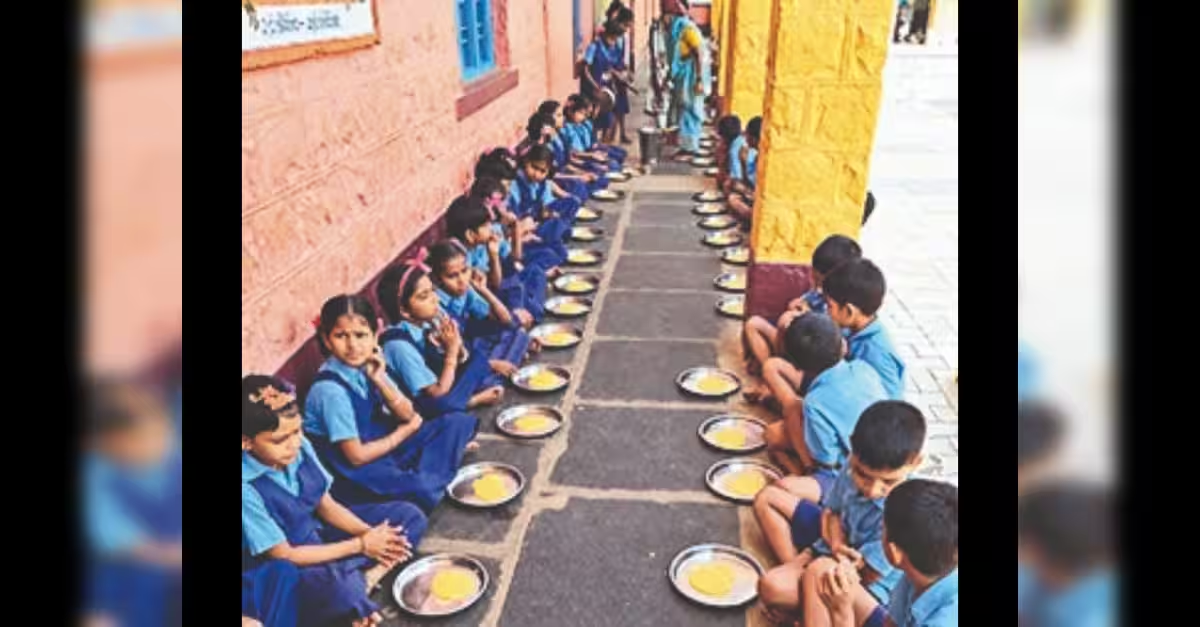
The assessment also underscored persistent infrastructure deficits that compromise hygiene during meal times. Only 41 percent of government schools surveyed possessed dedicated dining halls equipped with tables and chairs, forcing the majority of students to eat in makeshift conditions.
Among the remaining institutions, roughly 34 percent of students eat their meals inside classrooms, while 25 percent sit on the ground in open playgrounds or outdoor courtyards. Such settings heighten exposure to dust, environmental debris, and weather fluctuations, raising further questions about sanitary dining standards.
These systemic shortfalls arrive against a backdrop of broader nutritional vulnerabilities among school-age children and adolescents in Andhra Pradesh. Related health data referenced in state nutrition reviews indicate elevated rates of anemia, particularly affecting adolescent girls, alongside widespread deficiencies in essential micronutrients like vitamin B12 and folate.
Education and public health specialists emphasize that routine laboratory testing must be institutionalized through cluster-level testing protocols and dedicated budget outlays. Addressing cooking fund deficits and upgrading basic school dining infrastructure remain critical steps to ensuring that the midday meal scheme fulfills its core mission of child health and education.
Primary source: Google News Andhra Pradesh. Newzly rewrites and structures source reporting for clarity; verify critical details at the original.