OpenAI Launches ChatGPT Wallet for AI Purchases With Visa, Mastercard, and Amex
OpenAI has begun rolling out ChatGPT Wallet in the United States, allowing artificial intelligence agents to complete purchases via Visa, Mastercard, and American Express while keeping card details hidden.
In this piece
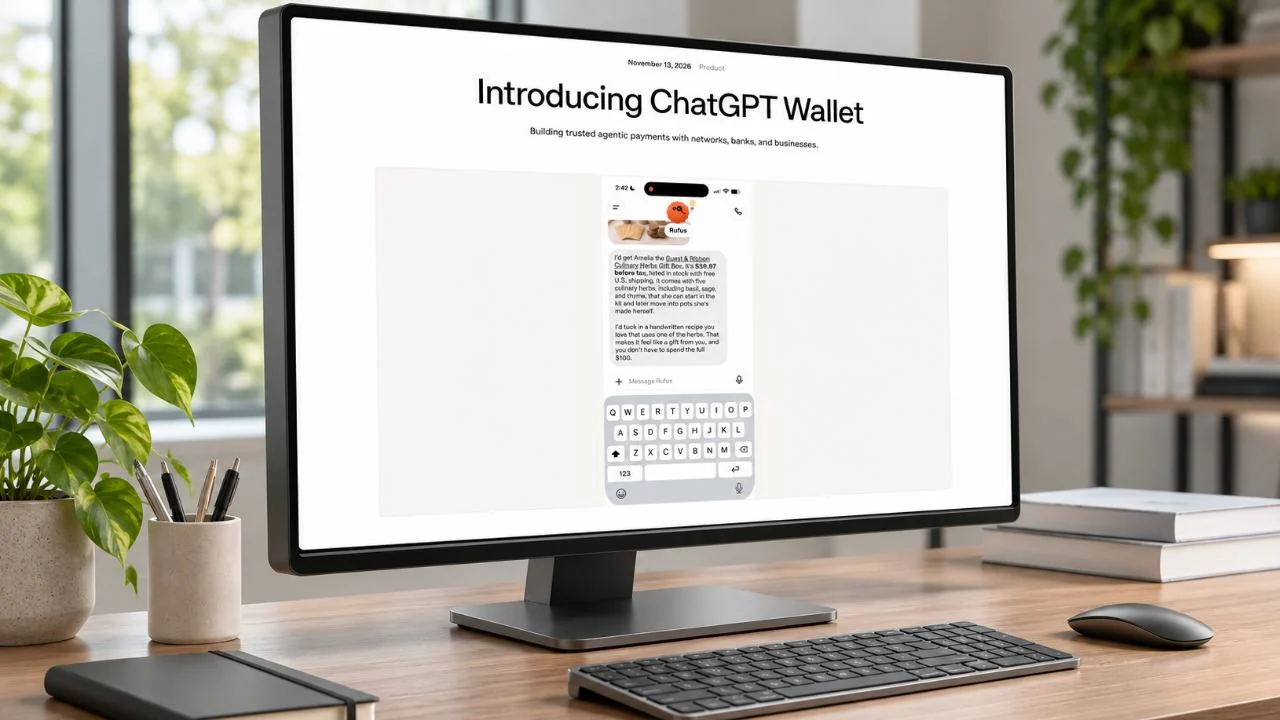
OpenAI introduced ChatGPT Wallet on Nov. 13 to enable artificial intelligence agents to make purchases using existing cards from Visa, Mastercard, and American…
OpenAI has launched ChatGPT Wallet, a new payment feature designed to enable artificial intelligence agents to complete online purchases using consumers' existing payment cards. The deployment began rolling out on Nov. 13, signaling a pivotal move to bring autonomous transactional capabilities into conversational AI software. By bridging virtual assistance with direct purchasing, the tool aims to streamline how consumers discover and buy products online.
In its initial phase, the feature is rolling out specifically to users across the United States. The system supports major payment card networks, allowing customers to link their accounts from Visa, Mastercard, and American Express. This integration ensures that consumers can participate using their preferred domestic credit and debit cards without creating novel funding mechanisms or separate merchant balances.
A central component of the new wallet infrastructure is its reliance on mandatory user confirmation. Even as artificial intelligence agents handle the navigation, item selection, and preparation of orders, transactions cannot be finalized without direct human approval. Requiring user sign-off on every charge acts as a critical safeguard against accidental spending and automated processing errors.
OpenAI has built data protection protocols into the core architecture of the wallet to mitigate potential financial risks. During the payment sequence, the platform keeps customers' actual card details hidden from both the artificial intelligence agents executing the task and the participating merchants. By masking primary card information, the service aims to reduce exposure to unauthorized data scraping and merchant-level security breaches.
The introduction of ChatGPT Wallet highlights an industry-wide transition toward agentic artificial intelligence systems capable of executing complex real-world actions. Early versions of generative chatbots were primarily confined to generating text, summarizing information, and answering factual questions. Equipping these models with transactional payment rails transforms them into active digital intermediaries capable of managing end-to-end consumer tasks.
Rather than relying on proprietary or emerging digital currencies, the partnership relies entirely on established payment networks with global reach. Aligning with Visa, Mastercard, and American Express allows OpenAI to build on decades of consumer protections, chargeback protocols, and payment processing standards. This traditional backbone provides a familiar and regulated environment for users experimenting with automated checkout tools.
Financial technology analysts view the human-in-the-loop requirement and credential protection as essential steps for gaining user trust. Autonomous agent software faces widespread scrutiny regarding reliability, making clear authorization boundaries vital before widespread commercial use. Ensuring that cards remain concealed and transactions remain user-approved directly addresses significant consumer apprehensions regarding AI access to personal finances.
For the broader e-commerce landscape, AI-driven purchasing agents represent a shift in how shoppers interact with digital storefronts. If autonomous assistants can successfully find products and initiate secure payments, the traditional browsing and checkout funnel could undergo considerable change. Nevertheless, merchant adoption will depend on how seamlessly these automated interactions integrate with existing online point-of-sale infrastructure.
Because the current release is confined to U.S. customers, global users will have to wait for future rollout announcements. OpenAI has not yet specified a timeline for international expansion or detailed potential localized payment partnerships outside the domestic market. The performance and security feedback gathered during this initial American phase are expected to inform any subsequent global deployments.
As conversational tools become increasingly intertwined with daily tasks, ChatGPT Wallet demonstrates how artificial intelligence developers are pursuing functional utility beyond conventional chat interfaces. Combining user-approved transactions with major card network support provides a blueprint for the future of assisted digital commerce. Observers will closely monitor user adoption and security outcomes as the system encounters wider everyday use.
Primary source: Bitcoin.com News. Newzly rewrites and structures source reporting for clarity; verify critical details at the original.