Overturned Boat Carrying Mourners to Funeral Kills at Least 24 in Nigeria
At least 24 people heading to a funeral died when their boat capsized in Nigeria, prompting police to arrest the vessel’s manager as a search continues for the driver who fled.
In this piece
At least 24 people were killed after an overturned boat carrying mourners capsized in Nigeria. Police have taken the vessel’s manager into custody while…
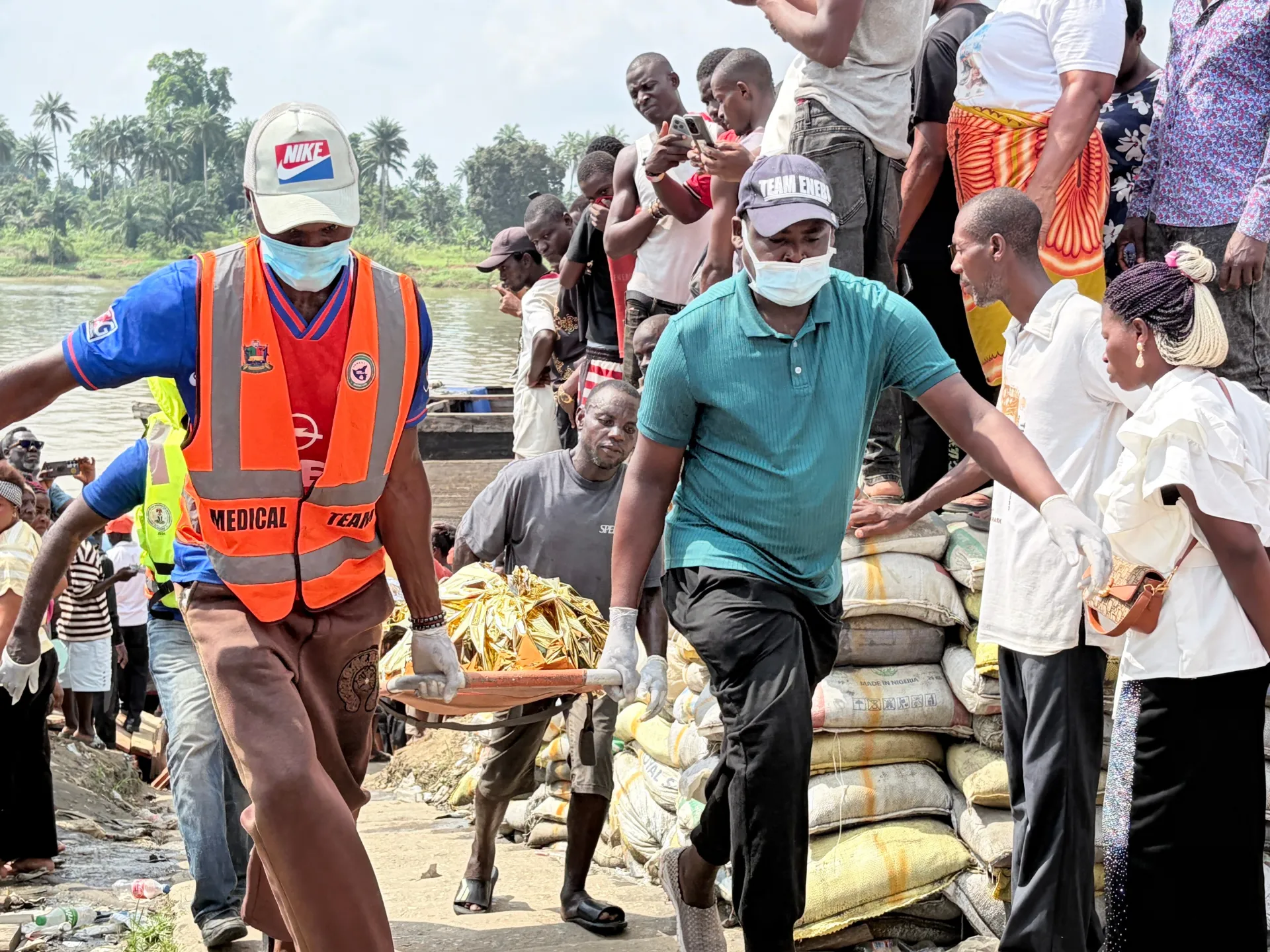
At least 24 people have died in Nigeria after a boat transporting mourners to a funeral capsized on an inland waterway, according to local police and emergency authorities. The tragedy unfolded as passengers traveled together for burial services, turning a communal moment of grief into a major maritime disaster.
Law enforcement officials confirmed that the vessel overturned during the journey, triggering an immediate emergency response as local residents and responders attempted to assist survivors. Police reported that the boat operator fled the scene shortly after the incident occurred, while authorities quickly detained the vessel’s manager for questioning.
Investigators have placed the manager into custody as they work to determine the operational circumstances surrounding the fatal trip. Detectives are seeking to question the driver regarding the boat's handling, passenger capacity, and the immediate conditions leading up to the capsizing.
River transport serves as a critical lifeline for millions of people across Nigeria, particularly in riverine communities where roadways are limited, impassable, or nonexistent. Many residents rely daily on commercial wooden boats and motorized skiffs to transport agricultural goods, attend market days, and travel between isolated settlements.
Such communal journeys frequently involve extended families, neighbors, and fellow villagers traveling together to attend major lifecycle milestones, including weddings, religious gatherings, and funerals. When maritime accidents occur under these circumstances, entire communities often suffer devastating losses across multiple households simultaneously.
Waterway tragedies have remained a persistent public safety challenge across Nigeria's extensive network of rivers, creeks, and coastal lagoons. Safety advocates and transportation analysts note that past accidents have frequently been linked to vessel overloading, poor mechanical maintenance, insufficient safety equipment, and operating without essential navigational aids.
Life jackets and other basic flotation devices are often in short supply or entirely absent aboard commuter vessels operating in rural waterways. In addition, the lack of formal passenger manifests on many informal charters complicates efforts by search and rescue teams to verify exactly how many people were on board at the time of an accident.
Regulators and inland water management agencies have repeatedly pledged stricter enforcement of maritime safety codes, including mandatory safety gear and restrictions on night navigation. However, monitoring vast river networks remains difficult due to limited resources, remote terrain, and widespread reliance on informal transport operators.
The detention of the boat’s manager highlights an increasing focus by law enforcement on holding commercial vessel operators legally accountable for safety lapses. Legal experts note that investigations into river accidents frequently examine whether operators adhered to licensing requirements, passenger limits, and basic seaworthiness standards.
Search teams and local emergency responders continue to monitor the water for any remaining victims or survivors as official inquiries proceed. Authorities have urged anyone with information regarding the whereabouts of the runaway boat driver to assist the police, while families await formal identification of the deceased and the conclusion of the preliminary investigation.
Primary source: Al Jazeera. Newzly rewrites and structures source reporting for clarity; verify critical details at the original.