Packham urges Treasury to redirect carbon capture funding to household energy savings
Chris Packham is urging the chancellor to scale back £24bn in planned carbon capture support, arguing that public money should instead prioritise emissions cuts and lower household energy bills.
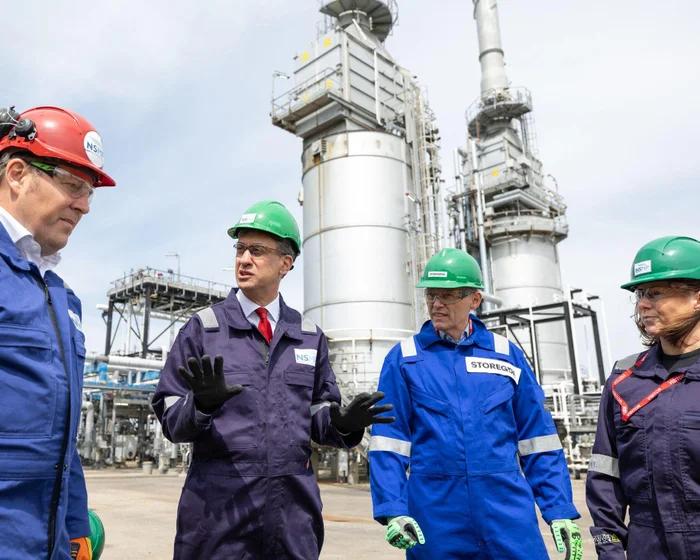
Environmental campaigners led by Chris Packham are urging the chancellor to reduce the government’s £24bn carbon capture spending plans and redirect funding towards measures to cut emissions and household energy bills. The appeal, reported by the Guardian, seeks a change of priorities in the forthcoming budget.
Packham described the planned support as a “national embarrassment” and challenged the case for committing substantial public funding to the technology. Campaigners argue that the Treasury should give greater priority to green measures they regard as more dependable ways to reduce energy use and ease pressure on households.
The intervention puts the allocation of climate spending at the centre of the budget debate. The campaigners’ argument is not simply that emissions must fall, but that ministers should assess how reliably each commitment can deliver reductions and whether households will benefit directly from the money spent.
Carbon capture and storage involves collecting carbon dioxide from industrial facilities before it reaches the atmosphere, then transporting it for permanent storage underground. It requires more than equipment at individual plants: transport networks and suitable storage sites are also needed to complete the process.
The government’s published case for the technology focuses particularly on industries that are difficult to decarbonise, including cement, chemicals and oil refining. Official policy documents describe industrial carbon capture as fundamental to deep emissions reductions in those sectors, presenting it as a tool for tackling pollution that cannot readily be eliminated through other changes.
Earlier commitments illustrate the programme’s long funding horizon. The government announced up to £21.7bn over 25 years in October 2024 for the first projects. That earlier allocation is distinct from the £24bn spending plans challenged in the campaigners’ latest appeal and should not be treated as an identical funding figure.
Parliamentary scrutiny has also raised questions about delivery. In its examination of the programme, the Public Accounts Committee said the technology was unproven at the scale planned in Britain and noted that no UK plants were then operating commercially. Those findings concerned the programme at the time of the committee’s review, rather than establishing its current construction or operating status.
The competing positions reflect different priorities within climate policy. The government’s rationale emphasises reducing emissions from industrial activity that remains difficult to replace, while Packham’s appeal stresses the opportunity to help households lower bills. The budget decision therefore concerns both the technologies receiving support and when the benefits of that spending are expected to emerge.
The campaigners’ description of carbon capture as unreliable remains their assessment, rather than a finding that every application will fail. Equally, the government’s stated ambitions do not by themselves establish that projects will deliver the anticipated emissions reductions at the expected cost. Delivery and value for money remain central to judging the programme.
The forthcoming budget will show whether the Treasury changes the scale or direction of its support. For Packham and fellow campaigners, the immediate test is whether ministers shift funding towards household-focused measures. For the wider programme, scrutiny will continue to centre on whether long-term commitments translate into demonstrable climate benefits.
Primary source: The Guardian Business. Newzly rewrites and structures source reporting for clarity; verify critical details at the original.